7 Storage Tips for College Students in Arkansas
Use this guide to compare unit size, climate control for summer, campus routes, lease timing, shared boxes, price/fees, and what to ask before renting student storage.

How to store dorm and apartment gear between semesters without overpaying or cooking your electronics
For most students, a small unit rented for the summer covers a dorm or single bedroom of belongings. The decisions that actually matter are whether you need climate control for electronics and books, how easy the unit is to load on a chaotic move-out day, and whether the price you see includes the fees you will pay. This guide walks through unit size, climate control, drive-up vs indoor access, price and fees, access hours, and the questions worth asking before you sign, then gives seven concrete packing and renting moves for a stay that only needs to last a few months.
What matters most
Use the article as a decision filter: choose the smallest unit that comfortably fits your load, use climate control for wood, electronics, documents, photos, and fabrics, prioritize access that matches your real schedule, and compare regular rates and fees before trusting the cheapest promotion.
#1Pack dorm essentials separately from what can wait until fall
Not everything you store needs to disappear until August. Set aside a single labeled 'first week' box for the things you will want the moment you move back in or need over the summer: chargers, a set of sheets, a few kitchen basics, and any paperwork tied to housing or enrollment. Everything else can go deep into the unit. Splitting your belongings this way keeps you from digging through a packed unit for one charger, and it means a summer sublet or a stop at your parents' place does not require unpacking the whole load.
Keep that 'first week' box in your car or with you, not in the unit. If it lives in storage, you lose the entire point of separating it out.
#2Use bedding bags for comforters, pillows, and laundry
Comforters, pillows, and laundry-bag piles are bulky but light, and they waste space fast if you box them. Compression or vacuum bedding bags shrink soft goods down and stack flat, which lets you fit a dorm's worth of bedding into a corner instead of a whole shelf. Sealed bags also keep dust and pests off fabric during a multi-month stay, which matters more than people expect when a unit sits closed all summer.
Do not vacuum-seal anything with memory foam for months at a time; it can lose loft. Use a loose breathable bag for foam pillows and toppers, and save the tight compression bags for cotton and synthetic bedding.
#3Keep electronics and documents out of summer heat
This is the one place a cheaper non-climate unit can cost you. Arkansas summers are genuinely hard on gear: average July highs run into the low-to-mid 90s and humidity is the defining factor, so a metal unit sitting in the sun can get far hotter inside. Laptops, monitors, printers, and game consoles do not like sustained heat, adhesives soften, and textbooks and important paperwork curl or mildew in humid air. If you are storing any of that, a climate-controlled unit is worth the difference for a summer stay.
If you only have one or two sensitive items, ask whether you can keep them somewhere climate-controlled at home and store just the bulky, heat-tolerant items. That can drop you to a cheaper non-climate unit for everything else.
#4Pick a location that matches your move-out traffic
On move-out weekend, every student in town is hauling bins at the same time, and campus streets and nearby facilities get busy. Choose a unit close to your dorm or apartment along a route you can actually drive with a loaded car or rental, and think about whether you need drive-up access to unload fast or an indoor unit for better climate protection. A drive-up unit is quickest for a one-day dump-and-go; an indoor climate unit trades a little loading convenience for steadier temperature.
Book a couple of weeks before your official move-out date. The units closest to campus fill first during move-out season, and waiting until the last day narrows your size and location choices.
#5Split shared items clearly when roommates store together
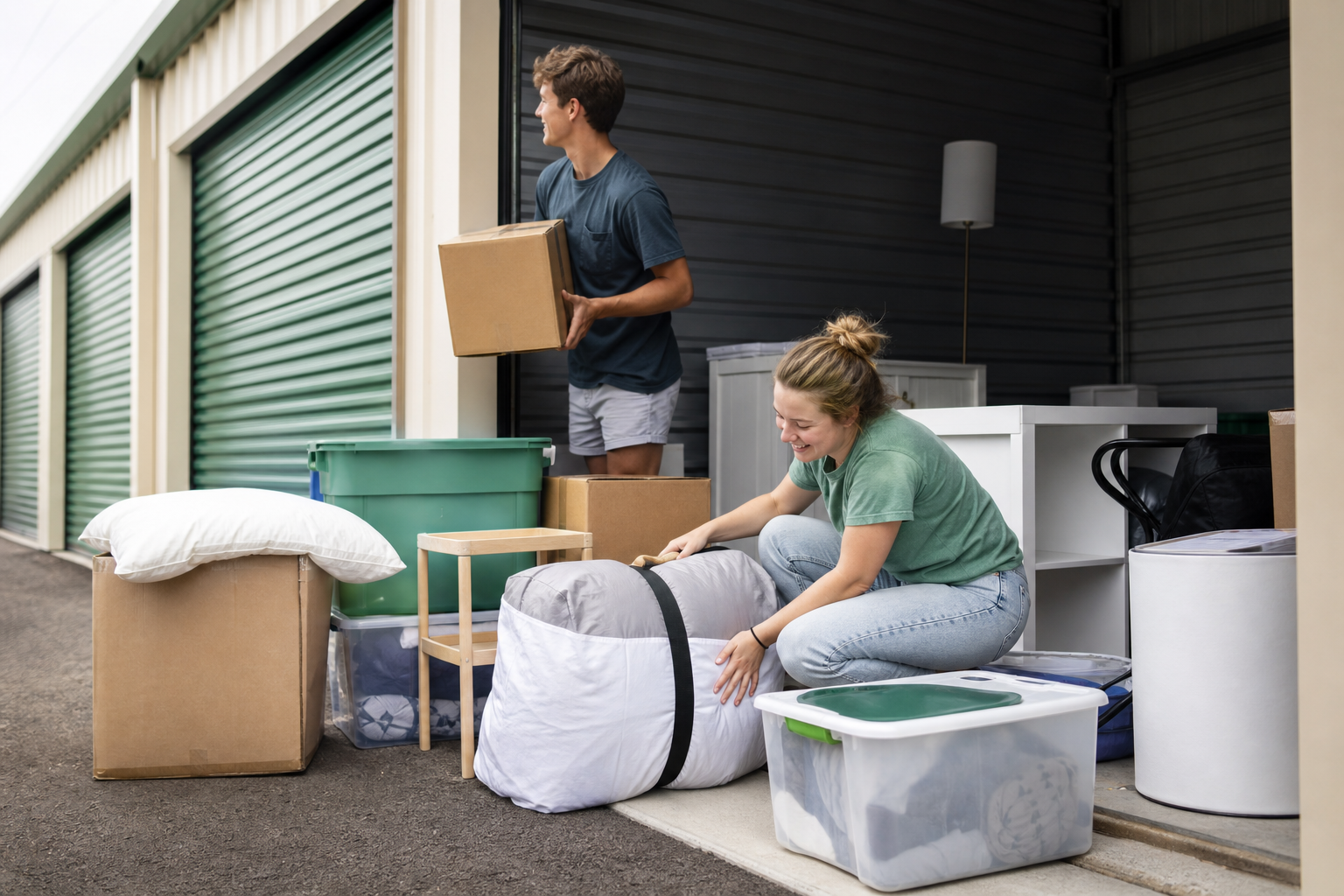
Sharing one unit is the fastest way for students to cut the cost in half, but it goes sideways when nobody knows whose stuff is whose or who is paying. Before you load, agree on who is on the rental agreement and how the bill is split, and physically zone the unit so each person's items sit in a separate labeled section. That way, when one roommate needs their desk lamp in July or moves out first, they can grab their zone without unpacking someone else's boxes.
Put one person's name on the lease but get the split in writing between roommates, including what happens if someone leaves early or misses a payment. A quick text thread everyone agrees to beats a dispute in August.
#6Label boxes by fall move-in priority, not just contents
Listing contents on a box is fine, but for a short storage stay it helps more to label by when you will want it back. Mark boxes as first-day, first-week, or later, and load the unit so the earliest-priority boxes end up at the front. When fall arrives and you are moving into a new room on a tight window, you pull what you need immediately without excavating the whole unit or hauling everything twice.
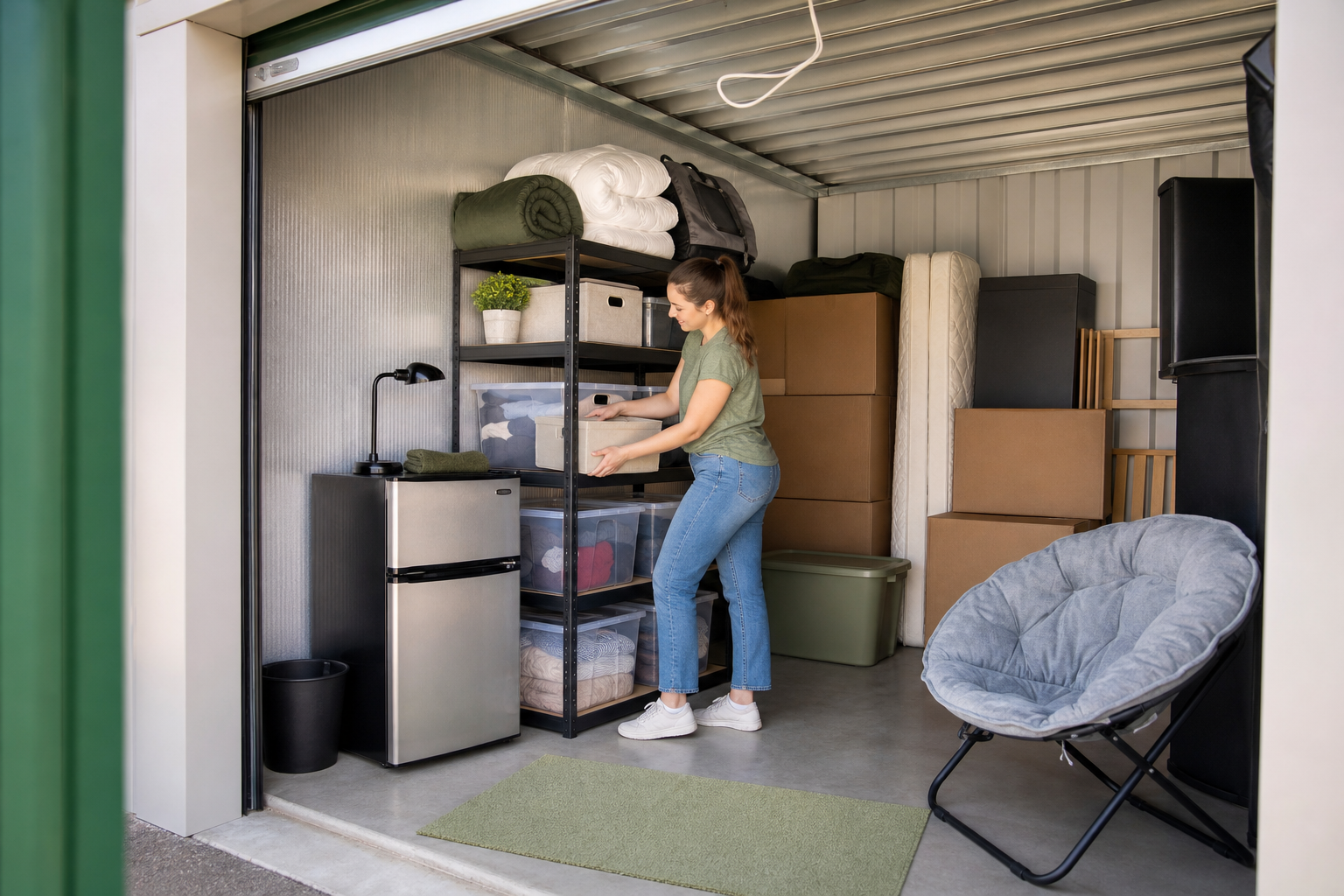
Snap a phone photo of the packed unit before you close it and note which box is where. Three months later that photo saves you from guessing what is buried behind the mini fridge.
#7Skip food, liquids, and anything that can leak
A closed unit in summer heat turns forgotten snacks and open bottles into a mess and a pest magnet. Leave out any food, including sealed pantry items, along with cleaning supplies, shampoo, and drinks that can leak or swell. Empty and dry a mini fridge fully before storing it, and prop the door open a crack so it does not grow mold in a humid, sealed space over the break.
Drain and wipe down anything that held liquid — water bottles, a coffee maker, a mini fridge — at least a day before you pack, so it stores completely dry. Trapped moisture is what causes odor and mildew, not the appliance itself.
Quick summary
| Decision | What to check | Why it matters |
|---|---|---|
| Unit size | Whether a 5×5 fits a dorm load or you need a 5×10 for a bedroom | The smallest unit that comfortably fits is cheaper and easier to load |
| Climate control | Are you storing electronics, textbooks, or soft goods | Arkansas summer heat and humidity can warp, mildew, or damage sensitive items |
| Access type | Drive-up for fast unloading vs indoor for temperature stability | Move-out day speed and item protection pull in different directions |
| Price and fees | Total monthly cost including admin, insurance, and any deposit | A low headline rate can hide fees that change the real price |
| Access hours | Gate and office hours for both move-out and fall move-in day | A great unit is useless if you cannot get in when you actually move |
Storage numbers worth checking
Use these numbers as decision anchors before comparing facilities. The goal is not to guess a perfect unit — it is to compare the same details across options.
List largest items, box count, and aisle needs.
Use these as comparison anchors.
Monthly rate, promo length, required fees.
Drive-up convenience vs. indoor protection.
| Check | What to compare | Why it matters |
|---|---|---|
| 5×10 | Boxes, small bedroom, seasonal items | A small unit can save money if it truly fits |
| 10×10 | Apartment contents or household overflow | Often a safer middle option for mixed items |
| 10×20 | Multi-room moves or large equipment | More room can reduce loading frustration |
| Climate control | Sensitive vs. durable belongings | Arkansas heat and humidity change the risk |
StorageGuide verdict
Use the article as a decision filter: choose the smallest unit that comfortably fits your load, use climate control for wood, electronics, documents, photos, and fabrics, prioritize access that matches your real schedule, and compare regular rates and fees before trusting the cheapest promotion.
Storage FAQs
What size storage unit does a college student usually need?
A 5×5 unit typically holds a dorm room's worth of boxes, bedding, and a few small items, while a 5×10 fits closer to a single bedroom or a shared load with a roommate. Measure any larger furniture first, then pick the smallest unit everything comfortably fits into.
Do I really need climate control for summer storage in Arkansas?
If you are storing electronics, textbooks, documents, or soft goods, yes. Arkansas summers combine heat with high humidity, and a closed non-climate unit can get significantly hotter inside, which risks warped adhesives, mildewed paper, and stressed electronics over a multi-month stay.
Can roommates share one storage unit?
Yes, and it is a common way to cut the cost. Decide who signs the lease, put the payment split in writing, and zone the unit so each person's items sit in a clearly labeled section that can be pulled out without disturbing the rest.
How early should I reserve a unit before move-out?
Book a couple of weeks ahead. Units closest to campus fill first during move-out season, and reserving early gives you the best choice of size, location, and climate-controlled availability.
Can I store my mini fridge over the summer?
Yes, but empty it, wipe it dry, and leave the door propped open a crack so trapped moisture does not turn into mold and odor in a sealed, humid unit. Do the same drying step for anything that held liquid.
Find student-friendly storage before move-out day
Compare unit sizes, climate-controlled options, and access near your campus so you can rent the right fit before the move-out rush fills things up.