Vehicle Storage Guide for Arkansas
Use this guide to compare vehicle size, clearance, surface type, access hours, prep steps, pricing, and what to ask before renting vehicle storage.
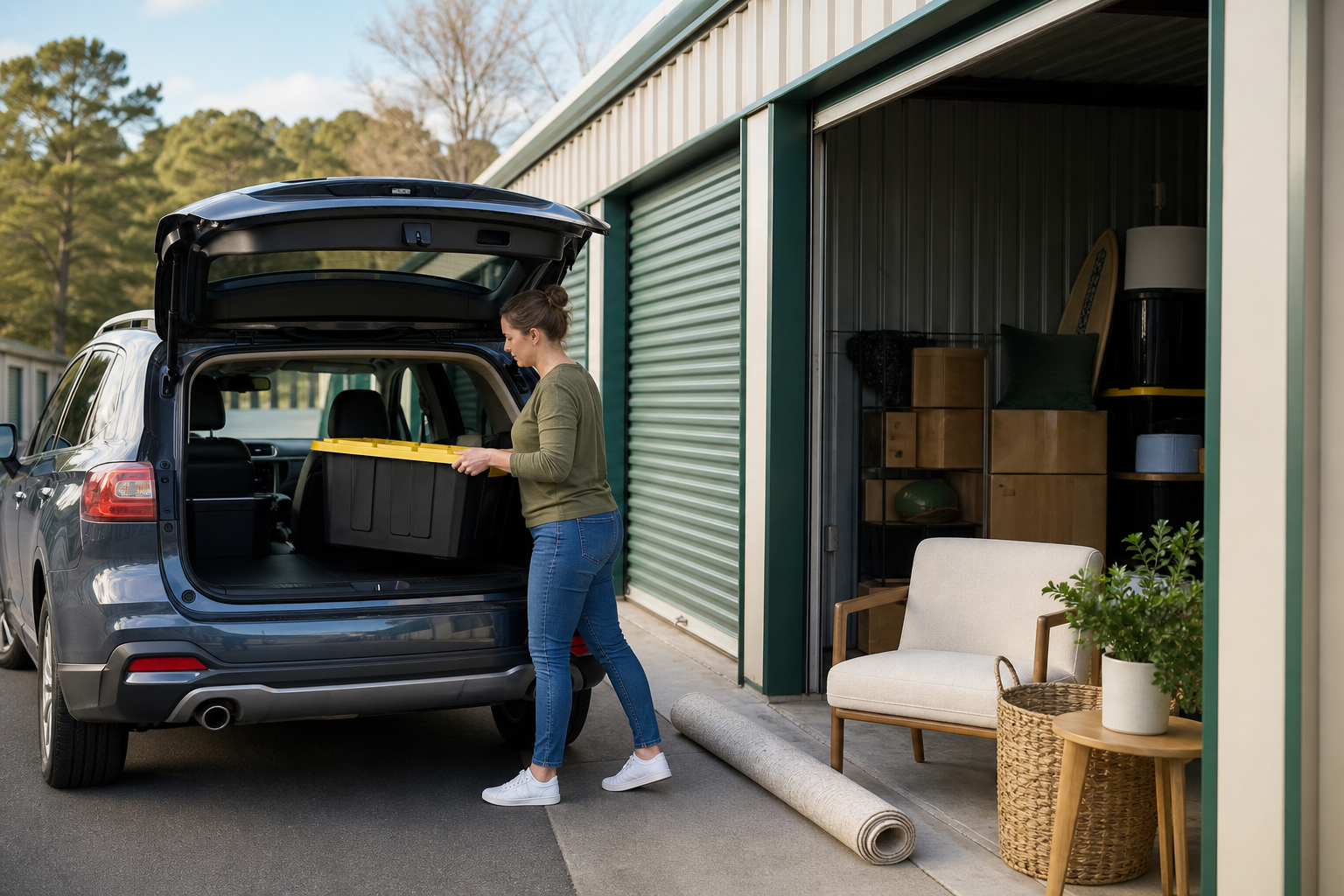
How to match a car, motorcycle, RV, or trailer to the right space, access, and prep
Vehicle storage is really three decisions stacked together: does the vehicle fit with room to work around it, can you get to it on the schedule you actually drive it, and does it need protection from Arkansas heat, humidity, and storms. This guide walks you through matching the space to the vehicle, checking access and surface before you look at price, prepping for a longer stay, and keeping seasonal gear organized alongside it. We also flag what to ask before signing: real drive-up clearance, surface type, access hours, and every line item on the monthly bill.
What matters most
Use the article as a decision filter: choose the smallest unit that comfortably fits your load, use climate control for wood, electronics, documents, photos, and fabrics, prioritize access that matches your real schedule, and compare regular rates and fees before trusting the cheapest promotion.
Match the space to the vehicle and your pickup schedule
Start with the vehicle's real footprint plus working room. A sedan needs enough length to swing a door and walk the sides; an RV or boat-on-trailer needs tongue and hitch clearance you often forget until you're backing in. Measure bumper to bumper, add a couple of feet, and match that to a unit or lot space rather than guessing from a size chart. Then layer on how often you drive it. A motorcycle you ride on nice weekends belongs somewhere with generous access hours; an RV you take out a few times a summer can sit in a back-lot spot that's cheaper because it's harder to reach.
- Measure with mirrors folded and trailer attached if it stays hitched
- Frequent-use vehicles: prioritize access hours over lowest price
- Seasonal vehicles: a harder-to-reach spot often costs less
If you're between two sizes, size up only when you plan to open doors, load gear, or run a battery tender cord inside — otherwise the smaller footprint is cheaper and easier to maneuver into.
Check access, clearance, and surface before you look at price
A rate looks great until you learn the gate closes at 6 p.m. or the drive-up door is too low for your camper. Before comparing prices, confirm the physical details: gate and access hours, whether you can drive right up to the space or have to navigate a tight indoor aisle, overhead clearance for tall vehicles, and turning room for a trailer. Surface matters too — gravel and dirt hold moisture and can leave tires and undercarriage damp, while paved or concrete spots drain and stay cleaner. For anything low-slung, ask about the approach angle so you don't scrape on the way in.
- Ask for exact gate/access hours, not just "extended access"
- Confirm door and canopy height for RVs, vans, and lifted trucks
- Prefer paved or concrete over gravel for moisture and cleanliness
Do a dry run: drive the actual vehicle (or one the same size) to the space before signing. A backup camera and a size chart won't tell you the aisle is too tight to turn a trailer — the attempt will.
Decide when covered or climate-controlled storage is worth it
Arkansas summers combine sustained heat with high humidity, and that mix is hard on vehicles that sit. UV fades paint and cracks dashboards, humidity feeds surface rust and mildew in upholstery, and temperature swings stress seals and electronics. Outdoor uncovered storage is fine for a work truck or utility trailer. A roofed canopy blocks direct sun and most weather for a mid-value vehicle. Enclosed indoor or climate-controlled space is the call for classics, motorcycles, leather interiors, and anything with sensitive electronics or resale value you're protecting. Weigh the monthly premium against what you'd spend fixing sun and moisture damage later.
- Outdoor: work trucks, utility trailers, rugged gear
- Covered: mid-value daily drivers you want out of the sun
- Indoor/climate: classics, motorcycles, leather, electronics
If you skip climate control, at least park indoors or under cover and use a breathable cover — a sealed plastic tarp traps humidity against the paint and does more harm than sun would.
Prep the vehicle for a longer storage stay
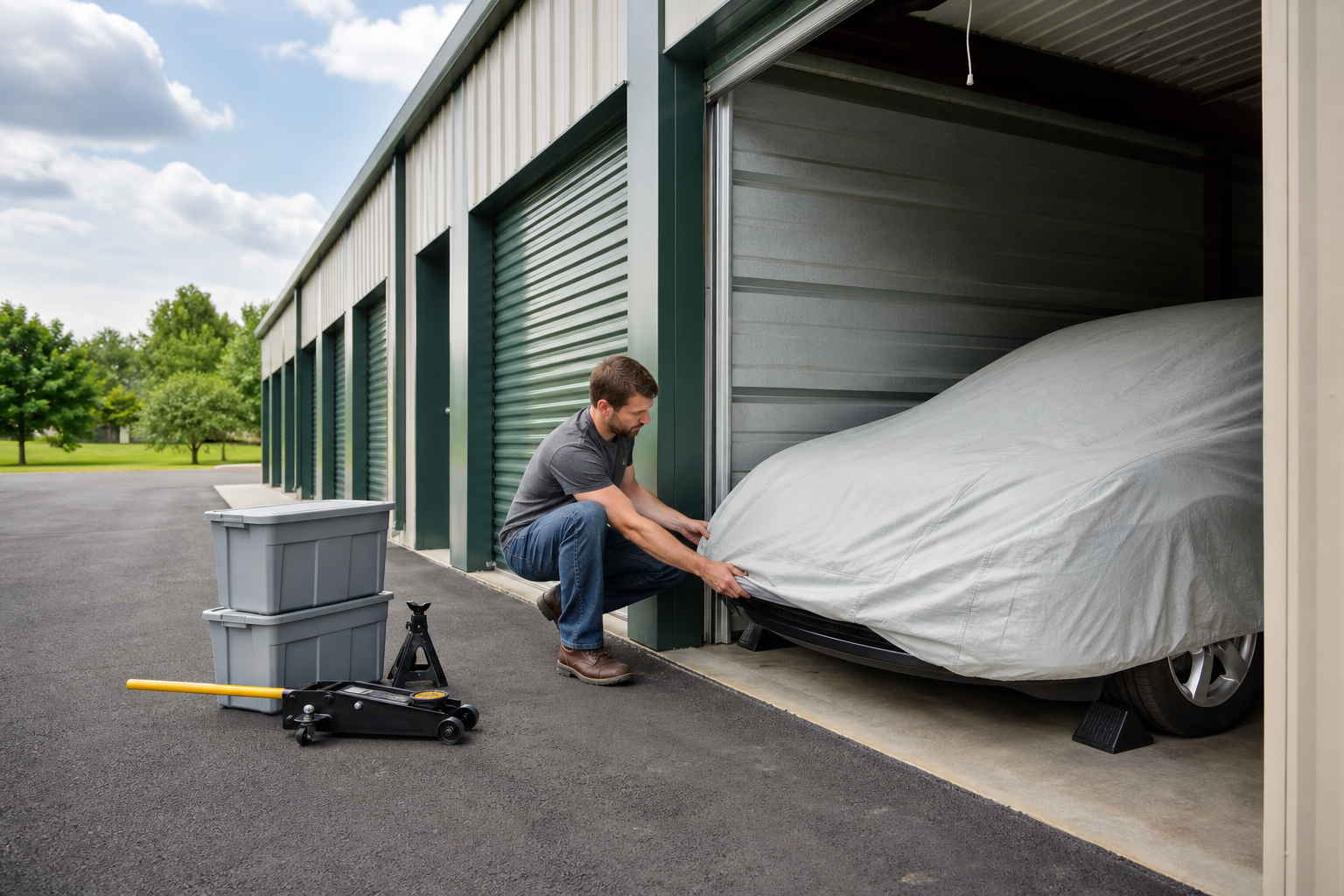
A vehicle sitting for more than about a month needs a few steps so it starts and drives when you come back. Fill the tank and add fuel stabilizer to keep gas from deteriorating over the months. Keep the battery alive with a battery tender (a maintainer that cycles on and off), or disconnect the negative terminal if there's no power at the space. Protect tires from flat spots by inflating to the correct pressure and, for long stays, considering jack stands. Change the oil before a long park so old contaminants don't sit in the engine, and use tire chocks so nothing rolls. Resist the urge to just start and idle it occasionally — that adds condensation without fully warming the engine; a real drive is better if you can manage one.
- Fuel stabilizer + full tank; fresh oil before a long park
- Battery tender if power is available, or disconnect the terminal
- Correct tire pressure and chocks; breathable cover, not plastic
Confirm whether your space has a power outlet before you rely on a battery tender. No outlet means you disconnect the battery instead — decide this before move-in day, not while you're standing there with a dead extension cord.
Keep seasonal gear organized with the vehicle
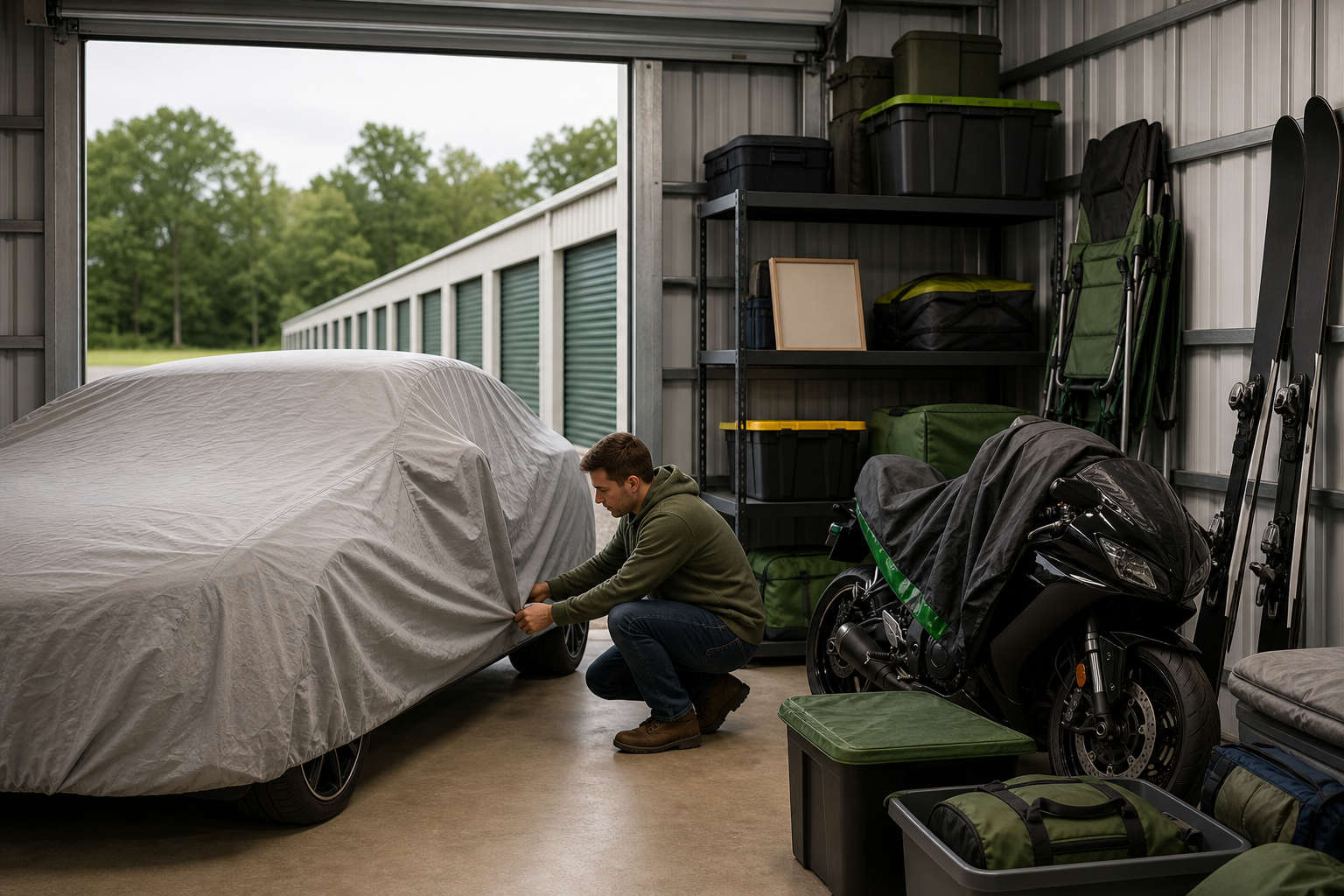
Seasonal gear should stay organized with the vehicle but not scattered inside it. Use labeled bins for helmets, straps, covers, chargers, lake gear, or maintenance items so pickup day does not require searching through loose equipment.
- Sealed, labeled bins beat loose gear for humidity and pests
- Keep bins clear of doors and your walk-around path
- Never store loose fuel or propane in an enclosed space
Measure the vehicle with mirrors, hitches, racks, and trailer clearance included; the base model dimensions are not enough.
Quick summary
| Decision | What to check | Why it matters |
|---|---|---|
| Space size | Vehicle length plus 2–3 ft of working room | Too tight means door dings and no room to prep; too big wastes money |
| Access type | Drive-up vs. indoor aisle, and gate hours | Determines how easily you pull the vehicle out on your schedule |
| Clearance & surface | Door/canopy height, turning room, paved vs. gravel | Prevents scrapes and keeps the undercarriage dry |
| Protection level | Outdoor, covered, or climate-controlled | Arkansas heat and humidity damage finishes, interiors, and electronics |
| Total price | Monthly rate plus admin, insurance, and fees | A low teaser rate can cost more than a clear all-in price |
Storage numbers worth checking
Use these numbers as decision anchors before comparing facilities. The goal is not to guess a perfect unit — it is to compare the same details across options.
List largest items, box count, and aisle needs.
Use these as comparison anchors.
Monthly rate, promo length, required fees.
Drive-up convenience vs. indoor protection.
| Check | What to compare | Why it matters |
|---|---|---|
| 5×10 | Boxes, small bedroom, seasonal items | A small unit can save money if it truly fits |
| 10×10 | Apartment contents or household overflow | Often a safer middle option for mixed items |
| 10×20 | Multi-room moves or large equipment | More room can reduce loading frustration |
| Climate control | Sensitive vs. durable belongings | Arkansas heat and humidity change the risk |
StorageGuide verdict
Use the article as a decision filter: choose the smallest unit that comfortably fits your load, use climate control for wood, electronics, documents, photos, and fabrics, prioritize access that matches your real schedule, and compare regular rates and fees before trusting the cheapest promotion.
Storage FAQs
Do I need climate control for a stored car in Arkansas?
It depends on the vehicle. For a work truck or utility trailer, an open or covered lot is fine. For classics, motorcycles, leather interiors, or anything with sensitive electronics, climate control is worth the premium because Arkansas heat and humidity fade paint, crack dashboards, and encourage rust and mildew over a long stay.
How do I keep the battery from dying in storage?
For stays longer than about a month, connect a battery tender — a maintainer that cycles on and off to hold the charge — if the space has power. If there's no outlet, disconnect the negative terminal instead. Confirm whether an outlet is available before move-in so you know which route to take.
Is it better to start the car occasionally or leave it parked?
Leave it properly prepped rather than starting and idling it every week. Brief idling doesn't fully warm the engine and can add condensation. If you want to run it, take it for a real drive; otherwise, stabilized fuel, a battery maintainer, and correct tire pressure keep it ready.
What should I ask before renting a vehicle space?
Confirm the exact space dimensions and overhead clearance, whether it's drive-up or indoor, the surface (paved vs. gravel), gate and access hours, whether power is available, and the full monthly price including any admin or insurance fees. A dry run with the actual vehicle before signing catches tight aisles and low doors a chart won't.
Can I store gear or fuel with the vehicle?
Store seasonal gear in sealed, labeled bins to protect it from humidity and pests, kept clear of doors and your walk-around space. Do not store loose gasoline, spare fuel cans, or propane inside an enclosed unit — most facilities prohibit it and it's a fire hazard. Keep the tank stabilized instead.
Find the right vehicle storage in Arkansas
Compare unit sizes, covered and indoor climate-controlled options, drive-up access, and clear monthly pricing near you before you park anything.