7 Things to Know Before Renting a Storage Unit in Arkansas
Use this size guide to compare bulky furniture, box count, walkway space, climate-control needs, drive-up access, and the questions to ask before reserving a unit.

A size-first checklist that keeps you from paying for empty air
The fastest way to overpay for storage is to guess. This guide walks you through choosing a unit size by starting with your largest item, layering in boxes and awkward gear, and leaving walkway room if you'll visit. It also covers where climate control earns its cost in Arkansas heat and humidity, when drive-up beats indoor access, how to read price and fees, access hours, and the questions to ask before you sign. Aim for the smallest unit your load fits comfortably.
What matters most
Use the article as a decision filter: choose the smallest unit that comfortably fits your load, use climate control for wood, electronics, documents, photos, and fabrics, prioritize access that matches your real schedule, and compare regular rates and fees before trusting the cheapest promotion.
#1Measure your largest item before anything else
Your biggest single item — a queen mattress, a three-seat sofa, a refrigerator, or a washer-dryer pair — decides the unit's footprint more than the total volume of your stuff. A 5×10 is only five feet deep, so a standard sofa turned on end or a mattress set eats most of one wall immediately. Pull out a measuring tape and note length, width, and height of your two or three bulkiest pieces before you look at a single price. Everything else packs around them.
If your largest item is longer than the unit is deep, you'll have to store it upright or diagonally. Confirm the door opening width too — a wide door can matter more than a few square feet when you're trying to fit an appliance inside.
#2Count boxes only after your furniture and appliances are listed
Boxes are flexible; furniture isn't. Once you know how your large items sit in the unit, you can see the leftover cubes and gaps — under a table, above a dresser, beside the fridge — where boxes actually go. Counting boxes first leads people to a bigger unit than they need, because stacked boxes climb walls efficiently while a sofa can't. Standard book and kitchen boxes stack four to five high safely, so a surprising number fit into the air space your furniture leaves behind.
Use uniform box sizes so they stack square and tall without toppling. A tower of mismatched boxes wastes the vertical space that lets a smaller unit work.
#3Leave a walkway if you'll visit during storage
A unit packed wall-to-wall is cheapest per square foot but useless if you need the Christmas bins in December or a tool halfway back. If you expect to retrieve items during your rental, plan a narrow aisle down the center and keep frequently used boxes near the door. That walkway effectively removes 15 to 25 percent of your usable floor, which often means sizing up one step — a real cost tradeoff worth deciding on purpose, not by accident.
If it's a load-it-and-forget-it store, skip the walkway and pack tight to save a size. Only pay for aisle space if your access pattern genuinely requires it.
#7Account for shelving, bikes, tools, and awkward gear
The items that blow a size estimate are rarely the sofa — they're the disassembled shelving unit, two bikes, a rolling toolbox, a lawnmower, patio chairs, and the odd-shaped stuff that won't stack. These pieces don't nest and they steal floor space out of proportion to their bulk. List them explicitly alongside your furniture so they're part of the size math instead of a surprise on move-in day. In Arkansas, seasonal gear like coolers, mowers, and lake equipment tends to pile up here fast.
Hang bikes and lean shelving flat against a wall, and nest chairs and totes inside each other. Wall and vertical space is where awkward items go without forcing a bigger unit.
#4Pick a 5×10 for compact apartment overflow
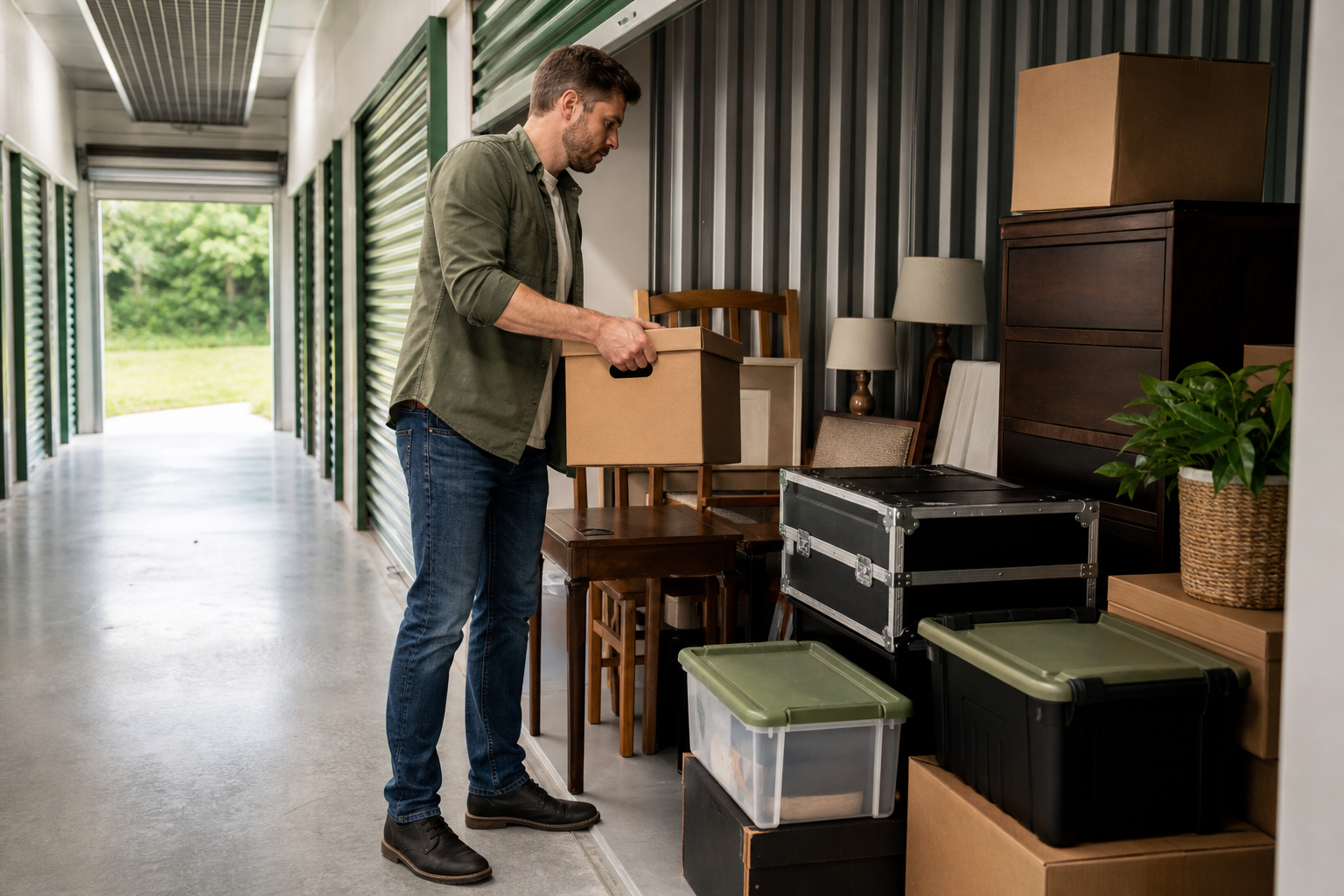
A 5×10 is the workhorse for studio and one-bedroom overflow: a mattress set, a love seat or small sofa, a dresser, a few chairs, a bike, and roughly a dozen boxes stacked along the back. It's the right call when you're between leases, decluttering to sell a home, or holding a semester's worth of dorm gear over a summer. If your list stops at one room of furniture plus boxes, you probably don't need to go bigger.
#5Move up to a 10×10 when furniture starts to dominate
When your list grows past a single room — a full bedroom set, a sofa and loveseat, a dining table, a dresser, and 20-plus boxes — a 5×10 forces you to double-stack furniture and lose access. A 10×10 is roughly the contents of a two-bedroom apartment and gives you square footing to set large pieces side by side rather than on top of each other. It's the point where the load is more furniture than boxes.
If you're one big appliance or a single mattress over a 5×10, price both sizes before defaulting up. Sometimes disassembling a bed frame or table keeps you in the smaller unit and saves real money every month.
#6Consider a 10×20 for multi-room moves and long items
A 10×20 is garage-sized — roughly a three-to-four-bedroom house or a full move where you also need to store long items like a ladder, a canoe, a couch and a mattress without cramming. It's the practical choice when you're between homes, consolidating a household, or storing furniture plus large recreational gear. The extra depth lets you keep a real walkway and still fit appliances, so it suits people who need both capacity and ongoing access.
Before jumping from 10×10 to 10×20, ask whether two smaller units or better vertical stacking would cost less. Go to 10×20 when the deciding factor is genuinely long items or a whole-house load, not just a few extra boxes.
Quick summary
| Decision | What to check | Why it matters |
|---|---|---|
| Largest item | Length, width, height, door opening | It sets the unit's footprint before boxes do |
| Box count | How many stack into leftover air space | Counting boxes first oversizes the unit |
| Access | Whether you'll visit and need a walkway | An aisle removes 15-25% of usable floor |
| Climate control | Wood, electronics, upholstery, documents | Arkansas heat and humidity warp and mold sensitive items |
| Price and fees | All-in rate, admin fees, insurance, teaser terms | The cheapest first month isn't always cheapest overall |
Storage numbers worth checking
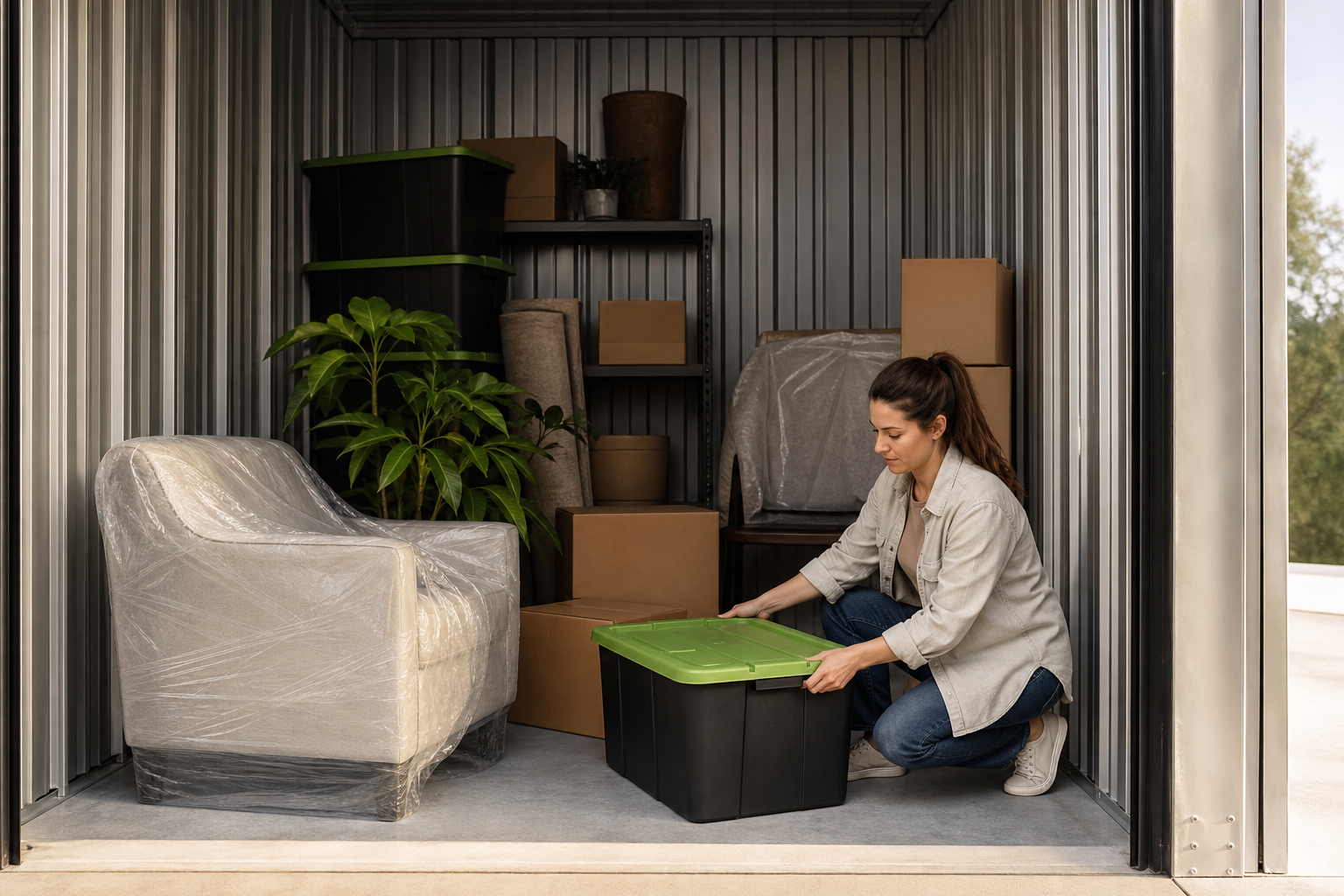
Use these numbers as decision anchors before comparing facilities. The goal is not to guess a perfect unit — it is to compare the same details across options.
List largest items, box count, and aisle needs.
Use these as comparison anchors.
Monthly rate, promo length, required fees.
Drive-up convenience vs. indoor protection.
| Check | What to compare | Why it matters |
|---|---|---|
| 5×10 | Boxes, small bedroom, seasonal items | A small unit can save money if it truly fits |
| 10×10 | Apartment contents or household overflow | Often a safer middle option for mixed items |
| 10×20 | Multi-room moves or large equipment | More room can reduce loading frustration |
| Climate control | Sensitive vs. durable belongings | Arkansas heat and humidity change the risk |
StorageGuide verdict
Use the article as a decision filter: choose the smallest unit that comfortably fits your load, use climate control for wood, electronics, documents, photos, and fabrics, prioritize access that matches your real schedule, and compare regular rates and fees before trusting the cheapest promotion.
Storage FAQs
How do I choose a unit size without over-renting?
Start with your single largest item and note its measurements, then place your other furniture and appliances around it in your mind or on paper. Only after that do you count boxes, which fill the leftover vertical space. Pick the smallest unit your furniture fits without stacking pieces on top of each other, and add one size up only if you need a walkway.
Is a 5×10 or 10×10 right for a one-bedroom apartment?
A 5×10 usually handles a one-bedroom's furniture — a mattress set, small sofa, dresser, and about a dozen boxes. Step up to a 10×10 when you're closer to a two-bedroom load or you want to set furniture side by side with room to reach it rather than double-stacking.
Do I need climate control in Arkansas?
For wood furniture, electronics, upholstery, photos, and documents, it's worth it. Arkansas summers bring sustained heat and humidity that can warp wood, encourage mold on fabric, and stress electronics. Metal patio furniture, tools, and plastic totes generally tolerate a non-climate drive-up unit fine.
Should I leave a walkway in my unit?
Only if you plan to visit during your rental. A walkway costs roughly 15 to 25 percent of your floor space, which can push you up a size. If you're loading it once and retrieving everything at the end, pack wall-to-wall and save the money.
How do I keep the price predictable?
Ask for the all-in monthly rate including any admin fee, required insurance, and what happens after a promotional first month. Confirm access hours and whether gate or after-hours access costs extra. A low teaser rate that jumps later can cost more than a steady, slightly higher rate.
Find the right-sized unit near you
Compare unit sizes, climate control, and access options across Arkansas locations, then reserve the smallest unit that fits your load.