Arkansas Storage Guide: How to Choose the Right Unit
Use this size guide to compare bulky furniture, box count, walkway space, climate-control needs, drive-up access, and the questions to ask before reserving a unit.

Size your unit around the big items first, then boxes and walkway — so you pay for space you use, not air.
Most renters guess their unit size by imagining a pile of boxes, then either cram everything into a too-small space or float their belongings in a half-empty unit they're overpaying for. The fix is to size from the bulky items down: your mattress, sofa, appliances, and shelving set the footprint, and boxes fill the gaps. This guide walks you through that method and covers the decisions that ride alongside size — climate control for Arkansas heat and humidity, drive-up versus indoor access, access hours, and the fees and terms worth confirming before you sign. Standard sizes (5×10, 10×10, 10×15, 10×20) act as planning ranges, not exact fits, so we also show you how to compare the next size up before you force a tight squeeze.
What matters most
Use the article as a decision filter: choose the smallest unit that comfortably fits your load, use climate control for wood, electronics, documents, photos, and fabrics, prioritize access that matches your real schedule, and compare regular rates and fees before trusting the cheapest promotion.
Size from your biggest items, not your box count
Box count is the wrong starting point because boxes stack and flex around whatever else is in the unit — the immovable footprint comes from your largest pieces. Pull your three or four biggest items to the front of your mental list: a queen or king mattress set, a sofa or sectional, and any full-size appliances like a fridge, washer, or dryer. Those set the floor space you can't compress. A standing wardrobe, a dresser, or a bookshelf come next. Once the big pieces have a home, boxes and totes fill the vertical gaps above and beside them. Sizing this way keeps you from renting a 10×15 when a 10×10 would have swallowed the same load with smart stacking.
Photograph each large item next to a tape measure and jot the width and depth. When you compare units online, you're checking real dimensions against real numbers instead of eyeballing a garage in your memory.
Match common unit sizes to what you're actually storing
Standard sizes cluster into predictable ranges, so treat them as brackets rather than exact fits. A 5×10 (about 50 sq ft) handles a studio or single room — a mattress set, a loveseat, a dresser, and roughly 30 boxes. A 10×10 (about 100 sq ft) is the most-rented size and holds a one-bedroom apartment's worth of furniture, a couple of appliances, and boxes on top. A 10×15 (about 150 sq ft) steps up to a two-bedroom load with room for oversized items. A 10×20 (about 200 sq ft) is roughly a one-car garage and fits a three-bedroom home. Ceilings are usually 8 feet, so all that unused height above your furniture is capacity you paid for — plan to use it.
- 5×10 — studio or one room, ~30 boxes
- 10×10 — one-bedroom apartment, most commonly rented
- 10×15 — two-bedroom home with oversized items
- 10×20 — three-bedroom home, ~one-car garage
If your list lands right at the top of a bracket, price the next size up before committing. The jump from 10×10 to 10×15 is often a modest monthly difference, and it buys you 400 more cubic feet plus easier loading.
Leave a walkway if you'll come back for things
The difference between packing a moving truck and packing a storage unit is the aisle. A truck gets loaded wall to wall because you unload it all at once; a unit you'll revisit needs a path to the back or you'll be unstacking half your belongings every visit. If you plan to swap seasonal gear, pull out a box of documents, or grab tools now and then, keep a narrow center walkway and put frequently used items near the door. That accessible packing eats floor space, which is exactly why sizing up one bracket often makes sense for renters who'll visit monthly rather than store-and-forget.
Store rarely touched items deep and heavy on the bottom, and reserve the front third for anything you'll reach for. Label box sides facing the aisle, not the tops, so you can read them without moving a stack.

Decide if climate control changes your pick
Arkansas summers bring sustained heat and high humidity, and a non-climate unit can swing well past outdoor temperatures. That matters for what, not just how much, you're storing. Solid wood furniture, upholstered sofas and mattresses, electronics, photos, documents, musical instruments, and anything with adhesives or leather hold up far better in a climate-controlled unit, which is typically kept in a moderate range. Climate-controlled space usually costs more per square foot and is more often indoors, which affects loading. If you're storing a metal shelving rack, patio furniture, or sealed plastic totes of hardy goods, standard drive-up space may be all you need — the decision follows the item, not the calendar.
Split your load if it's mixed: put the humidity-sensitive pieces on your climate-control list and everything rugged in a cheaper standard unit. You're not obligated to protect a lawnmower at the same rate as a leather couch.
Confirm the fit, the terms, and the real cost
Once you've landed on a size, a few checks keep the rental from surprising you. Verify the actual dimensions and ceiling height, since a listed size can vary by facility. Ask what the first month really costs after any admin fee, required insurance or protection plan, and lock purchase — the advertised rate is rarely the move-in total. Confirm access hours match how you'll use the unit; a great price is worthless if the gate closes before you get off work. Check whether the rental is month-to-month so you can downsize once boxes clear out. For a campus move-out or a summer-into-fall gap, a flexible term matters more than a headline promotion.
- Actual width, depth, and ceiling height
- First-month total after fees and required add-ons
- Access hours versus your real schedule
- Month-to-month terms so you can downsize later
Bring your measured dimensions and box count to the reservation and ask the manager to confirm the unit fits before you pay. If they hesitate, that's your cue to look at the next size up rather than gamble on a tight squeeze.
Quick summary
| Decision | What to check | Why it matters |
|---|---|---|
| Unit size | Do your 3–4 biggest items plus a walkway fit the footprint? | Bulky pieces set the floor space; boxes fill the rest |
| Size buffer | Are you at the top of a bracket? | The next size up often costs little more and avoids a re-rent |
| Climate control | Any wood, upholstery, or electronics? | Arkansas heat and humidity damage sensitive items in standard units |
| Access | Drive-up or indoor, and how often you'll visit | Frequent visits need a walkway; drive-up speeds heavy loading |
| Terms and cost | Move-in total, access hours, month-to-month | The advertised rate rarely equals what you pay to move in |
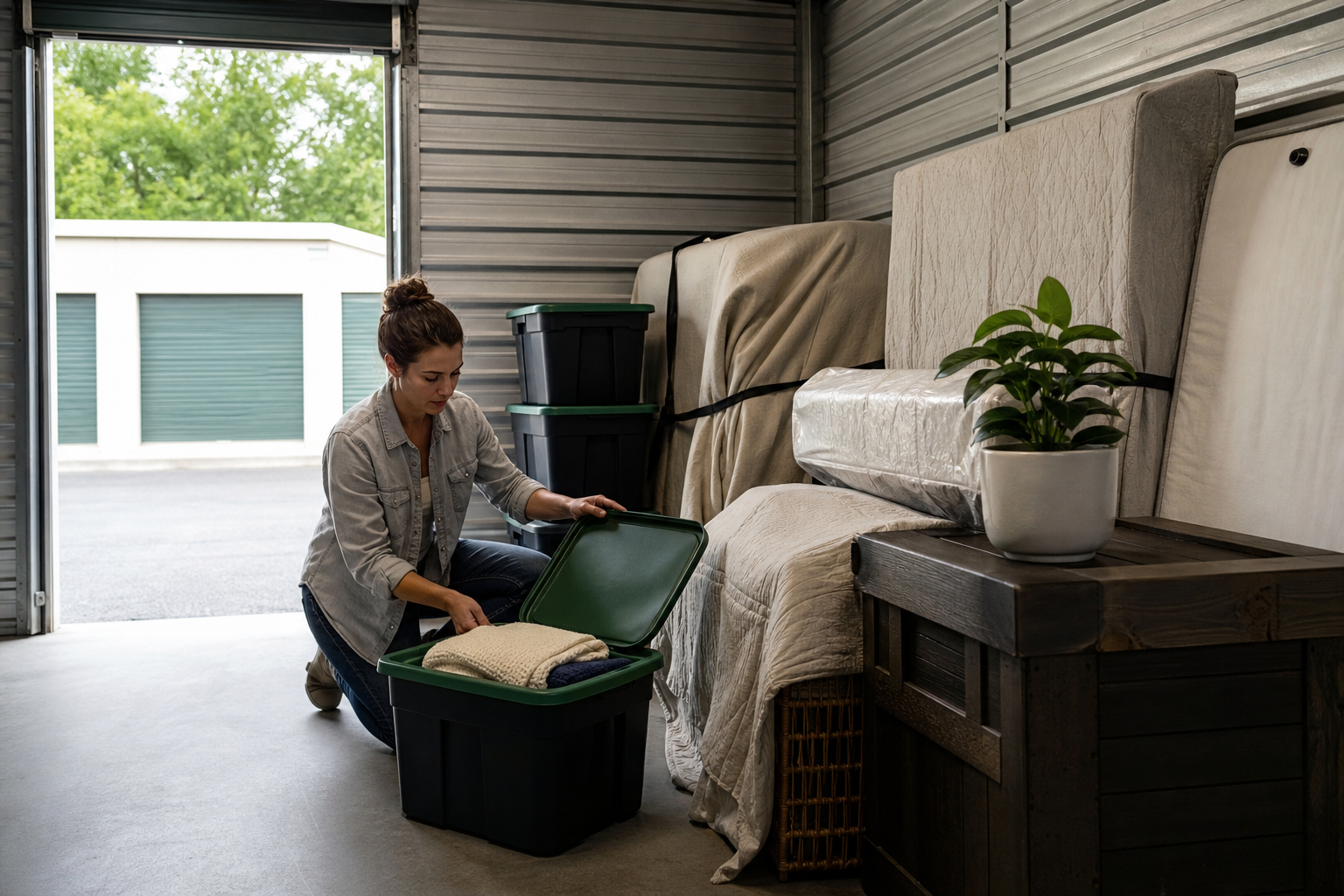
Storage numbers worth checking
Use these numbers as decision anchors before comparing facilities. The goal is not to guess a perfect unit — it is to compare the same details across options.
List largest items, box count, and aisle needs.
Use these as comparison anchors.
Monthly rate, promo length, required fees.
Drive-up convenience vs. indoor protection.
| Check | What to compare | Why it matters |
|---|---|---|
| 5×10 | Boxes, small bedroom, seasonal items | A small unit can save money if it truly fits |
| 10×10 | Apartment contents or household overflow | Often a safer middle option for mixed items |
| 10×20 | Multi-room moves or large equipment | More room can reduce loading frustration |
| Climate control | Sensitive vs. durable belongings | Arkansas heat and humidity change the risk |
StorageGuide verdict
Use the article as a decision filter: choose the smallest unit that comfortably fits your load, use climate control for wood, electronics, documents, photos, and fabrics, prioritize access that matches your real schedule, and compare regular rates and fees before trusting the cheapest promotion.
Storage FAQs
What size storage unit do I need for a one-bedroom apartment?
A 10×10 (about 100 sq ft) is the common pick for a one-bedroom apartment — enough for a mattress set, a sofa, a couple of appliances, and boxes stacked above. If you own oversized furniture or want to walk in and reach things, price a 10×15 before deciding.
How many boxes fit in a 10×10 unit?
If you stored nothing but medium boxes, a 10×10 can hold up to roughly 100. Once you add furniture and a mattress set, that drops to around 50–60 boxes stacked in the gaps. Size from your furniture first, then see how many boxes the leftover space and vertical height absorb.
Should I get climate control in Arkansas?
It depends on what you're storing. Arkansas summer heat and humidity are hard on wood furniture, upholstery, mattresses, electronics, photos, and documents, so those belong in a climate-controlled unit. Metal shelving, sealed totes of hardy goods, and outdoor gear are usually fine in a standard drive-up unit.
Is it better to size up or cram everything in?
Size up if your list sits at the top of a bracket or you'll need regular access. Cramming a unit wall to wall works only if you're loading once and never coming back. The next size often costs modestly more and saves you from re-renting or unstacking to reach anything.
What should I ask before renting?
Confirm the actual dimensions and ceiling height, the first-month total after fees and any required protection plan, the access hours, and whether the rental is month-to-month so you can downsize once boxes clear. Don't commit on the advertised rate alone.
Find a unit that fits — not one you'll overpay to fill
Compare nearby Arkansas storage options by size, access, and climate control, then match the unit to your measured items instead of guessing.