Storage Unit Cost in Arkansas: What Affects the Price?
Use this size guide to compare bulky furniture, box count, walkway space, climate-control needs, drive-up access, and the questions to ask before reserving a unit.

Match the unit to your bulky items and box count so you stop paying for empty air.
The fastest way to price a storage unit in Arkansas is to size it correctly, because you pay by the footprint whether you fill it or not. Start with your biggest items, add a rough box count, then decide whether you need walkway space, climate control, and drive-up access. This guide walks through how large items, box count, and access habits push you between common unit sizes, how climate control and fees affect the monthly price, and what to ask about access hours and terms before you sign.
What matters most
Use the article as a decision filter: choose the smallest unit that comfortably fits your load, use climate control for wood, electronics, documents, photos, and fabrics, prioritize access that matches your real schedule, and compare regular rates and fees before trusting the cheapest promotion.
Size around your bulky items, not your box count
Boxes are flexible — they stack, shift, and fill gaps. Your big pieces do not. A queen mattress, a full-size sofa, a refrigerator, or a washer and dryer set the floor plan, so measure those first with a tape and note the longest dimension of each. A sofa that will not turn a corner or a mattress that has to lie flat can force you into a wider unit even when your total volume is small. Once the large items have a home on your mental floor plan, boxes and totes fit into the space that is left over.
- Measure mattress, sofa, and appliances first
- Note which items cannot be turned or laid flat
- Let boxes fill the leftover space, not define it
Photograph each bulky item next to a tape measure before you shop. If your longest single piece is over 7 feet, skip the 5×10 and start your comparison at a 10×10 so you are not fighting the door width on move-in day.
Use common unit sizes as ballparks, not exact fits
Storage sizes are marketed in tidy numbers, but they map to rough amounts of stuff rather than a guaranteed fit. As a working guide, a 5×10 handles a studio's worth of furniture and boxes, a 10×10 covers roughly a one-bedroom, a 10×15 stretches to about two bedrooms, and a 10×20 approaches a three-bedroom home or a car. Treat these as planning ranges: your actual load depends on how much bulky furniture you have and how tightly you are willing to pack. If your inventory lands between two sizes, that is normal — the next two sections help you break the tie.
- 5×10: studio-scale furniture and boxes
- 10×10: roughly a one-bedroom
- 10×15: about two bedrooms
- 10×20: near a three-bedroom or a vehicle
Build a quick two-column list: bulky items in one, box count in the other. Roughly 40 to 50 medium boxes plus a bed and a couch usually signals a 10×10 rather than a 5×10 — a fast way to check yourself against the marketing labels.
Leave a walkway if you plan to visit
A unit packed wall-to-wall is cheaper on paper but useless if you need to reach the back. If you will rotate seasonal gear, pull business inventory, or grab a single box every few weeks, leave a 2-to-3-foot aisle down the center or along one side. That walkway effectively removes some usable capacity, so a tightly packed 10×10 and a walk-in 10×10 hold very different amounts. Renters who will not touch their unit until move-out can pack it dense and size down; frequent visitors should size up or choose a layout with clear access to the items they reach most.
- Frequent access: keep a center or side aisle
- Set-and-forget storage: pack dense and size down
- Put high-use items nearest the door
Decide your visit frequency before you rent, then place the things you will grab most near the door. If you expect to open the unit more than once a month, price the next size up against the hours you would waste unstacking — the wider unit often wins.
Price the next size up before forcing a tight fit
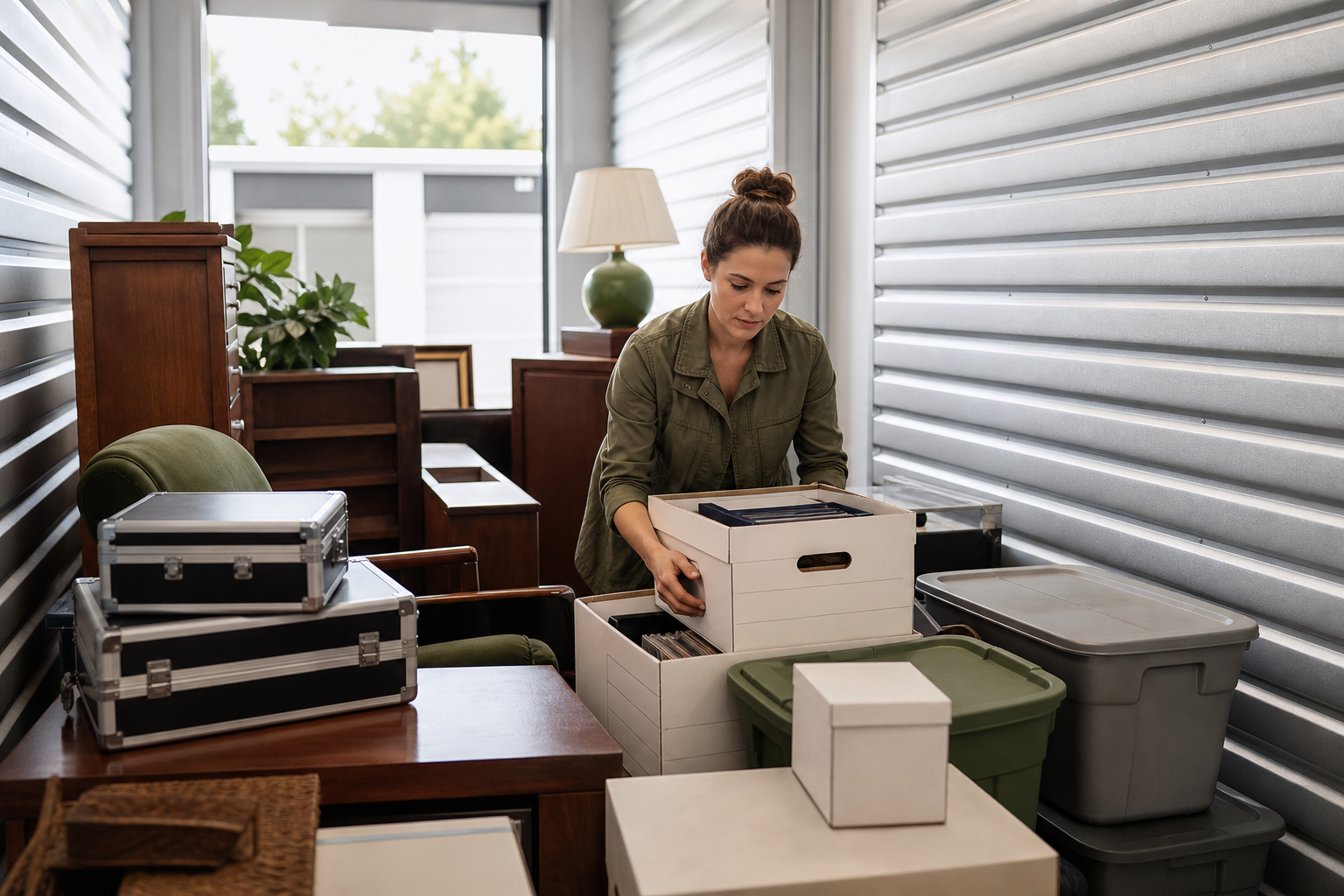
When your load sits right at the edge of a size, compare the monthly difference to the next unit up before you commit to a squeeze. The gap between a 10×10 and a 10×15 is often smaller than the cost of renting a second small unit later or damaging furniture you crammed in at odd angles. A tight fit also slows every visit and makes climate control less effective when air cannot move around your items. Weigh the real monthly difference — not the promo rate — against how much easier the larger unit makes packing, access, and protecting what is inside.
- Right-at-the-edge loads usually justify sizing up
- One unit beats two small units in most cases
- Loose packing helps climate control work
Ask each facility for the standard monthly rate after any promotion ends, then compare sizes on that number. If moving up a size costs less per month than the value of one damaged mattress or a second trip with a rented truck, take the bigger unit.
When climate control is worth the higher price
Climate control costs more per square foot, and in Arkansas it earns that premium for the right items. Summer heat and humidity can warp wood furniture, mildew upholstery and mattresses, cloud electronics, and buckle vinyl or photos in a standard metal unit. If you are storing a sofa, a mattress, instruments, documents, or anything with a screen through a hot, humid stretch, the climate-controlled rate is cheaper than replacing damaged belongings. Purely rugged items — tools, patio furniture, plastic totes of hardware — can usually ride out the season in a standard unit and save you money.
- Climate control: mattresses, upholstery, wood, electronics, paper
- Standard is fine: tools, hardware, plastic bins
- Split inventory rarely beats one right unit
Sort your inventory into 'heat and humidity sensitive' and 'rugged' before you price units. If more than a third of what you are storing falls in the sensitive column, book climate control for the whole unit rather than splitting your things across two spaces.
Check drive-up access, hours, and the fees behind the rate
Two units at the same headline price can cost very differently once you account for how you load and what is added on. Drive-up units let you pull a truck to the door and are ideal for heavy appliances and one big move, while indoor units usually mean carts, hallways, and elevators but often come with climate control. Then read the line items: administration fees, required insurance, lock purchase, and the rate that kicks in after the intro month all change your true monthly cost. Confirm gate and office hours match when you will actually visit, especially for a campus move-out or a weekend lake run.
- Drive-up: best for heavy items and single big moves
- Indoor: usually climate control, plan for carts and elevators
- Confirm gate/office hours match your visits
Get the all-in monthly number in writing — base rent plus insurance, admin, and any lock or gate fee — and confirm access hours before you reserve. If a lower base rate comes with tight daytime-only access, factor in the trips you cannot make on your schedule.
Quick summary
| Decision | What to check | Why it matters |
|---|---|---|
| Unit size | Longest bulky item plus rough box count | Big pieces set the footprint you pay for |
| Walkway | How often you will visit | An aisle removes usable space and can bump you up a size |
| Tight fit vs next size | Monthly gap on the post-promo rate | Sizing up often beats a second unit or damaged items |
| Climate control | Share of heat/humidity-sensitive items | Arkansas summers can ruin fabric, wood, and electronics |
| Access type | Drive-up vs indoor, gate hours | Determines loading effort and when you can get in |
| True cost | Admin, insurance, lock, after-promo rate | Fees and rate changes decide the real monthly price |

Storage numbers worth checking
Use these numbers as decision anchors before comparing facilities. The goal is not to guess a perfect unit — it is to compare the same details across options.
List largest items, box count, and aisle needs.
Use these as comparison anchors.
Monthly rate, promo length, required fees.
Drive-up convenience vs. indoor protection.
| Check | What to compare | Why it matters |
|---|---|---|
| 5×10 | Boxes, small bedroom, seasonal items | A small unit can save money if it truly fits |
| 10×10 | Apartment contents or household overflow | Often a safer middle option for mixed items |
| 10×20 | Multi-room moves or large equipment | More room can reduce loading frustration |
| Climate control | Sensitive vs. durable belongings | Arkansas heat and humidity change the risk |
StorageGuide verdict
Use the article as a decision filter: choose the smallest unit that comfortably fits your load, use climate control for wood, electronics, documents, photos, and fabrics, prioritize access that matches your real schedule, and compare regular rates and fees before trusting the cheapest promotion.
Storage FAQs
How do I choose between a 10×10 and a 10×15?
List your bulky pieces first — a mattress, sofa, appliances — then your box count. If the big items plus roughly two bedrooms' worth of boxes fill a 10×10 without an aisle, and you will visit often, compare the monthly difference to a 10×15 on the standard (post-promo) rate. The larger unit usually wins if it costs less than a second unit or damaged furniture.
Do I really need climate control in Arkansas?
For heat- and humidity-sensitive items, yes. Summer conditions can warp wood, mildew mattresses and upholstery, and harm electronics and paper in a standard metal unit. Rugged items like tools, hardware, and plastic totes are usually fine without it. Sort your inventory first — if a third or more is sensitive, book climate control for the whole unit.
What makes one unit cost more than another at the same size?
Climate control, indoor vs drive-up access, location, and add-on fees. Administration charges, required insurance, a lock purchase, and the rate that starts after the first-month promo all change your true monthly cost. Ask for the all-in number in writing before you reserve.
Is it cheaper to pack a small unit tightly or rent a bigger one?
It depends on how often you will visit. Set-and-forget storage can be packed dense in a smaller unit to save money. If you will pull items out regularly, a wall-to-wall unit wastes time and risks damage, so the modest cost of the next size up is often the better value.
How much walkway space should I leave?
About 2 to 3 feet is enough to walk in and reach the back. Frequent visitors should keep a center or side aisle and place high-use items near the door. If you will not open the unit until move-out, you can skip the aisle and size down.
Find the right-sized unit near you
Compare climate-controlled and drive-up units by size, access hours, and honest monthly terms so you rent the footprint that fits — not the empty space.