Drive-Up Storage Units in Arkansas
Use this guide to compare drive-up access, indoor hallways, loading distance, access hours, weather exposure, unit size, and the questions to ask before renting.
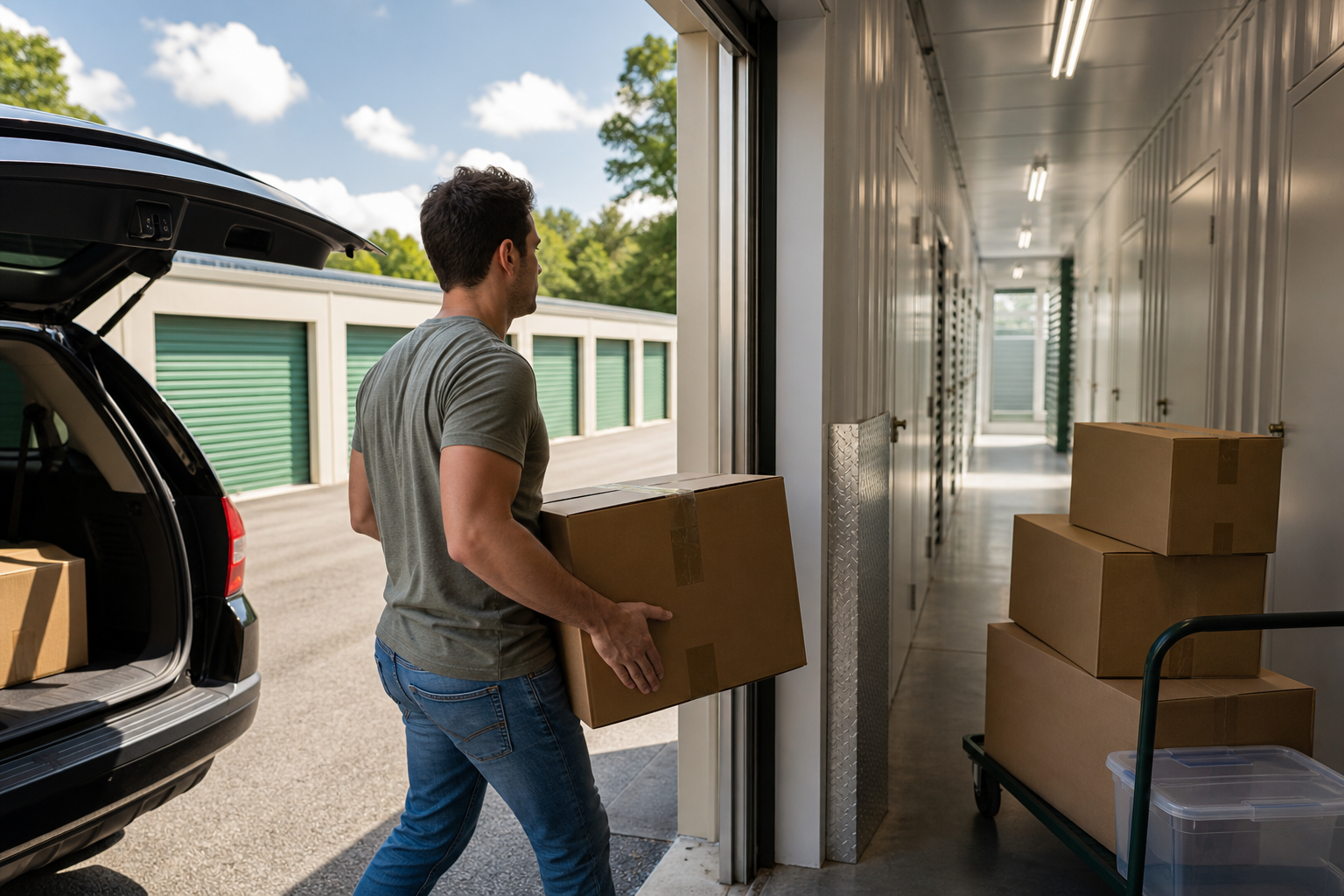
How to match ground-floor loading, climate control, and access hours to what you're actually storing
Drive-up storage lets you park at a roll-up door and load straight from the vehicle, which is a real advantage for heavy furniture, appliances, and any unit you'll visit often. But that ground-level convenience usually comes with less protection from Arkansas heat and humidity than an interior, climate-controlled space. This guide helps you compare unit size, climate control, drive-up vs. indoor access, price and fees, and access hours — plus the questions worth asking before you sign, so the door you rent actually matches your loading path and what's going inside it.
What matters most
Use the article as a decision filter: choose the smallest unit that comfortably fits your load, use climate control for wood, electronics, documents, photos, and fabrics, prioritize access that matches your real schedule, and compare regular rates and fees before trusting the cheapest promotion.
Use drive-up access for heavy or repeated loading
The whole point of a drive-up unit is eliminating the carry. You back the vehicle to a ground-level roll-up door and move a sofa, mattress, or stack of heavy boxes in a few steps instead of down a corridor and around a corner. That matters most in two situations: when individual items are awkward and heavy, and when you'll be in and out repeatedly. A one-time storage drop of light bins won't feel the difference, but a full apartment move, an appliance you're storing between homes, or a business restocking inventory weekly will. Fewer steps per item also means fewer chances to drop something or scrape a doorway.
Count your trips, not just your stuff. If you expect to visit more than twice a month, the time saved at a drive-up door usually outweighs a slightly lower interior rate — flip the math the other way for a set-it-and-forget-it load.
Compare loading distance against protection needs
Every step you save at the door is a step away from a sealed interior climate. Interior and climate-controlled units sit behind more building envelope, so they hold steadier temperature and humidity; drive-up units share a wall with the outdoors and swing more with the weather. The right call depends on the item, not the label. A metal filing cabinet, patio furniture, or plastic totes shrug off a hot afternoon. A leather sofa, a solid-wood dresser, a mattress, or anything electronic does not — those absorb humidity, warp, or grow mildew when they cook through an Arkansas summer. Sort your load into 'tough' and 'sensitive' before you choose the door.
- Fine for drive-up: metal, plastic totes, tools, patio and lawn gear, most appliances short-term
- Better indoors: wood furniture, mattresses, electronics, documents, photos, instruments
Do a quick two-pile test at home: if an item would survive a day in your closed garage in July, drive-up is fine. If it wouldn't, that item belongs in climate control even if the rest of your load doesn't.
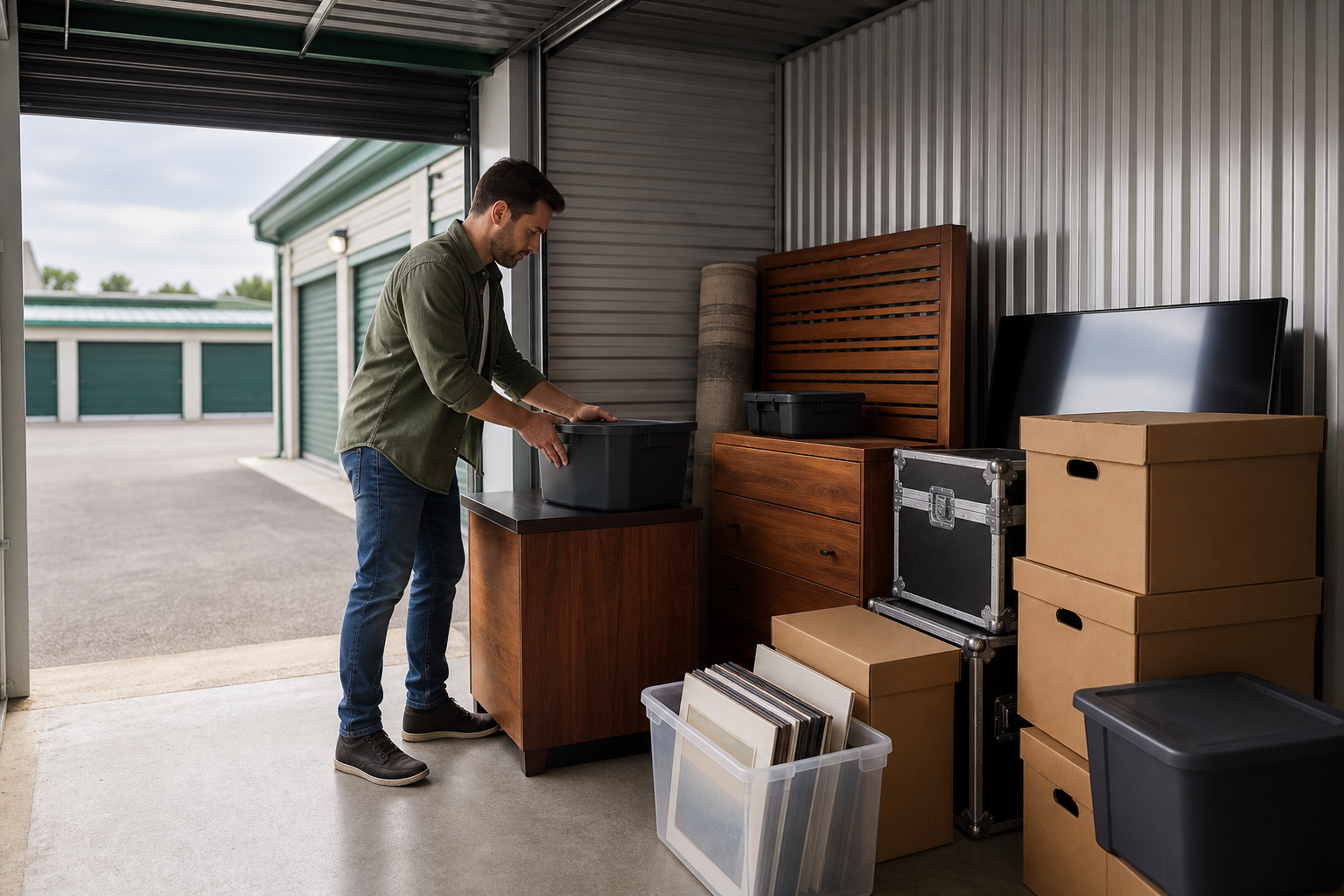
Check access hours against your actual schedule
A drive-up unit is only convenient if you can reach it when you're actually free. Facilities vary widely: some offer 24-hour gate access, others limit entry to office or daytime hours, and gate codes, after-hours policies, and holiday closures all differ. If you load after work, on weekends, or on a tight moving-day window, confirm the real hours — not just 'open daily.' Also picture the drive itself: the access lane needs to be wide enough for your truck or trailer to pull up and, importantly, back out or turn around without a three-point struggle between rows of doors.
Use indoor access when weather protection matters more than speed, especially for wood, electronics, documents, or fabric.
Choose indoor or climate-controlled access when weather protection matters more
Sometimes the smart move is to give up the drive-up door. If you're storing sensitive belongings through a full Arkansas summer, or leaving a load untouched for months, the steadier interior environment protects your stuff better than door-side parking ever could. Indoor units also tend to add a layer of security by keeping your belongings behind an additional locked building, and they shield everything from rain blowing in during a load-out. You'll carry items a bit farther — so bring a dolly and plan for it — but for wood, upholstery, electronics, and anything you'd hate to lose to mildew, that's a fair trade. Some renters even split the difference: drive-up for the tough, bulky items and a smaller climate-controlled unit for the sensitive few.
If most of your load is tough but a handful of items are sensitive, don't oversize a climate-controlled unit for everything. Rent the drive-up space you need and add the smallest interior unit for the fragile pieces — it's often cheaper than one big climate-controlled unit.
Quick summary
| Decision | What to check | Why it matters |
|---|---|---|
| Access type | Whether you can back a vehicle to the door | Drive-up removes the hallway carry for heavy or repeated loads |
| Climate control | What's sensitive to heat and humidity | Wood, electronics, and upholstery degrade in an exposed unit over an Arkansas summer |
| Unit size | Room to reach the back, not just fit the pile | The smallest unit that fits comfortably saves money without trapping items behind others |
| Access hours | Gate hours vs. office hours, holiday closures | Convenience disappears if you can't reach the unit when you're free |
| Lane and door | Lane width and roll-up door dimensions | A tight lane or narrow door slows a moving-day unload and risks damage |
| Price and fees | Full monthly cost, admin and lock fees, promo terms | The cheapest teaser rate can cost more once fees and access limits are added |
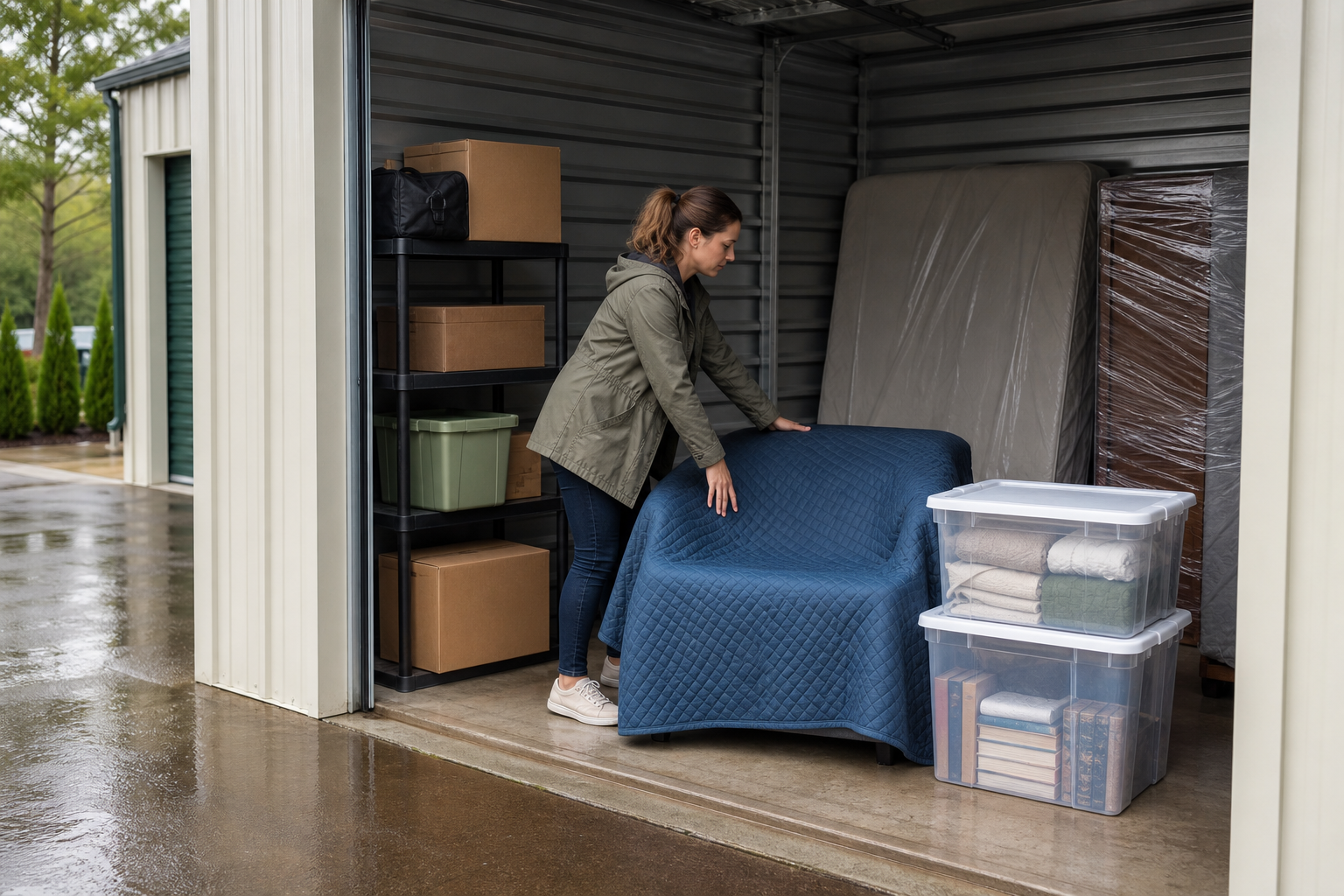
Storage numbers worth checking
Use these numbers as decision anchors before comparing facilities. The goal is not to guess a perfect unit — it is to compare the same details across options.
List largest items, box count, and aisle needs.
Use these as comparison anchors.
Monthly rate, promo length, required fees.
Drive-up convenience vs. indoor protection.
| Check | What to compare | Why it matters |
|---|---|---|
| 5×10 | Boxes, small bedroom, seasonal items | A small unit can save money if it truly fits |
| 10×10 | Apartment contents or household overflow | Often a safer middle option for mixed items |
| 10×20 | Multi-room moves or large equipment | More room can reduce loading frustration |
| Climate control | Sensitive vs. durable belongings | Arkansas heat and humidity change the risk |
StorageGuide verdict
Use the article as a decision filter: choose the smallest unit that comfortably fits your load, use climate control for wood, electronics, documents, photos, and fabrics, prioritize access that matches your real schedule, and compare regular rates and fees before trusting the cheapest promotion.
Storage FAQs
Is a drive-up unit worth it if I'm only storing a few boxes?
Usually not on its own. Drive-up access pays off for heavy, bulky, or frequently accessed loads. For a handful of light boxes you rarely touch, a smaller interior unit is often cheaper and offers steadier protection — unless the boxes are heavy enough that the door-side loading genuinely saves your back.
Can I store furniture in a drive-up unit through an Arkansas summer?
You can, but be selective. Metal and plastic items are fine. Solid-wood furniture, upholstered pieces, and mattresses are vulnerable to warping and mildew in prolonged heat and humidity, so those are better in climate-controlled storage if they'll sit through the summer.
What should I confirm about access before renting a drive-up unit?
Ask whether gate access hours differ from office hours, whether after-hours and holiday access is allowed, how wide the access lanes are, and the roll-up door dimensions. Also get the full monthly price including any admin, lock, or insurance fees so a low advertised rate doesn't surprise you later.
Drive-up or indoor — how do I decide?
Sort your load into tough items and sensitive items. If most of it is tough and you'll visit often, choose drive-up. If it's sensitive or stored long-term, choose climate-controlled interior. When it's a mix, renting a drive-up unit plus a small climate-controlled unit for the fragile pieces is often the smartest split.
Find drive-up storage that fits your load
Compare drive-up and climate-controlled units by size, access hours, and price so the door you rent matches your moving-day path and what's going inside.