10×10 vs 10×20 Storage Units
Use this size guide to compare bulky furniture, box count, walkway space, climate-control needs, drive-up access, and the questions to ask before reserving a unit.

How to pick between two of the most-rented sizes.
10×10 and 10×20 are some of the most common unit sizes. This guide helps you compare the two and choose the right size for you.
What matters most
Use the article as a decision filter: choose the smallest unit that comfortably fits your load, use climate control for wood, electronics, documents, photos, and fabrics, prioritize access that matches your real schedule, and compare regular rates and fees before trusting the cheapest promotion.
Count your bulky items before you count boxes
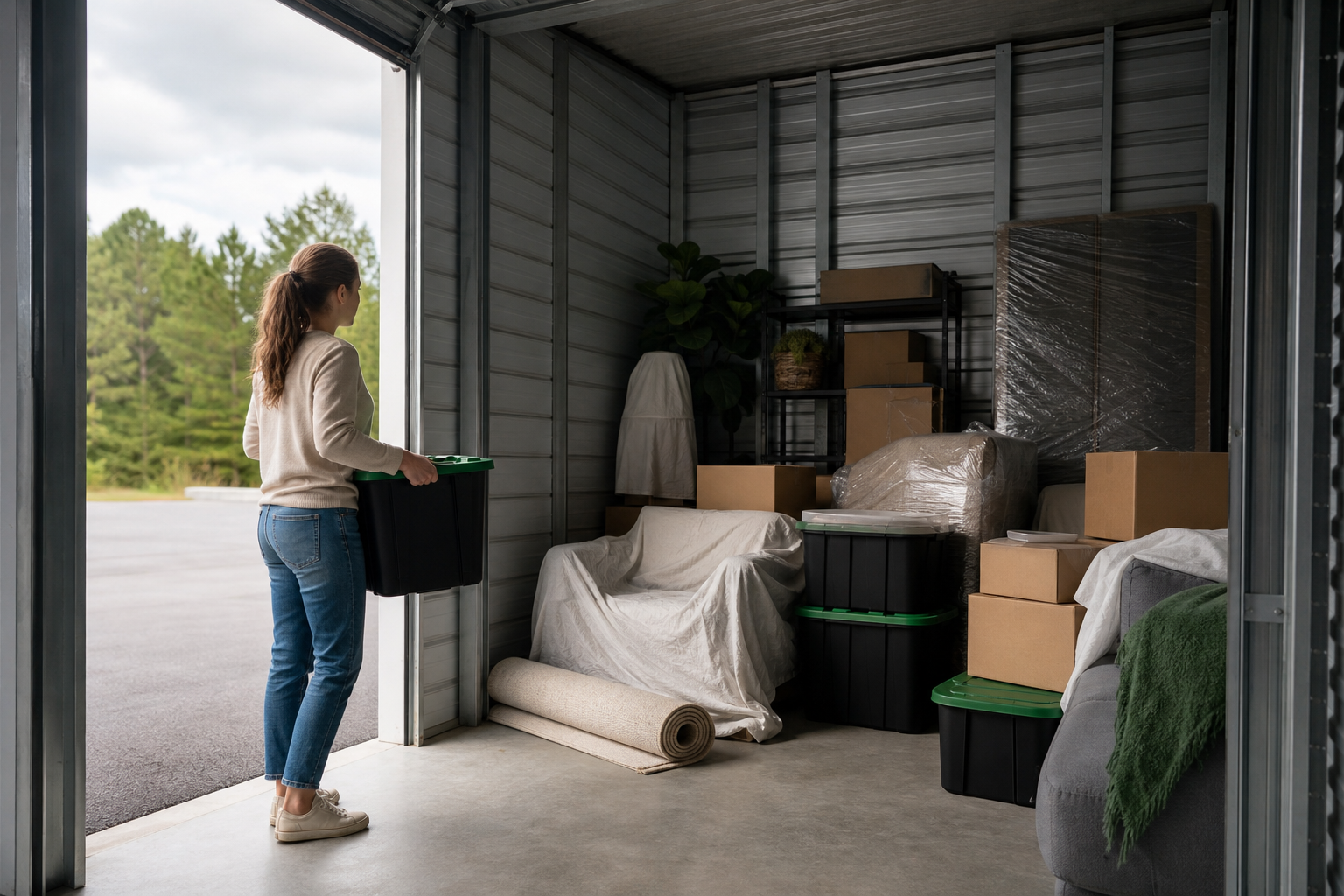
Boxes flex to fill whatever space is left, so they're the wrong thing to plan around. Your big, rigid items decide the size. A 10×10 comfortably takes a queen mattress and frame, a sofa, a dresser, and a few appliances stacked or lined along one wall. Once you add a second mattress set, a dining table, a washer and dryer, and a fridge all at once, those pieces start fighting for floor space and you're into 10×20 territory. Walk your home and list only the items you can't fold or flatten — that list, not the box pile, tells you which size to compare.
- List rigid items first: mattress, sofa, fridge, washer/dryer, table, shelving
- Treat boxes as filler for gaps and vertical space
- Two large soft-goods items on one wall usually signals the next size up
Measure your longest single item (usually a sofa or mattress) with a tape before you rent. A 10-foot wall swallows an 84-inch sofa, but two long pieces on the same wall won't both fit — that's often the real trigger for going to a 10×20.
Use 10×10 and 10×20 as ranges, not exact ceilings
Advertised sizes describe floor area, but your real capacity is cubic feet. A 10×10 with 8-foot ceilings gives you around 800 cubic feet; a 10×20 roughly doubles that to about 1,600. That means a 10×10 leans toward a one-bedroom apartment's contents, while a 10×20 lands near a two-to-three-bedroom home or a one-car garage. Think of each size as a range you can stretch upward by stacking, or shrink by leaving aisles. If your load sits at the top edge of a 10×10, don't force it — a packed-to-the-door unit is miserable to access and easy to damage.
- 10×10 ≈ one-bedroom apartment contents
- 10×20 ≈ 2–3 bedroom home or one-car garage
- Cubic feet, not square feet, decides what really fits
Stack vertically only where it's safe: heavy and sturdy on the bottom, light and fragile on top, nothing leaning on appliance doors. Gaining a size's worth of room by going tall works better for sealed boxes than for furniture you'll need to pull out.
Leave a walkway if you'll visit the unit
The size that fits your stuff on move-in day isn't always the size that works over months of visits. If you'll pull out seasonal gear, swap furniture, or grab boxes on a rotation, you need a center aisle — and an aisle eats floor space. A 10×10 packed wall-to-wall gives you no room to step inside; the same load in a 10×20 leaves a clear path to the back. Renters who store and forget can size tight; renters who visit monthly should size for the walkway. This matters more in Arkansas summers, when digging through a sealed unit in July heat is its own punishment.
- Store-and-forget loads can size tight
- Frequent-access loads need a permanent aisle
- Keep seasonal and frequently used items near the door
If you know you'll access items often, plan the unit like a room with a floor plan: frequently used boxes near the door, long-term items to the back, and a 2–3 foot center aisle you never fill. That single aisle is often what pushes a borderline load from a 10×10 to a 10×20.

Compare the next size up before forcing a tight fit
A 10×10 costs less per month than a 10×20, and paying for empty space is a real waste — but so is renting too small and cramming. Before you lock in a tight 10×10, price the 10×20 at the same facility and weigh the difference against the aggravation of a jammed unit, likely damage, and a mid-lease upgrade if it doesn't work. If the step-up cost is modest and your load is right at the 10×10 limit, the larger unit usually pays for itself in easier access and fewer dings. Look at the ongoing monthly rate and any fees, not just a discounted first month.
- Price both sizes at the same facility side by side
- Factor in damage risk and a possible mid-lease upgrade
- Compare true monthly cost, not the first-month special
Get both sizes' full monthly rate in writing, including administrative and insurance fees, then divide by the months you expect to store. A borderline 10×10 that forces a move to a 10×20 in month three often costs more than just starting with the 10×20.
Does either size change your climate-control call?
Unit size and climate control are separate decisions, but they interact once you're choosing between these two. A 10×20 often holds a bigger, more valuable mix — wood furniture, upholstered pieces, electronics, appliances, and paper records — which raises the stakes for temperature and humidity. Arkansas summers bring sustained heat and moisture that can warp wood, mildew fabric, and stress electronics in a standard drive-up unit. If your 10×20 is mostly a car, tools, and sealed plastic bins, standard is usually fine; if it's a household's worth of sensitive belongings, climate control earns its keep regardless of which size you land on.
- Size and climate control are independent choices
- Bigger loads tend to include more sensitive items
- Sealed bins and tools tolerate standard units better than wood and electronics
Sort your list into 'tough' (metal, plastic, outdoor gear) and 'sensitive' (wood, leather, electronics, photos, documents). If the sensitive pile is more than a few boxes, choose climate control even if it nudges you toward a slightly smaller unit to stay on budget.
Drive-up vs. indoor at each size, and what to ask
How you'll load matters as much as capacity. A drive-up 10×10 or 10×20 lets you back a vehicle to the door — ideal for heavy appliances, a mattress, and anything you don't want to carry far. Indoor units add a layer of protection and are more commonly climate-controlled, but you'll move items through hallways and sometimes an elevator, which slows a big 10×20 move. Match the access to your load: a garage-style haul favors drive-up, while a sensitive household load may be worth the indoor walk. Confirm the details before you sign so move-in day holds no surprises.
- Drive-up suits appliances and heavy furniture
- Indoor adds protection and is more often climate-controlled
- Confirm access hours and elevator access for large 10×20 moves
Before renting, ask three things: what are the access hours, is the unit drive-up or indoor (and if indoor, is there an elevator), and what's the full monthly rate after any promo ends. The answers often decide between two otherwise-identical sizes.
Quick summary
| Decision | What to check | Why it matters |
|---|---|---|
| How much fits | 10×10 ≈ 1-bedroom; 10×20 ≈ 2–3 bedroom or one-car garage | Sizing by home type gets you close before you measure |
| Bulky items | Whether appliances + a full living room + a bedroom overlap on the floor | Overlapping big items is the main reason to jump to a 10×20 |
| Walkway | Do you need a center aisle for regular visits? | An aisle can push a borderline load into the larger size |
| Climate control | How many wood, leather, electronic, or paper items you're storing | Arkansas heat and humidity can damage sensitive belongings in standard units |
| Access type | Drive-up vs. indoor, elevator, and access hours | Affects move-in effort and daily access, especially for a large load |
| True cost | Ongoing monthly rate plus fees at both sizes | A tight 10×10 that forces an upgrade can cost more than starting at 10×20 |
Storage numbers worth checking
Use these numbers as decision anchors before comparing facilities. The goal is not to guess a perfect unit — it is to compare the same details across options.
List largest items, box count, and aisle needs.
Use these as comparison anchors.
Monthly rate, promo length, required fees.
Drive-up convenience vs. indoor protection.
| Check | What to compare | Why it matters |
|---|---|---|
| 5×10 | Boxes, small bedroom, seasonal items | A small unit can save money if it truly fits |
| 10×10 | Apartment contents or household overflow | Often a safer middle option for mixed items |
| 10×20 | Multi-room moves or large equipment | More room can reduce loading frustration |
| Climate control | Sensitive vs. durable belongings | Arkansas heat and humidity change the risk |
StorageGuide verdict
Use the article as a decision filter: choose the smallest unit that comfortably fits your load, use climate control for wood, electronics, documents, photos, and fabrics, prioritize access that matches your real schedule, and compare regular rates and fees before trusting the cheapest promotion.
Storage FAQs
Is a 10×20 just double a 10×10?
Close — a 10×20 has twice the floor area (200 vs 100 sq ft) and roughly twice the usable volume (about 1,600 vs 800 cubic feet with standard 8-foot ceilings). The practical difference is that a 10×20 gives you room for big items plus a walkway, while a fully loaded 10×10 leaves no aisle.
Will a one-bedroom apartment fit in a 10×10?
Usually yes. A 10×10 typically holds a queen bed, a sofa, a dresser, a few appliances, and a stack of boxes. If you're adding a second bedroom's furniture, a dining set, and a full appliance lineup at the same time, compare the 10×20.
Can I fit a car in a 10×10?
No. Most standard cars and SUVs need a 10×20, which is comparable to a one-car garage. Larger trucks and vans may need a 10×25 or bigger. A 10×10 is too short for a full vehicle.
Do I need climate control for either size?
It depends on what you store, not the size itself. Wood furniture, leather, electronics, photos, and documents do best with climate control, especially through Arkansas summers when heat and humidity can warp and mildew belongings. Tools, metal, and sealed plastic bins tolerate standard units.
How do I avoid paying for empty space?
Size to your bulky items plus a walkway if you'll visit, then fill remaining space with stackable boxes. If your load only half-fills a 10×20, drop to a 10×10. If a 10×10 leaves you cramming with no aisle, step up.
Compare 10×10 and 10×20 units near you
See both sizes side by side at Arkansas facilities, check access type and hours, and pick the fit that matches your bulky items — not just the cheapest promo.