Climate-Controlled vs Standard Storage in Arkansas
Use this guide to compare Arkansas heat and humidity, storage length, sensitive belongings, unit size, indoor access, price tradeoffs, and what to ask before renting climate-controlled storage.

When the extra cost pays off — and when standard storage is the smarter buy
Climate control is worth paying for when what you're storing can warp, crack, mold, or fail in Arkansas summer heat — wood, electronics, documents, photos, and fabric. This guide compares the two on the things you'll actually decide on: which items react to heat, how long you're storing through hot months, drive-up vs indoor access, price and fees, access hours, and how to pack so the protection actually works. If you're storing tools, patio furniture, or a lawn mower for a few weeks, standard is usually fine.
What matters most
Use the article as a decision filter: choose the smallest unit that comfortably fits your load, use climate control for wood, electronics, documents, photos, and fabrics, prioritize access that matches your real schedule, and compare regular rates and fees before trusting the cheapest promotion.
The items most likely to react to heat and humidity
Your inventory decides this comparison before price ever enters the picture. Climate-controlled units hold a steady environment that protects sensitive belongings, and the items that benefit most are consistent across the industry: wood furniture that warps and cracks, electronics that corrode, and photos, documents, and artwork that curl or stick together. Fabric, leather, and upholstery are vulnerable to mildew when humidity climbs. Standard units, by contrast, breathe with the weather — fine for a metal shelving rack or a push mower, risky for a veneer dresser or a box of family photos. Walk your load item by item and sort it into 'reacts to heat/moisture' and 'shrugs it off.' If the sensitive pile is more than a box or two, the comparison is effectively settled.
- Warp/crack risk: solid and veneer wood, musical instruments
- Corrosion risk: electronics, appliances with circuit boards
- Mold/mildew risk: fabric, upholstery, leather, paper, photos
- Low risk: metal tools, plastic bins, patio and garden gear
Do a two-pile sort on the floor before you rent: sensitive on the left, durable on the right. If the sensitive pile fits in a couple of bins, rent standard and store those few bins with a relative instead of paying a climate premium on a whole unit.
Use climate control when storage runs through the hot months
Length of stay changes the answer even for identical items. A sealed unit in Arkansas can run far hotter than the outdoor air on a July afternoon, and it's the sustained heat plus humidity over weeks — not a single hot day — that warps wood joints and grows mildew on fabric. A two-week stint in October is low-stakes; the same items sitting from May through September are exposed to the worst of the season. Think in terms of which months your belongings will actually be inside. If your rental window includes June, July, or August, weight the decision toward climate control. If you're bridging a short move outside peak summer, standard storage carries much less risk for the same contents.
Set a mental threshold: if the stay spans two or more of the hottest months (roughly June–August), default to climate control regardless of item type. Below that, decide on the items alone.
Pack sensitive items so the climate control actually works
Paying for a stable environment doesn't help if your packing traps moisture or blocks airflow. Climate control manages the room; your packing manages each item. Use breathable furniture covers instead of wrapping wood in plastic that seals in condensation. Store documents and photos in sturdy, closable bins rather than cardboard, which absorbs humidity and collapses. Keep everything off the slab with pallets or boards so nothing wicks up moisture from the floor. Leave narrow gaps between large pieces so conditioned air can circulate rather than sitting stagnant against a dresser back. Good packing is what turns a climate-controlled unit from a nice idea into real protection — and it's also what makes standard storage survivable for borderline items on a short stay.
- Breathable covers on wood and upholstery, not sealed plastic
- Rigid, lidded bins for documents and photos
- Pallets or boards under everything on the concrete
- Airflow gaps between large furniture pieces
Toss a few silica gel packs or a small moisture absorber into bins of electronics and paper. It's a cheap insurance layer that catches the humidity that sneaks in every time the door opens.
Drive-up standard vs indoor climate: the access tradeoff
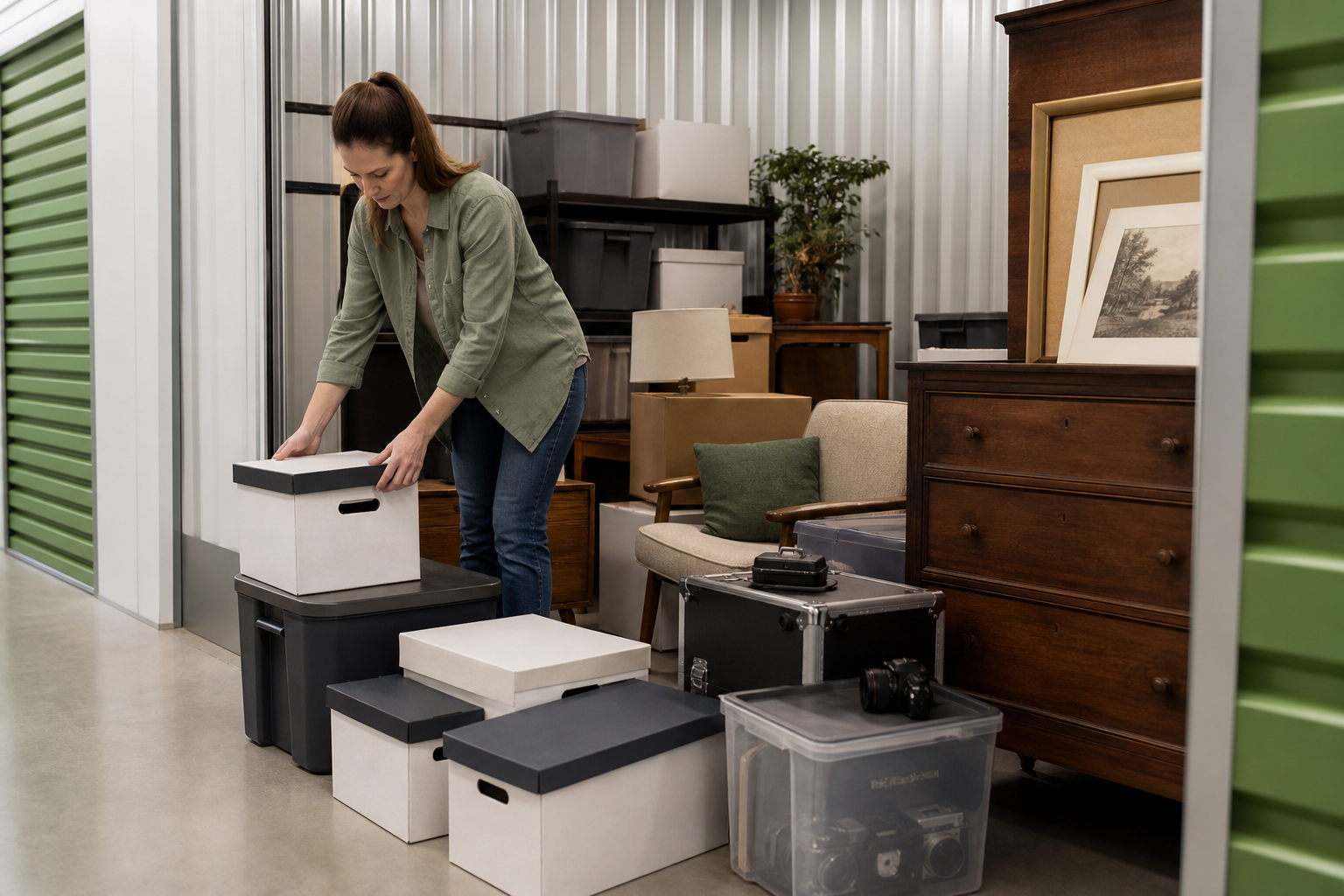
The two options usually differ in how you get to your stuff, and that matters for heavy or frequent loads. Standard units are often drive-up: you back a truck to the door and carry items a few feet, which is a real advantage for appliances, mattresses, and anything you'll access often. Climate-controlled units are typically indoors, reached through building doors and sometimes a hallway or elevator, which adds a few minutes to every visit but keeps the corridor conditioned too. If you're storing sensitive items you rarely touch — off-season photos, stored furniture — the indoor walk is a non-issue. If you're cycling business inventory or gear in and out weekly, weigh whether the climate benefit is worth losing drive-up convenience, and check access hours before you commit. In Arkansas, the practical question is usually not just temperature; it is how long the item will sit through heat and humidity before you need it again.
If you need both climate protection and frequent access, ask specifically for a ground-floor climate unit near an entrance. It splits the difference and spares you an elevator trip on every load.
Compare climate control by unit size, cost, and availability
Climate control adds to the monthly rate, and that premium scales with square footage — so the size you rent affects how much the upgrade costs. This is where choosing the smallest unit that comfortably fits pays off twice: you save on base rent and you shrink the climate surcharge. Climate-controlled units are also a smaller share of most facilities' inventory, so popular sizes can sell out ahead of standard ones during peak moving season. Don't compare on the promotional first month alone — look at the ongoing rate, any administrative or insurance fees, and whether the price holds after the intro period. A slightly smaller climate unit you pack efficiently often beats an oversized standard unit that quietly ruins what's inside. In Arkansas, the practical question is usually not just temperature; it is how long the item will sit through heat and humidity before you need it again.
- Right-size first — a smaller climate unit costs less than an oversized one
- Compare ongoing rates, not just the first-month promo
- Ask about admin fees and required insurance
- Reserve climate sizes early in the moving season
Price the exact same size in both formats at the facilities on your shortlist, then multiply the difference by your expected months. Seeing the total premium — not the monthly one — makes the worth-it call obvious.
Quick summary
| Decision | What to check | Why it matters |
|---|---|---|
| What you're storing | Is any of it wood, electronics, paper, photos, or fabric? | Sensitive items warp, corrode, or mold in an unconditioned unit |
| How long | Does the stay cover June–August? | Sustained summer heat and humidity, not a single hot day, causes damage |
| Access needs | Drive-up convenience vs indoor climate entry | Frequent, heavy loads favor drive-up; rarely-touched sensitive goods favor indoor |
| Size | Smallest unit that comfortably fits | Climate surcharge scales with square footage |
| Total cost | Ongoing rate + fees, not just first-month promo | Intro pricing hides the real monthly cost and the climate premium |
Storage numbers worth checking
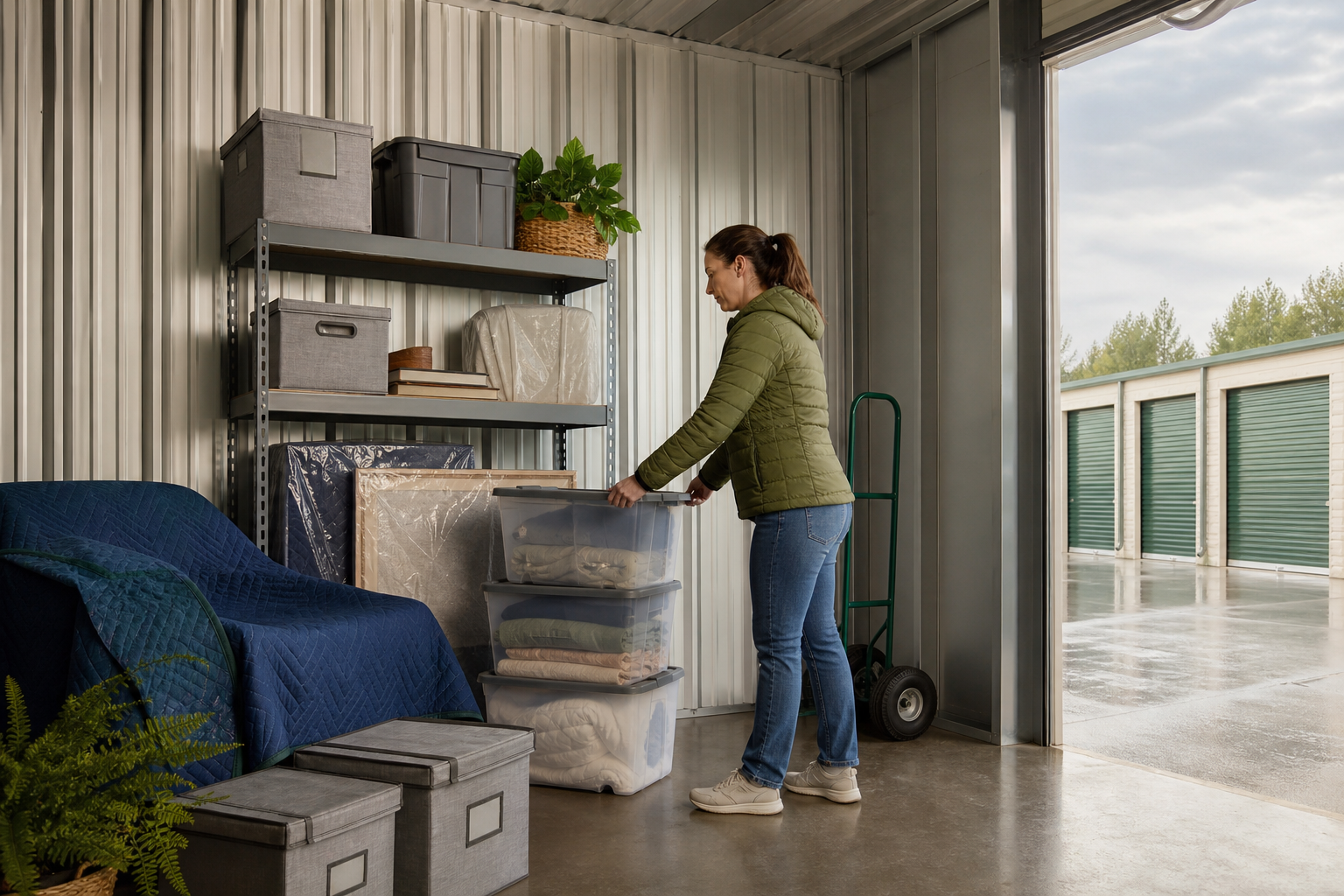
Use these numbers as decision anchors before comparing facilities. The goal is not to guess a perfect unit — it is to compare the same details across options.
List largest items, box count, and aisle needs.
Use these as comparison anchors.
Monthly rate, promo length, required fees.
Drive-up convenience vs. indoor protection.
| Check | What to compare | Why it matters |
|---|---|---|
| 5×10 | Boxes, small bedroom, seasonal items | A small unit can save money if it truly fits |
| 10×10 | Apartment contents or household overflow | Often a safer middle option for mixed items |
| 10×20 | Multi-room moves or large equipment | More room can reduce loading frustration |
| Climate control | Sensitive vs. durable belongings | Arkansas heat and humidity change the risk |
StorageGuide verdict
Use the article as a decision filter: choose the smallest unit that comfortably fits your load, use climate control for wood, electronics, documents, photos, and fabrics, prioritize access that matches your real schedule, and compare regular rates and fees before trusting the cheapest promotion.
Storage FAQs
What temperature do climate-controlled units actually hold?
Most facilities target a range of about 55 to 80 degrees and also help balance humidity year-round. That band is chosen specifically to keep temperature-sensitive belongings stable through both summer heat and winter cold.
Is climate control worth it for just a couple of weeks?
Usually not, unless you're storing genuinely fragile items during the hottest months. A short stay in spring or fall exposes belongings to far less sustained heat and humidity, so well-packed standard storage often does the job for less.
Which items really need climate control in Arkansas?
Wood furniture, electronics, photos, documents, artwork, musical instruments, and fabric or leather are the usual candidates because they warp, corrode, or grow mildew in heat and humidity. Metal tools, plastic bins, and patio gear generally do fine in standard units.
Can good packing replace climate control?
It can narrow the gap for borderline items on short stays, but it can't replicate a stable temperature over a full summer. Breathable covers, rigid bins, off-floor storage, and moisture absorbers help, but truly sensitive items stored long-term still need a conditioned space.
Do I lose drive-up access with climate control?
Often, yes — climate units are typically indoors and reached through building doors, while standard units are frequently drive-up. If you need both, ask for a ground-floor climate unit near an entrance to keep loading manageable.
Compare climate-controlled and standard units near you
Match the unit type to what you're storing and how long it'll sit. Use the storage finder to see sizes, access options, and current availability in your Arkansas town.