8 Storage Unit Organization Ideas That Actually Help
Use this size guide to compare bulky furniture, box count, walkway space, climate-control needs, drive-up access, and the questions to ask before reserving a unit.

Size your unit around your biggest item and your box count — not a guessed square footage
The fastest way to choose a storage unit size is to start with your largest item, then add furniture, then count boxes — in that order. This guide walks through eight organization moves that turn a vague 'how big do I need?' into a confident pick between common Arkansas unit sizes. Along the way it covers when climate control is worth it for heat- and humidity-sensitive belongings, whether drive-up or indoor access fits how you'll load and visit, how to read price and fees without getting surprised, what access hours actually matter for your schedule, and the questions to ask before you sign.
What matters most
Use the article as a decision filter: choose the smallest unit that comfortably fits your load, use climate control for wood, electronics, documents, photos, and fabrics, prioritize access that matches your real schedule, and compare regular rates and fees before trusting the cheapest promotion.
#1Measure your largest item before anything else
The single item that decides your unit size is almost never a box — it's a mattress, a sofa, or a full-size appliance. A king mattress needs about 76 inches of wall or floor length; a three-seat sofa runs 84 to 90 inches. If your biggest piece won't fit standing or laid flat inside a footprint, no amount of clever box stacking rescues that unit. Pull out a measuring tape and write down the length, width, and height of your top three largest items first.
- Measure length, width, and height
- Note which pieces can stand vertically
- Record the top three biggest items
If your largest item can stand on end (mattresses and some sofas can), you may drop a whole size class — measure the vertical clearance too, not just floor space.
#2Count boxes only after furniture and appliances are listed
Boxes are flexible; furniture is not. If you total boxes first, you'll pick a size around a number that shifts every time you repack. List every large item, sketch how those pieces sit in the unit, and only then estimate boxes to fill the gaps and go on top. A stack of 20 medium boxes takes up far less real floor space than people assume once the furniture defines the layout.
- Furniture footprint first
- Boxes fill gaps and stack up
- Estimate by volume, not count
Convert boxes to a rough cubic-foot count rather than a box count — 15 large boxes at ~4.5 cu ft each is close to 70 cu ft, which is easier to picture against a unit's volume than 'a bunch of boxes.'
#3Leave a walkway if you'll visit during storage
A unit packed wall to wall is cheapest per cubic foot but useless if you need the winter clothes buried in the back in July. If you plan to swap seasonal gear, grab tools, or rotate anything, keep a 24-to-30-inch aisle down one side and put frequently accessed items near the door. That walkway effectively costs you one size class — budget for it up front instead of realizing later you can't reach anything.
- Aisle down one side
- Frequent items near the door
- Plan the walkway into the size
Label boxes on the side facing the aisle, not the top — you'll be reading them at eye level from a standing walkway, not looking down at a floor-to-ceiling stack.
#4Choose a 5×10 for compact apartment or dorm overflow
A 5×10 (50 square feet) is roughly a large walk-in closet and handles a studio, a dorm, or the overflow from a one-bedroom: a mattress set on edge, a small dresser, a few chairs, and a modest box stack. It's the right call for an Arkansas campus move-out where you're storing a semester's worth of stuff, not a whole household. Go bigger only if a full-size sofa or major appliance is in the mix.
- Mattress on edge
- Small dresser and chairs
- Modest box stack
Compare the price jump to the next size up before forcing a tight fit; the easier move-in can be worth the difference.
#5Step up to a 10×10 when furniture starts to dominate
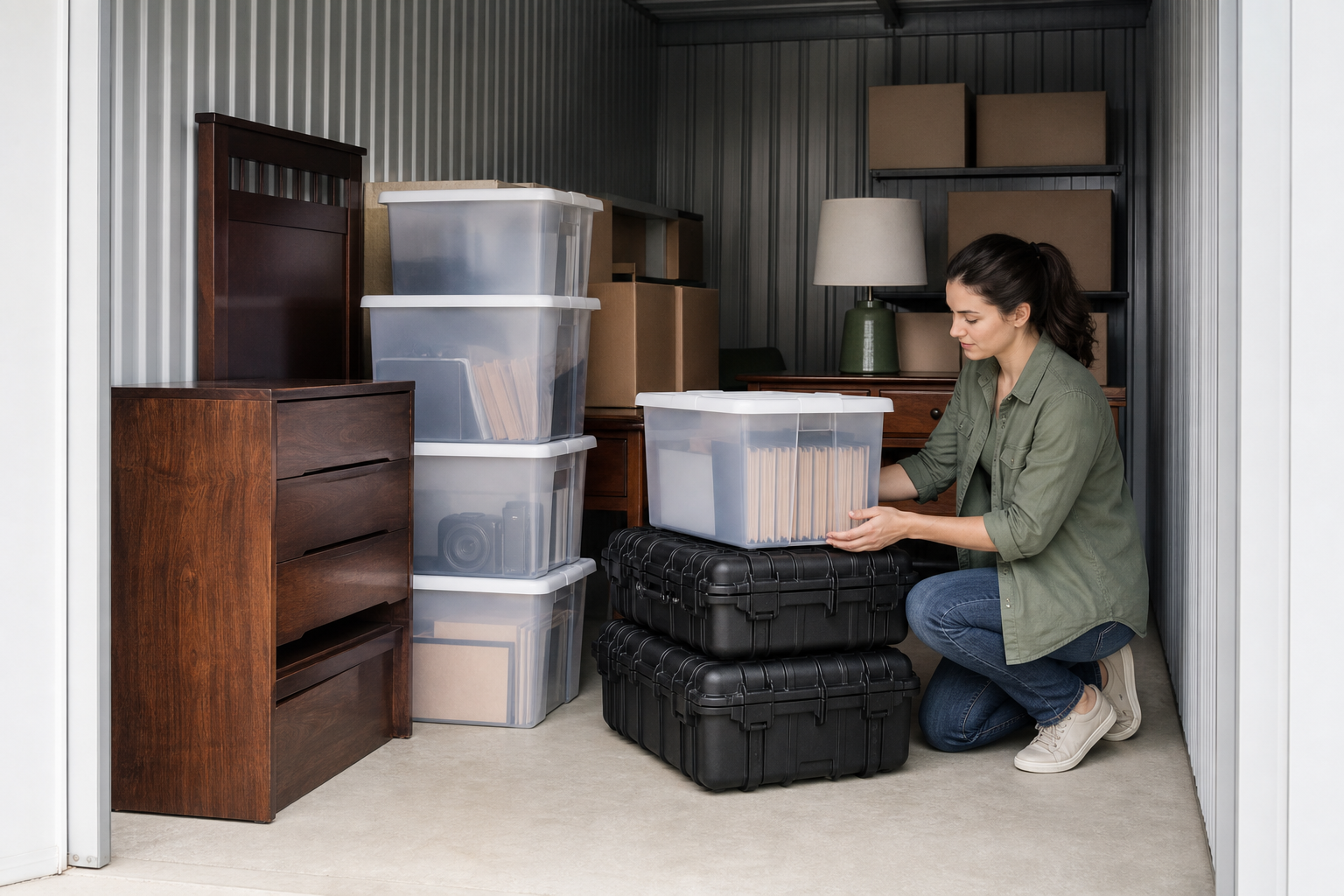
A 10×10 (100 square feet) is about the size of a small bedroom and holds a typical one-bedroom apartment: a sofa, a queen or king bed, a dresser, a dining set, and boxes stacked around them. This is the size where the load stops being 'a few things' and becomes 'a room's worth of furniture.' If you find yourself planning to tetris a couch and a mattress into a 5×10, you're already at a 10×10.
- Sofa plus full bed
- Dresser and dining set
- Boxes stacked around
The tell isn't box count — it's the second large soft item. One sofa fits a lot of ways; a sofa plus a mattress set plus a recliner is the threshold that pushes you from 5×10 to 10×10.
#6Consider a 10×20 for multi-room moves and big appliances
A 10×20 (200 square feet) is garage-sized and swallows a two-to-three-bedroom home: multiple bedroom sets, a full living room, a washer and dryer, and a refrigerator with boxes on top. It's the practical choice for a whole-house move between Arkansas towns or a renovation where everything comes out at once. Drive-up access matters more at this size because you'll be moving heavy appliances and won't want to haul them down an indoor corridor.
- Multiple bedroom sets
- Washer, dryer, fridge
- Whole living room
If you'll store a car or truck alongside household goods, a 10×20 usually fits a standard vehicle plus some boxes — but confirm the door clearance and interior length before assuming it, since not every 10×20 is drive-in.
#7Account for shelving, bikes, tools, and awkward shapes
The items that blow up your size estimate are rarely the obvious ones — it's the disassembled bookshelf, two bikes, a lawnmower, ladders, and a rolled rug that refuse to stack neatly. These awkward shapes waste vertical space and eat floor you thought was free. List them separately from furniture and boxes, because a unit that fits your sofa and bed can still fail if a 6-foot ladder has nowhere flat to lie.
- List awkward items separately
- Stand long items upright
- Strap loose gear together
Stand long, rigid items (ladders, bed frames, disassembled shelving) upright against a back wall and strap them together — that reclaims the floor they'd otherwise sprawl across and keeps them from sliding into your walkway.
#8Stack safely instead of chasing a perfect floor plan
No unit fills like a diagram. Heavy boxes and appliances go on the bottom, lighter and fragile items on top, and nothing goes above chest height unless it's stable and light. Keep aisles clear as you build up rather than sealing the back wall and blocking yourself out. In Arkansas heat, avoid stacking sealed plastic bins full of fabric at the very top of a non-climate unit — trapped moisture rises and collects where it's hottest.
- Heavy items on the floor
- Nothing tall and unstable
- Keep aisles clear as you stack
Do a 'pull test' before you leave: tug the bottom box in each stack. If the stack shifts, it's too tall or unbalanced — rebuild it now rather than finding a collapsed pile on your next visit.
Quick summary
| Decision | What to check | Why it matters |
|---|---|---|
| Unit size | Your largest item plus a walkway | The biggest piece sets the floor; boxes only fine-tune it |
| 5×10 vs 10×10 | Whether a second large soft item is in the load | Sofa plus mattress set usually pushes you to 10×10 |
| 10×20 | Room count and appliance list | Two to three rooms and major appliances need garage-sized space |
| Climate control | Sensitive items and summer storage length | Arkansas heat and humidity damage wood, electronics, and fabric |
| Access type | Drive-up vs indoor and access hours | Heavy loads and frequent visits favor drive-up and long hours |
| Price and fees | Ongoing monthly rate, not just the intro deal | A teaser rate can rise; clear terms beat the cheapest promo |
Storage numbers worth checking
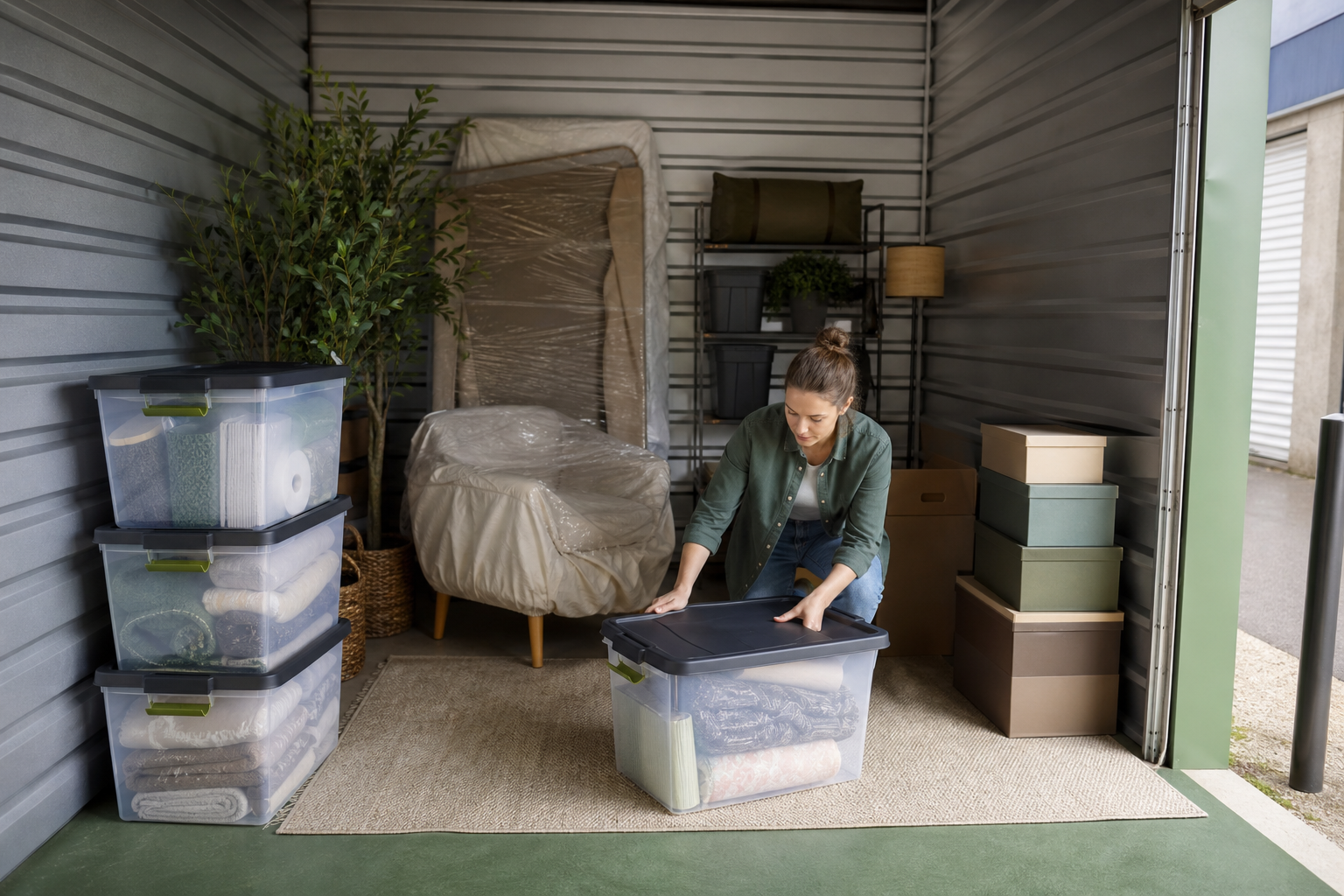
Use these numbers as decision anchors before comparing facilities. The goal is not to guess a perfect unit — it is to compare the same details across options.
List largest items, box count, and aisle needs.
Use these as comparison anchors.
Monthly rate, promo length, required fees.
Drive-up convenience vs. indoor protection.
| Check | What to compare | Why it matters |
|---|---|---|
| 5×10 | Boxes, small bedroom, seasonal items | A small unit can save money if it truly fits |
| 10×10 | Apartment contents or household overflow | Often a safer middle option for mixed items |
| 10×20 | Multi-room moves or large equipment | More room can reduce loading frustration |
| Climate control | Sensitive vs. durable belongings | Arkansas heat and humidity change the risk |
StorageGuide verdict
Use the article as a decision filter: choose the smallest unit that comfortably fits your load, use climate control for wood, electronics, documents, photos, and fabrics, prioritize access that matches your real schedule, and compare regular rates and fees before trusting the cheapest promotion.
Storage FAQs
How do I choose a storage unit size without paying for empty space?
Start with your largest item — a mattress, sofa, or appliance — and size the unit to fit it plus a walkway if you'll visit. Add furniture next, then count boxes last to fill the gaps. This order keeps you from over-buying square footage around a box number that keeps changing.
Is a 5×10 or a 10×10 right for a one-bedroom apartment?
A 5×10 handles overflow, a studio, or a dorm. Once you have a full-size sofa plus a bed and a second large item like a recliner or dresser set, you're at a 10×10, which is sized for a full one-bedroom household.
Do I need climate control in Arkansas?
For anything sensitive to heat and humidity — wood furniture, electronics, upholstery, photos, and documents — climate control is worth it, especially for summer storage. Non-climate drive-up units are fine for tools, patio furniture, and sealed, moisture-tolerant items.
What should I ask before renting?
Ask about the ongoing monthly rate versus the intro rate, any admin or insurance fees, access hours, whether the unit is drive-up or indoor, and door dimensions if you're storing appliances or a vehicle. Clear, stable terms matter more than the cheapest promotion.
How much room should I leave to walk inside?
Plan a 24-to-30-inch aisle down one side if you'll visit during storage, and keep frequently used boxes near the door. That walkway effectively costs one size class, so build it into your size choice from the start.
Find the right-sized unit near you
Compare unit sizes, climate control, and access options in your area, then pick the smallest unit that comfortably fits your biggest item.