Vehicle Storage vs Garage Parking
Use this guide to compare vehicle size, clearance, surface type, access hours, prep steps, pricing, and what to ask before renting vehicle storage.
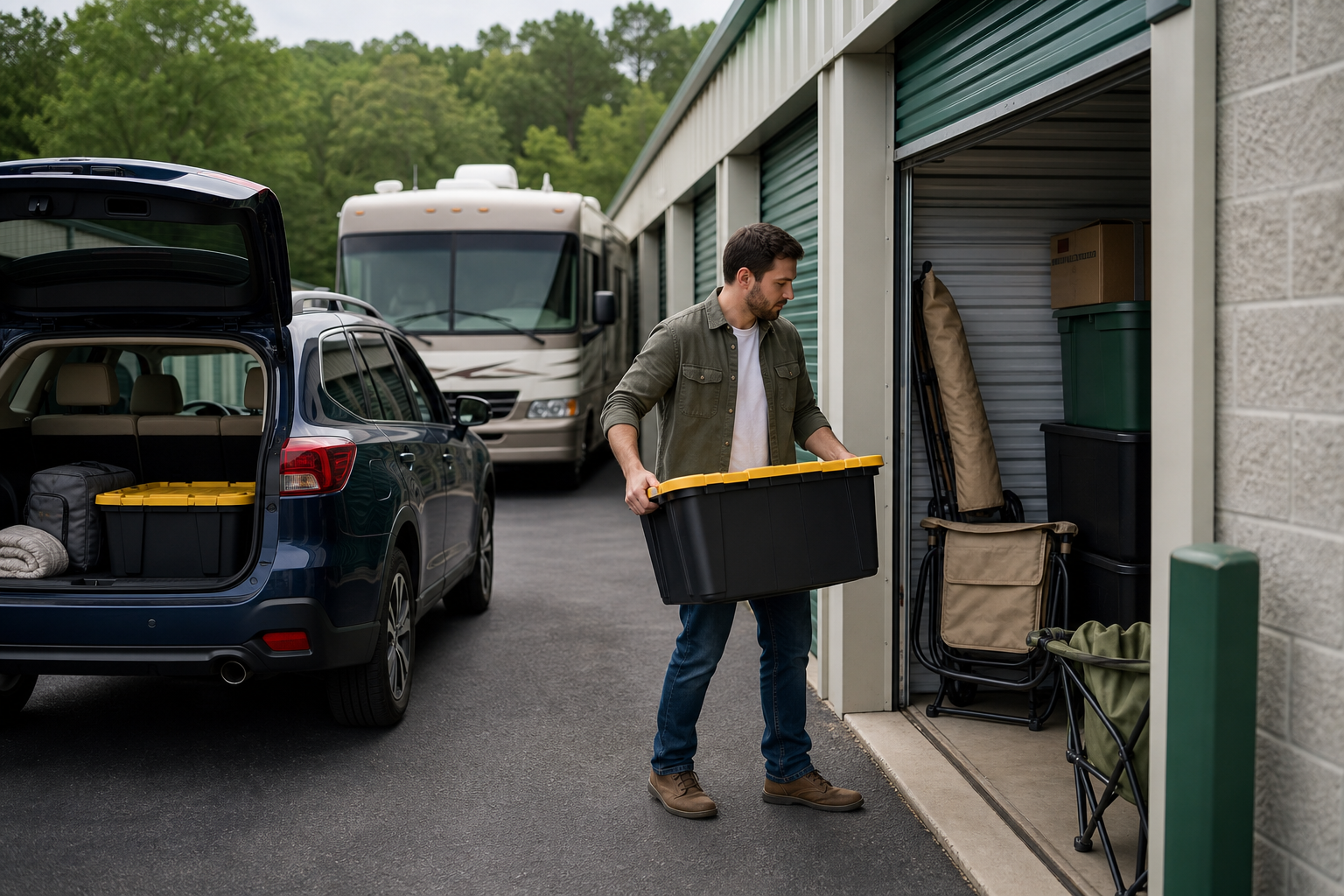
How to decide between dedicated vehicle storage and a rented garage or parking space
If you're storing anything with wheels, the real question isn't just 'where can it fit' — it's how you'll get to it, what surface it sits on, and how much weather protection it actually needs. This guide compares purpose-built vehicle storage (drive-up outdoor, covered, or fully enclosed) against renting a garage or enclosed parking spot, and walks through the six things that decide the call: how big a space you need, whether climate control is worth it, drive-up versus indoor access, price and fees, access hours, and the questions to ask before you sign. Match those to your pickup schedule and you'll land the right space the first time.
What matters most
Use the article as a decision filter: choose the smallest unit that comfortably fits your load, use climate control for wood, electronics, documents, photos, and fabrics, prioritize access that matches your real schedule, and compare regular rates and fees before trusting the cheapest promotion.
Match the space to the vehicle and your pickup schedule
Start with dimensions and how often you'll actually retrieve the vehicle. A commuter car or motorcycle you pull out weekly fits comfortably in a standard enclosed unit and rewards easy access. A boat, travel trailer, or Class C RV needs length and turning room that a rented residential garage usually can't offer, which is why open or covered vehicle spaces exist. If you tow to a lake most weekends, drive-up parking near an exit lane beats a tucked-away enclosed bay you have to maneuver into every Friday. If the vehicle sleeps through winter and only comes out in spring, enclosed or covered space earns its keep.
- Weekly use: prioritize easy in-and-out over maximum enclosure
- Seasonal storage: enclosed or covered pays off over months
- Oversized rigs: confirm length and turning radius, not just width
Measure with mirrors folded out and doors partly open, then add two feet on each side. A space that fits the vehicle but not you climbing out is a space you'll regret by the second visit.
Check access, clearance, and surface before you check price
A cheap space you can't get into is not cheap. For tall rigs, confirm door and gate clearance in feet, not a vague 'RV-friendly.' For anything low or long, ask about the approach: a tight interior corridor can be impossible for a trailer, and a gravel or dirt lot can trap a low sports car after rain. Paved, level surfaces are easier on tires and jack stands and cleaner for gear you set down. Gate and access hours matter more than most renters expect — if you leave for the lake at 5 a.m., a facility that opens at 8 changes your whole weekend.
- Paved and level: best for tires, jacks, and setting down gear
- Gravel lots: cheaper but muddy after Arkansas storms and hard on low cars
- Confirm gate hours match your real pickup times
Ask for the actual door height and driveway width in numbers, and ask whether the surface is paved or gravel. If they can't tell you, treat it as a red flag and keep looking.
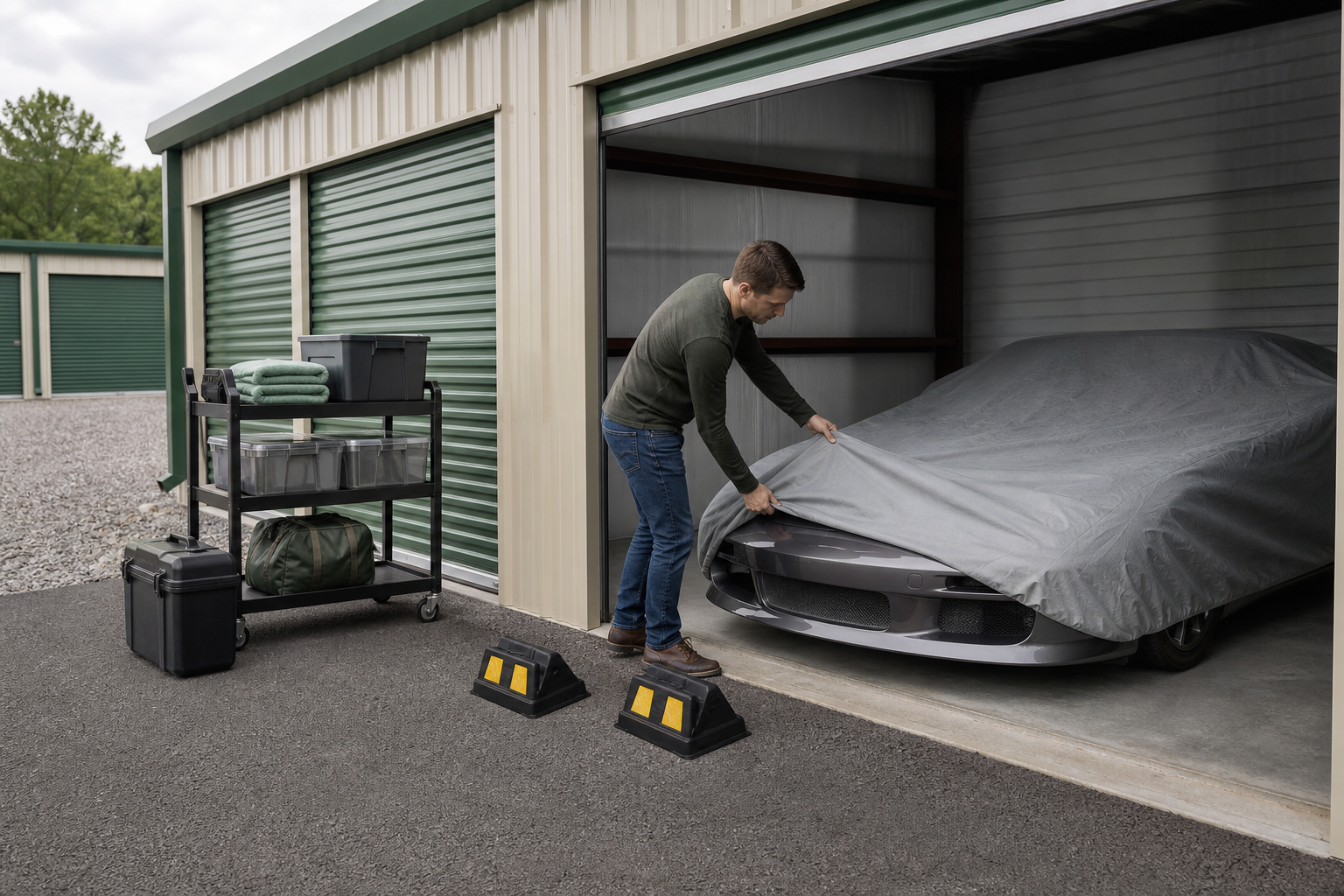
Prep the vehicle for a longer storage stay
The longer the stay, the more the storage type matters — and the more prep you do. Arkansas heat and humidity are hard on a parked vehicle: interiors bake, seals dry out, and moisture invites rust and mildew, especially in an open lot through a muggy summer. A battery tender keeps the charge alive so you're not jump-starting in spring. Tire chocks and a few extra PSI help fight flat spots on tires that sit for months. A breathable vehicle cover blocks dust and sun in a covered or open space; in an enclosed climate-controlled unit you may not need one at all. Top off the fuel and add stabilizer for long stays so the tank doesn't gum up.
- Battery tender for anything sitting more than a few weeks
- Fuel stabilizer and a full tank to prevent moisture and gumming
- Breathable cover for open/covered; often skip it in enclosed climate control
Crack a window a half-inch only inside a locked enclosed unit — never in an open lot — and toss moisture absorbers on the floor mats to keep humidity from turning into mildew.
Keep seasonal gear organized with the vehicle
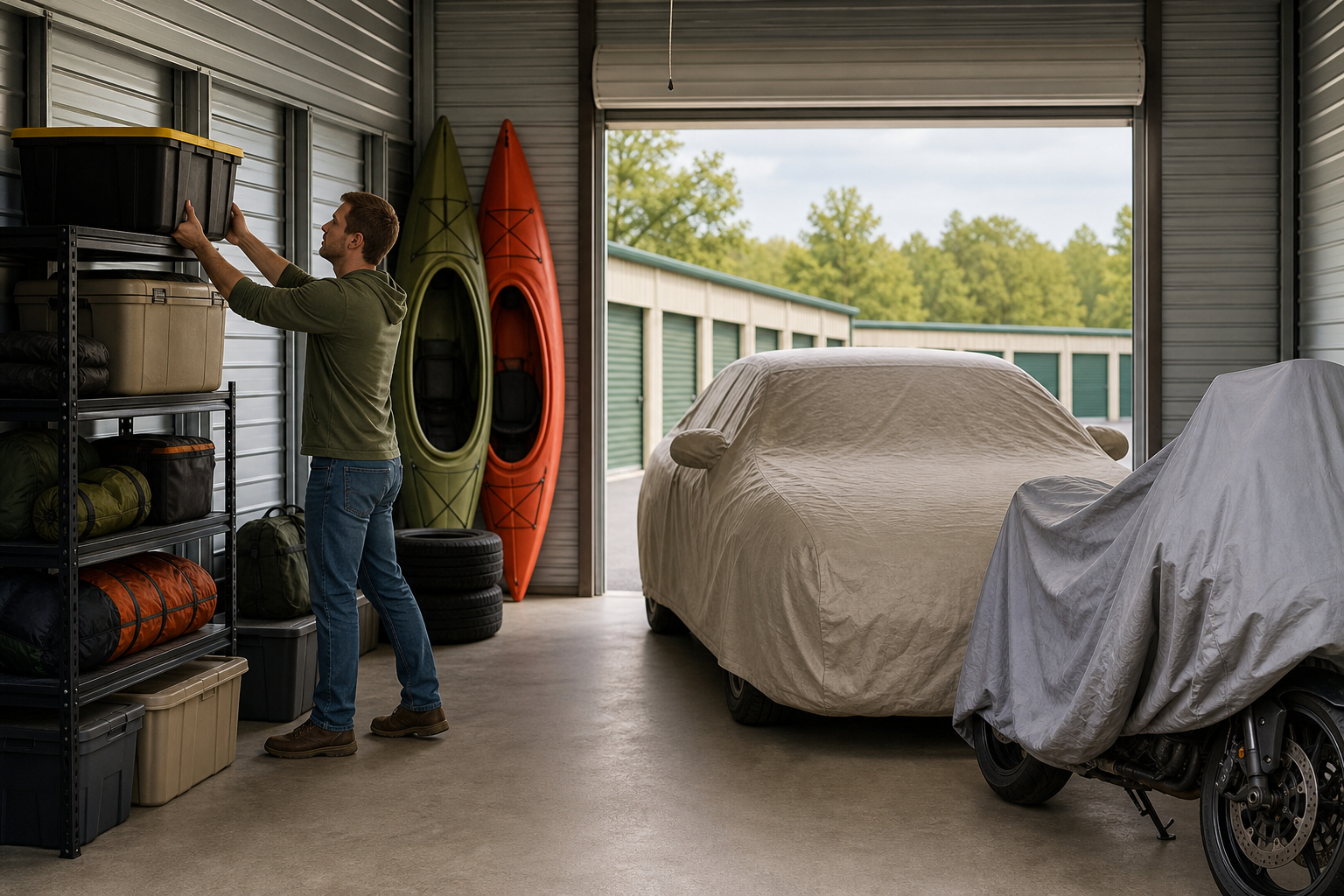
Most people storing a vehicle are also storing what goes with it — life jackets and tow straps with the boat, camp chairs and leveling blocks with the RV, track wheels or a cover with the sports car. A larger enclosed unit or garage lets you keep the vehicle and its gear together, which beats hunting through the house every trip. Use sealed bins rather than cardboard, since boxes sag in humidity and invite pests. Label bins by activity, not by room, so you grab exactly what a lake or camping weekend needs. Keep anything with fuel or propane out; those belong elsewhere for safety.
- Group gear by activity: lake bin, camp bin, detailing bin
- Sealed bins beat boxes for humidity and pest resistance
- No fuel, propane, or pressurized cylinders stored with the vehicle
Store the gear you use every trip in one bin near the vehicle's door and the rarely-touched stuff deeper in the space. You'll load out in minutes instead of unpacking the whole unit.
Quick summary
| Decision | What to check | Why it matters |
|---|---|---|
| Protection level | Enclosed vs covered vs open lot | Enclosed shields paint, interiors, and electronics; open lots expose the vehicle to sun and storms |
| Size and clearance | Length, door height, driveway width | RVs, boats, and trailers need room to maneuver, not just to park |
| Access | Gate hours and surface type | Early lake trips and paved surfaces make retrieval fast and clean |
| Climate control | Needed for long or sensitive stays | Arkansas heat and humidity damage leather, paint, and batteries over months |
| Price and fees | Base rate, insurance, admin fees | The cheapest space can cost more once fees and poor access are counted |
Storage numbers worth checking
Use these numbers as decision anchors before comparing facilities. The goal is not to guess a perfect unit — it is to compare the same details across options.
List largest items, box count, and aisle needs.
Use these as comparison anchors.
Monthly rate, promo length, required fees.
Drive-up convenience vs. indoor protection.
| Check | What to compare | Why it matters |
|---|---|---|
| 5×10 | Boxes, small bedroom, seasonal items | A small unit can save money if it truly fits |
| 10×10 | Apartment contents or household overflow | Often a safer middle option for mixed items |
| 10×20 | Multi-room moves or large equipment | More room can reduce loading frustration |
| Climate control | Sensitive vs. durable belongings | Arkansas heat and humidity change the risk |
StorageGuide verdict
Use the article as a decision filter: choose the smallest unit that comfortably fits your load, use climate control for wood, electronics, documents, photos, and fabrics, prioritize access that matches your real schedule, and compare regular rates and fees before trusting the cheapest promotion.
Storage FAQs
Is climate-controlled storage worth it for a car in Arkansas?
For a daily driver stored a few weeks, usually no. For a classic, convertible, or any vehicle sitting several months through a humid Arkansas summer, climate control helps protect leather, electronics, and paint and reduces moisture-related problems.
Can I store an RV or boat in a rented garage?
Only if the length, door height, and approach clear it — most residential-style garages don't. Boats, travel trailers, and larger RVs typically need purpose-built covered or open vehicle spaces measured hitch-to-bumper.
What should I do to a vehicle before long-term storage?
Fill the tank and add fuel stabilizer, connect a battery tender, set tire pressure a little high and chock the wheels, and use a breathable cover in open or covered spaces. Add moisture absorbers inside enclosed units.
Drive-up or indoor — which is better?
Drive-up wins for anything you tow or retrieve often, like a boat headed to the lake most weekends. Indoor or enclosed wins for protection when the vehicle sits for long stretches or you care about its finish.
Can I keep gear with my stored vehicle?
Yes, and a slightly larger enclosed space makes that easy. Use sealed bins instead of cardboard, group them by activity, and keep fuel, propane, and pressurized cylinders out for safety.
Find the right space for your vehicle
Compare drive-up, covered, and enclosed vehicle storage by size, access, and protection, then match it to your pickup schedule.