6 Storage Tips for Arkansas Summers
This guide helps compare unit size, climate control, drive-up versus indoor access, price and fees, access hours, and the questions to ask before renting.

Beat Arkansas heat, humidity, and storm season with a storage plan built for long summer stays
Arkansas summers punish stored belongings: sustained heat warps wood, humidity breeds mold on fabric and paper, and storm season adds moisture and power risk. This guide walks through six decisions that actually protect your stuff — which items need climate control, how to seal and cover things without trapping damp, what never belongs in a summer unit, and how to time move-in around heat and thunderstorms. Along the way it flags the practical shopping questions worth asking: unit size, climate control vs. standard, drive-up vs. indoor access, monthly price and any fees, and access hours before you sign.
What matters most
Use the article as a decision filter: choose the smallest unit that comfortably fits your load, use climate control for wood, electronics, documents, photos, and fabrics, prioritize access that matches your real schedule, and compare regular rates and fees before trusting the cheapest promotion.
#1Put heat- and humidity-sensitive items in climate control
A standard metal unit in Arkansas can climb well past outdoor temperatures on a July afternoon, and the humidity rides along with it. That combination is what damages belongings: sustained heat dries and warps wood, while trapped moisture invites mold and mildew. Climate-controlled units hold a steadier range and manage humidity, which is why they're the right call for wood furniture, upholstery, electronics, vinyl records, artwork, and anything paper. The tradeoff is cost — climate control runs more per month — so reserve it for items that genuinely react, not for a unit full of patio chairs and plastic bins.
- Climate control matters most for wood, electronics, photos, and fabric
- Skip it for tools, sealed outdoor gear, and hard plastics
- Longer stays across peak summer raise the payoff
Do a quick sort before you rent: make two piles, 'ruined by a hot damp summer' and 'fine either way.' If the sensitive pile fills more than about a third of the load, rent one climate-controlled unit rather than splitting into two.
#2Seal documents, fabric, and photos in airtight bins
Cardboard is the wrong container for a humid summer. It absorbs moisture, sags, and passes damp straight to whatever's inside — exactly the problem for paperwork, clothing, linens, and photographs. Swap those into rigid, lid-sealing plastic totes and add a few silica gel packs to soak up stray humidity. Keep photos from sticking by slipping acid-free paper between them, and fold fabric loosely rather than vacuum-crushing it so fibers can breathe. Label the lids, because sealed bins all look alike once they're stacked.
- Use airtight plastic totes for paper, photos, and fabric
- Add silica gel packs and acid-free paper for photos
- Label lids clearly since bins look identical stacked
Test a bin's seal before you trust it: press the lid shut and give it a gentle shake near your ear. If you hear the lid shift or click loose, it won't hold humidity out — save that tote for garage items and buy a tighter one for photos.
#3Cover furniture so it breathes instead of sweating
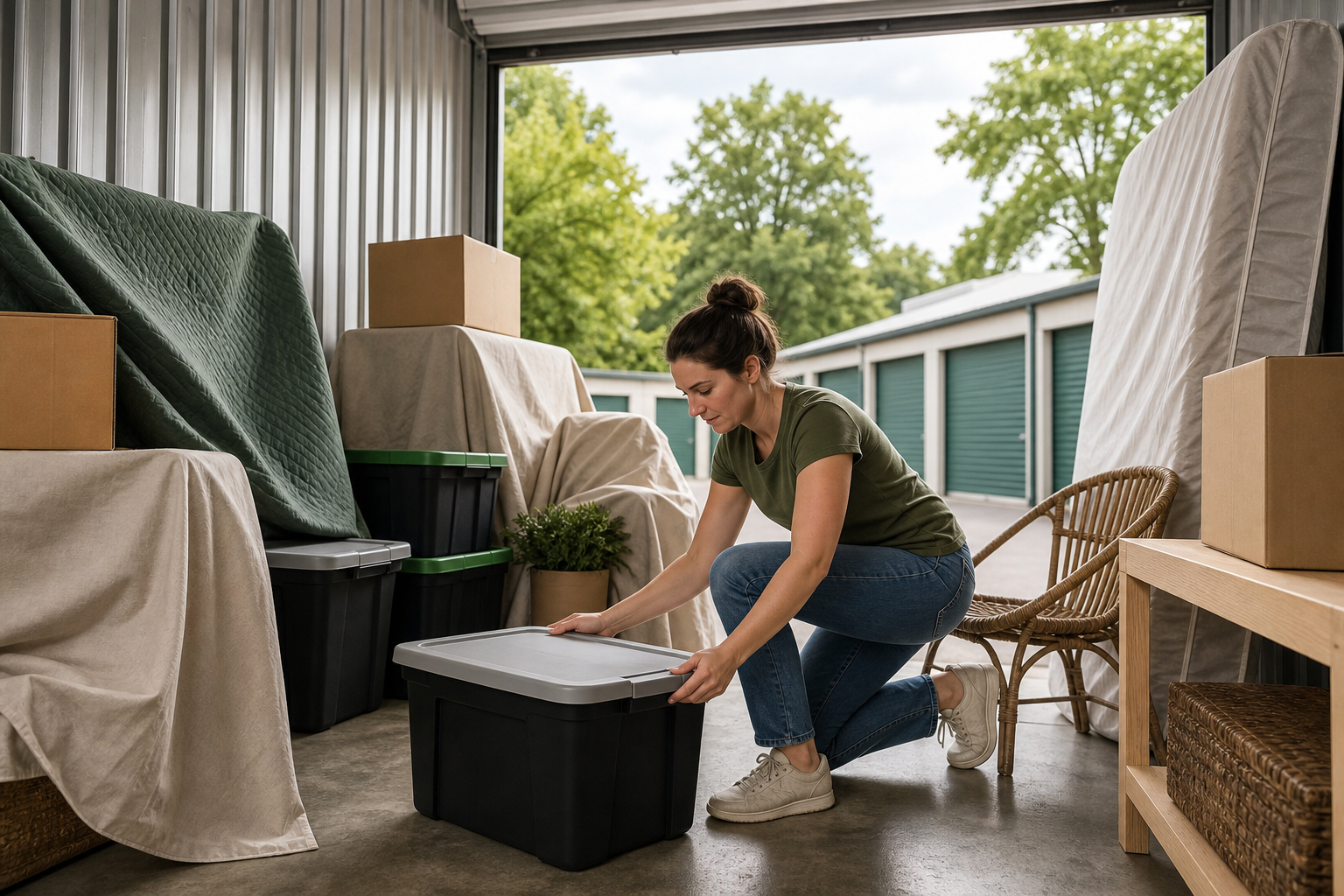
Wrapping a sofa or wood dresser in plastic sheeting feels protective, but in Arkansas humidity it backfires — plastic traps moisture against the surface and creates a mini greenhouse where mold grows and wood finishes cloud. Use breathable furniture covers, moving blankets, or old cotton sheets instead. Wipe every piece down and let it dry fully before it goes in, since any trapped surface moisture has weeks to do damage. For leather and wood, a light conditioning before storage helps them survive the dry-then-damp swings of a long summer.
- Choose breathable covers over airtight plastic
- Clean and fully dry pieces before storing
- Condition leather and wood ahead of a long stay
If you already own plastic furniture wrap, don't seal it tight — cut a few vents along the bottom so air can move. Better yet, save the plastic for the floor as a moisture barrier and cover the furniture itself with cloth.
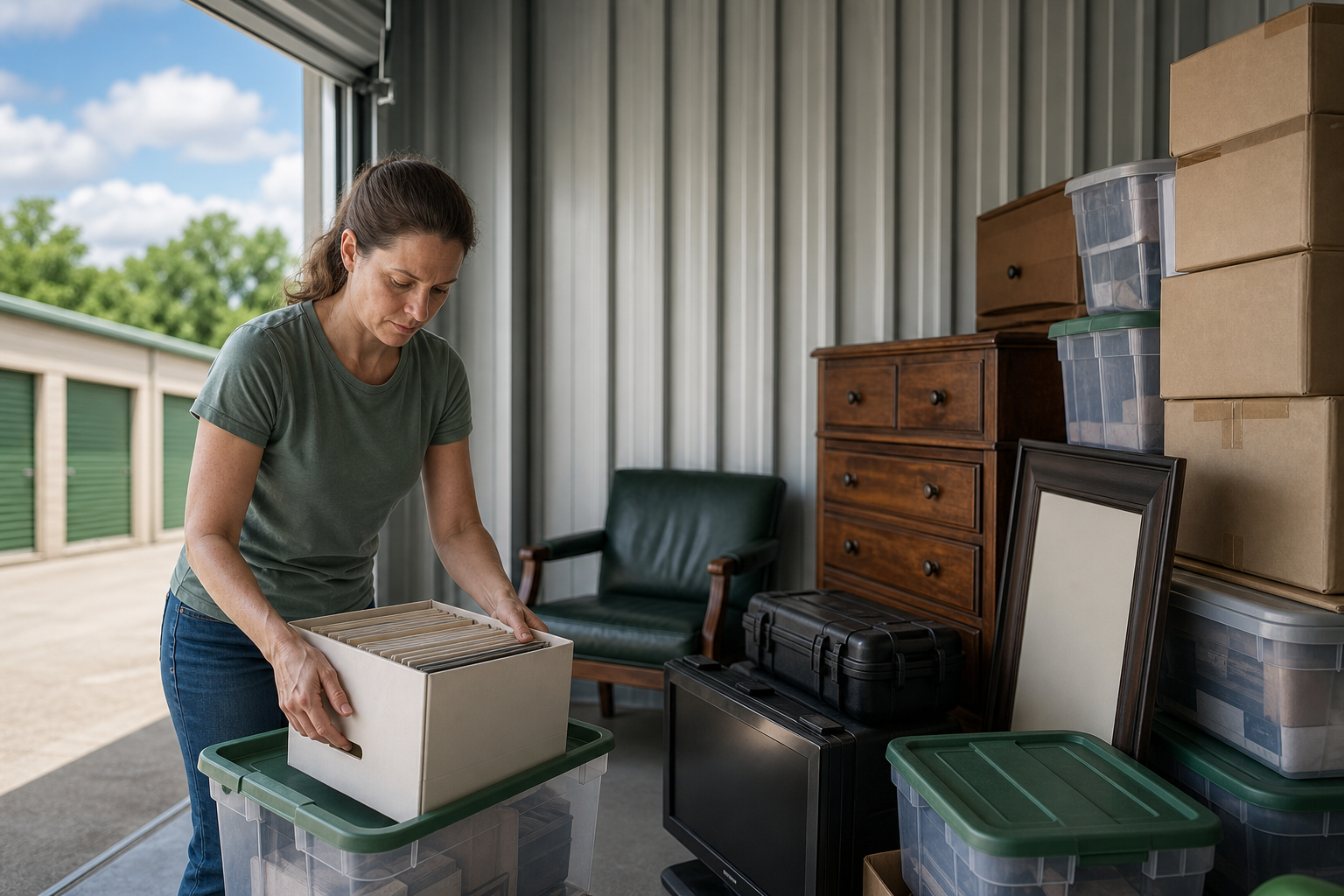
#4Keep out anything that can melt, leak, or draw pests
Summer heat turns some items into liabilities. Candles, crayons, and certain cosmetics soften or melt and ruin whatever they touch. Aerosols, paint, and other pressurized or flammable liquids are unsafe as temperatures rise and are typically prohibited anyway. The sneakier problem is food and anything scented: a forgotten pantry box or pet food bag becomes a pest invitation, and Arkansas summers are prime bug season. Perishables, plants, and open liquids don't belong in any unit, climate-controlled or not.
- No candles, aerosols, paint, or flammable liquids
- No food or scented items that attract pests
- Empty and clean grills, coolers, and appliances first
Run a 'melt and smell' check on every box before it goes in: if an item would soften on a hot dashboard or has any food odor, pull it out. Wipe down and fully empty appliances like grills and coolers so residue doesn't attract insects.
#5Time your move-in around heat and storm season
When you load matters as much as what you load. Arkansas afternoons peak hot, and summer pop-up thunderstorms can turn a driveway loading session into a soaked scramble. Book move-in for early morning when it's cooler and the sky is calmer, and check the forecast the day before so boxes and mattresses don't ride in an open truck through a downpour. This is also where access type earns its keep: a drive-up unit speeds a fast unload but leaves you exposed to weather, while indoor access is slower to reach but keeps loading out of the rain and sun.
- Load in cool morning hours, not the afternoon peak
- Check the forecast to dodge summer thunderstorms
- Match drive-up vs. indoor access to your weather risk
If a storm is forecast on your only available day, stage everything in the truck or garage the night before and unload during the morning break between storms — rather than pushing the move to a triple-digit afternoon. Confirm the facility's access hours cover early mornings before you commit.
#6Leave airflow gaps around boxes and furniture
Even in a climate-controlled unit, a wall-to-wall packed load traps stale, damp air in the middle where nothing circulates — and that pocket is where mold starts. Leave a few inches between stacks and the unit walls, keep sensitive boxes off the concrete floor on pallets or boards, and avoid burying breathable items behind a solid plastic wall of bins. The goal is to let the managed air actually reach your belongings instead of skimming past a sealed block. It also makes the unit easier to walk into when you need one thing in August. In Arkansas, the practical question is usually not just temperature; it is how long the item will sit through heat and humidity before you need it again.
- Keep boxes off bare concrete on pallets or boards
- Leave space between stacks and unit walls
- Keep a center aisle for air and easy access
Leave a center aisle even in a small unit — it doubles as airflow and access. Put the items you're most likely to retrieve mid-summer near the front so you're not unstacking the whole load in the heat.
Quick summary
| Decision | What to check | Why it matters |
|---|---|---|
| Climate control vs. standard | Whether your load includes wood, electronics, paper, or fabric | These items warp, corrode, or mold in a hot, humid standard unit |
| Container type | Sealed plastic totes for anything paper or fabric | Cardboard absorbs humidity and passes damp to contents |
| Furniture covering | Breathable covers, not sealed plastic wrap | Plastic traps moisture and grows mold on the surface |
| Prohibited items | No food, fuel, aerosols, or meltables | Summer heat and pests turn these into hazards or messes |
| Move-in timing | Cool morning slot and the storm forecast | Avoids heat exhaustion and rain-soaked belongings |
| Access hours and terms | Whether hours cover early mornings and the monthly price is clear | You'll need cool-hour access and predictable cost over a long stay |
Storage numbers worth checking
Use these numbers as decision anchors before comparing facilities. The goal is not to guess a perfect unit — it is to compare the same details across options.
List largest items, box count, and aisle needs.
Use these as comparison anchors.
Monthly rate, promo length, required fees.
Drive-up convenience vs. indoor protection.
| Check | What to compare | Why it matters |
|---|---|---|
| 5×10 | Boxes, small bedroom, seasonal items | A small unit can save money if it truly fits |
| 10×10 | Apartment contents or household overflow | Often a safer middle option for mixed items |
| 10×20 | Multi-room moves or large equipment | More room can reduce loading frustration |
| Climate control | Sensitive vs. durable belongings | Arkansas heat and humidity change the risk |
StorageGuide verdict
Use the article as a decision filter: choose the smallest unit that comfortably fits your load, use climate control for wood, electronics, documents, photos, and fabrics, prioritize access that matches your real schedule, and compare regular rates and fees before trusting the cheapest promotion.
Storage FAQs
Do I really need climate control for an Arkansas summer?
It depends on what you're storing. Wood furniture, electronics, photos, documents, and fabric can be damaged by sustained heat and humidity, so those belong in climate control. Tools, sealed outdoor gear, and hard plastics are usually fine in a standard unit, which costs less.
Are plastic bins better than cardboard boxes for summer storage?
Yes for anything moisture-sensitive. Cardboard absorbs humidity and sags, while rigid, lid-sealing totes keep damp out. Add silica gel packs for extra protection with photos and documents.
Why shouldn't I wrap furniture in plastic?
Sealed plastic traps moisture against the surface in humid weather, which encourages mold and can cloud wood finishes. Use breathable covers, moving blankets, or cotton sheets, and let each piece dry fully before storing.
What can't I store in a summer unit?
Keep out food and scented items that attract pests, plus candles, aerosols, paint, and other meltable or flammable materials that heat makes hazardous. Empty and clean grills, coolers, and appliances before storing them.
When's the best time of day to move in during summer?
Early morning, when temperatures are lower and pop-up thunderstorms are less likely. Check the forecast the day before, and confirm the facility's access hours cover early mornings before you rent.
Find a summer-ready unit in Arkansas
Compare unit sizes, climate-controlled options, and access hours so your belongings make it through the heat, humidity, and storm season in one piece.