10 Packing Supplies That Make Storage Easier
Use this guide to compare boxes, tape, labels, covers, bins, moving blankets, access needs, price tradeoffs, and what to ask before renting storage.
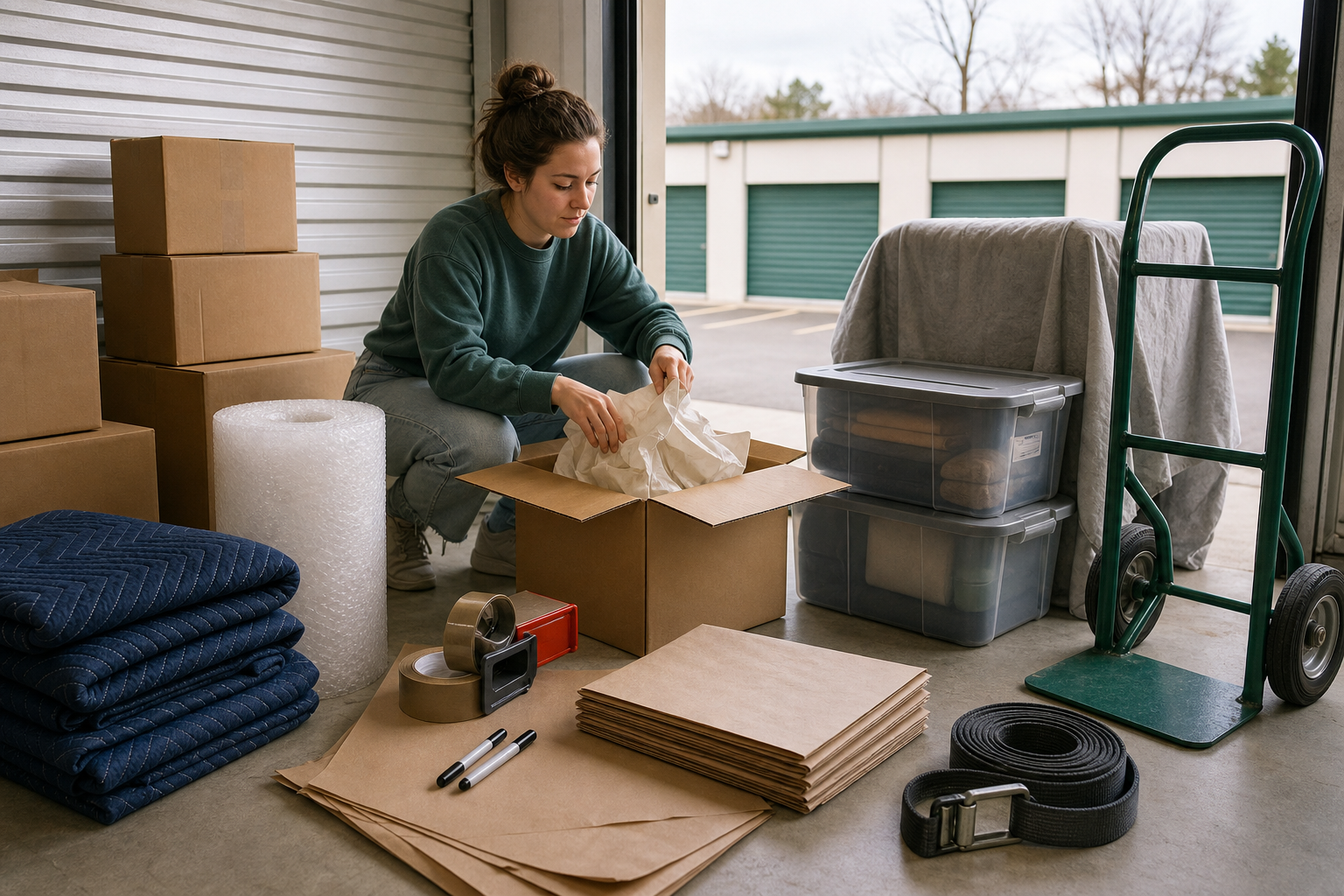
The gear that actually protects your stuff and makes a unit easy to reload
The right supplies do three jobs: they let you stack a unit tightly (so you rent the smallest space that fits), they shield belongings from Arkansas heat and humidity, and they make it possible to reopen the unit later without unpacking everything. This list walks through 10 specific products — from double-wall cardboard boxes to a hand truck — and where each one earns its cost. As you shop supplies, also weigh unit size, climate control vs. standard, drive-up vs. indoor access, monthly price and any admin/insurance fees, and gate hours, and ask the facility about all of those before you sign.
What matters most
Use the article as a decision filter: choose the smallest unit that comfortably fits your load, use climate control for wood, electronics, documents, photos, and fabrics, prioritize access that matches your real schedule, and compare regular rates and fees before trusting the cheapest promotion.
#1Double-wall cardboard boxes for anything heavy
Standard single-wall boxes crush under heavy items and a crushed box means a leaning stack. Double-wall (heavy-duty) boxes in a small-to-medium size handle dense loads and keep flat tops so you can stack them tall the way up. Buying one or two sizes in bulk also makes stacking predictable — mismatched boxes are a reason people rent more square footage than they need.
Weigh-test before you seal: if you can't lift the box comfortably to shoulder height, it's too heavy and belongs in a smaller box, not a stronger one.
#2Shelving Unit
A metal or plastic shelving unit along one wall gets frequently needed boxes and totes off the floor and accessible without having to move multiple boxes in a stack. If you have several boxes of things you'll need access to frequently, a shelving unit is the way to go.
#3Plastic totes with lids for items you'll revisit
Rigid plastic totes lock out moisture, stack securely, and let you easily see whats inside. Use them for the things you'll reach mid-lease — seasonal clothes, holiday decor, kids' gear — and keep cardboard for the deep-storage items you won't touch until move-out.
Buy one tote size so lids interlock when stacked; mixing brands leaves wobbly gaps that waste vertical space in the unit.
#4Bubble wrap for electronics and odd-shaped breakables
Dishes and glass pack fine with paper, but electronics, framed art, and irregular breakables need cushioning that conforms and holds its air. Small-bubble wrap protects surfaces and screens; large-bubble wrap fills voids around awkward shapes so nothing shifts when the box is jostled onto a stack. Wrap electronics fully — a stored TV or console sits untouched for months and any pressure point becomes a permanent one.
Wrap with the bubbles facing inward against delicate screens and finishes so the flat side takes any rubbing during load-in.
#5Packing peanuts to fill dead space fast
When you've wrapped the fragile item but the box still has gaps, peanuts fill the rest cheaply and add almost no weight. They're ideal for topping off boxes of mixed small items so contents don't settle and shift during transport and stacking. Biodegradable (starch) peanuts avoid the static cling and mess of foam, which matters if you'll reopen the box indoors later.
Pour peanuts in stages and pause to press down gently — filling in one dump leaves hollow pockets that let items sink after the first bump.

#6Specialty boxes: TV, dish pack, and wardrobe
Some items don't fit standard boxes safely, and forcing them wastes protection and space. A specialty TV box holds a flat panel upright the way it should ride; a dish-pack (dish barrel) has thicker walls and cell dividers for glassware; a wardrobe box hangs clothes so they don't wrinkle or mildew folded in a bin. These sized-to-purpose boxes cost more per box but often save you from damage or from buying a bigger unit to lay things flat.
Store a flat-screen TV standing on its edge, never flat — laying a panel down puts uneven pressure on the screen, and a proper TV box is built for the upright position.
#7Moving blankets and furniture pads
Bare furniture rubs, scratches, and picks up dust every time you slide another item past it. Quilted moving pads wrap dressers, tables, and cabinet corners so surfaces survive the load-in and the months of sitting beside other stacked goods. In a non-climate unit, pads also buffer wood and veneer against the daily temperature swings that loosen joints and glue over an Arkansas summer.
Secure pads with stretch wrap rather than tape — tape adhesive bonds to wood finish in heat and pulls the surface when you remove it later.
#8Mattress bags and upholstered-item covers
A mattress stored uncovered absorbs dust, moisture, and odors, and upholstery is a magnet for humidity and pests. A sealed mattress bag keeps the surface clean and lets you stand the mattress on edge to save floor space; breathable covers do the same for sofas and chairs without trapping condensation. Given Arkansas humidity, this is one place climate control pays off most — soft goods hold moisture and can mildew in a hot, damp unit.
For a multi-month stay, choose a bag you can tuck a moisture absorber into rather than sealing the mattress airtight, which can trap humidity inside.
#9A dolly or hand truck and utility gloves
The heaviest part of loading a unit is the trip from truck to back wall, and doing it by hand slows you down and risks dropped boxes. A hand truck moves stacked boxes and appliances in one pass, and grippy utility gloves protect your hands and give you a firmer hold on tape-slick boxes and pad-wrapped furniture. Together they let one or two people load a unit that would otherwise need a crew.
Check to see if one is provided free of charge while at a storage facility
#10Labels and markers
The last supply is what makes the unit usable months in: a labeling system and, for smaller items, a unit of freestanding shelving. Label boxes on two sides by room and priority — not just contents — so you can read them once they're stacked.
Leave a center aisle and put priority-labeled boxes nearest the door; the goal is reaching your top-ten items without pulling everything else out.
Quick summary
| Decision | What to check | Why it matters |
|---|---|---|
| How sturdy a box? | Weight of contents | Heavy items need double-wall boxes to keep flat, stackable tops |
| Box or tote? | How often you'll reach it | Totes resist humidity and let you pull one bin without restacking |
| Standard or specialty box? | Item shape and fragility | TV, dish-pack, and wardrobe boxes prevent damage and save space |
| Cover furniture? | Finish, upholstery, mattress | Pads and bags guard against scratches, dust, and humidity |
| Climate control? | Electronics, wood, soft goods | Arkansas heat and humidity can warp wood and mildew upholstery |
| Access type? | Drive-up vs. indoor, hours | Determines whether a dolly rolls in and when you can get in |
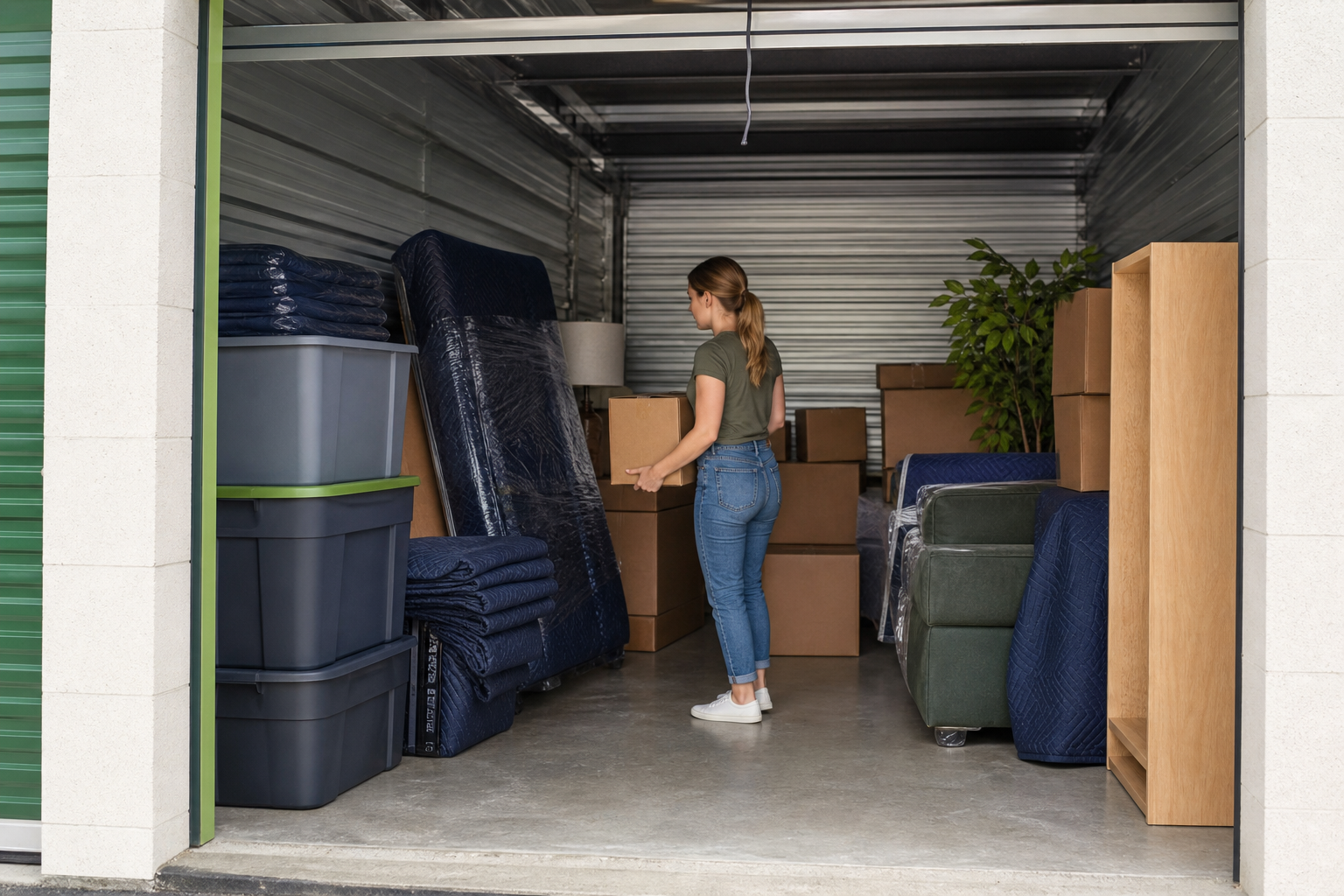
Storage numbers worth checking
Use these numbers as decision anchors before comparing facilities. The goal is not to guess a perfect unit — it is to compare the same details across options.
List largest items, box count, and aisle needs.
Use these as comparison anchors.
Monthly rate, promo length, required fees.
Drive-up convenience vs. indoor protection.
| Check | What to compare | Why it matters |
|---|---|---|
| 5×10 | Boxes, small bedroom, seasonal items | A small unit can save money if it truly fits |
| 10×10 | Apartment contents or household overflow | Often a safer middle option for mixed items |
| 10×20 | Multi-room moves or large equipment | More room can reduce loading frustration |
| Climate control | Sensitive vs. durable belongings | Arkansas heat and humidity change the risk |
StorageGuide verdict
Use the article as a decision filter: choose the smallest unit that comfortably fits your load, use climate control for wood, electronics, documents, photos, and fabrics, prioritize access that matches your real schedule, and compare regular rates and fees before trusting the cheapest promotion.
Storage FAQs
Do I really need climate control if my boxes are sealed?
Sealing helps against dust and pests, but it doesn't control temperature. For electronics, wood furniture, mattresses, and upholstery stored through an Arkansas summer, climate control is worth it — heat and humidity can warp wood, damage screens, and cause mildew that no box prevents.
What's the single best supply for saving space?
Uniform boxes and matching totes. Flat, consistent tops let you stack floor-to-ceiling and use the unit's full cubic footage, which often lets you rent a smaller, cheaper unit than a pile of mismatched boxes would.
Cardboard boxes or plastic totes?
Use totes for anything you'll reach mid-lease or that's sensitive to humidity, and cardboard for deep-storage items you won't touch until move-out. Totes cost more but resist moisture and let you pull one without collapsing the stack.
How should I label boxes for a storage unit?
Label on at least two sides by room and priority, not just contents. Once boxes are stacked you can only see the exposed faces, and priority labels help you place must-reach items near the door.
What should I ask a facility before renting?
Confirm the unit size against what you're packing, whether it's climate-controlled, drive-up or indoor access, the full monthly price including any admin or insurance fees, and the gate/access hours. Don't choose on the cheapest first-month promo alone.
Find the right-sized unit for your packed boxes
Once your supplies are sorted, match them to a unit that fits without paying for space you won't fill. Compare sizes, climate control, and access hours to rent smart.