How to Pack a Storage Unit So You Can Find Things Later
Use this size guide to compare bulky furniture, box count, walkway space, climate-control needs, drive-up access, and the questions to ask before reserving a unit.

Size your unit around bulky items, then pack so nothing gets buried
The fastest way to overpay for storage is to guess your size from box count alone. This guide helps you compare unit sizes by starting with your largest items, then factoring in boxes, a walkway if you'll visit, and whether climate control is worth it for Arkansas heat and humidity. It also covers what changes between drive-up and indoor access, how fees and access hours affect the choice, and the questions worth asking before you sign.
What matters most
Use the article as a decision filter: choose the smallest unit that comfortably fits your load, use climate control for wood, electronics, documents, photos, and fabrics, prioritize access that matches your real schedule, and compare regular rates and fees before trusting the cheapest promotion.
Size the unit around your bulky items, not your boxes
Boxes are flexible; a sofa is not. The items that actually decide your unit size are the ones you can't fold, stack thin, or squeeze into a corner: the mattress, the couch, a refrigerator or washer, a dresser, a headboard. Lay those out mentally first and note their footprint. A queen mattress and a three-seat sofa alone will eat most of the floor in a 5×10. Once the big pieces have a home, boxes fill the gaps around and on top of them. If you size the other way around, counting boxes first, you'll almost always guess low and end up wrestling furniture through a half-packed door.
- Measure furniture that can't be disassembled first
- Note which pieces can stand on end to save floor space
- Treat boxes as fill, not as the main size driver
Walk your house with a measuring tape and write down the width, depth, and height of your three largest items. Those three numbers, not your box pile, are what you compare against a unit's dimensions.
Use common unit sizes as ranges, not exact answers
Facilities tend to offer the same handful of footprints, and each one covers a rough range of loads. A 5×5 is closet-sized, good for seasonal gear or a dorm's worth of boxes. A 5×10 handles the contents of a studio or a one-bedroom with modest furniture. A 10×10 is the workhorse: a one or two-bedroom apartment, furniture plus appliances. A 10×15 or 10×20 moves into full houses and garage overflow. Treat these as brackets. If you land right at the edge of a 5×10, you're really choosing between cramped and comfortable, which is the whole game.
- 5×5: seasonal items, boxes, a few small pieces
- 5×10: studio or light one-bedroom
- 10×10: one to two-bedroom apartment
- 10×15-10×20: full house or garage overflow
Ask the facility for the exact interior dimensions and door width, not just the label. A '10×10' with a narrow roll-up door can defeat a wide sofa that would otherwise fit fine.
Leave a walkway if you'll open the unit before move-out
There's a real difference between a unit you seal until you move and one you'll dip into monthly for holiday decorations, tools, or a kid's stuff between semesters. If you'll visit, give up roughly two feet down the center or along one wall as a walkway, and keep the things you'll grab often near the front. That walkway costs you floor space, which is exactly why it belongs in your size decision. A perfectly packed unit with no aisle looks efficient on day one and becomes a wall of boxes you have to unload onto the pavement the first time you need something in the back.
- Keep frequently used items near the door
- Label box sides facing the aisle, not the tops
- Skip the walkway only for true sealed storage
Put a cheap folding step stool or a labeled 'open me first' box right inside the door for the items you know you'll return for, so you're not climbing over furniture on every visit.
Pack so weight, height, and fragility all work together
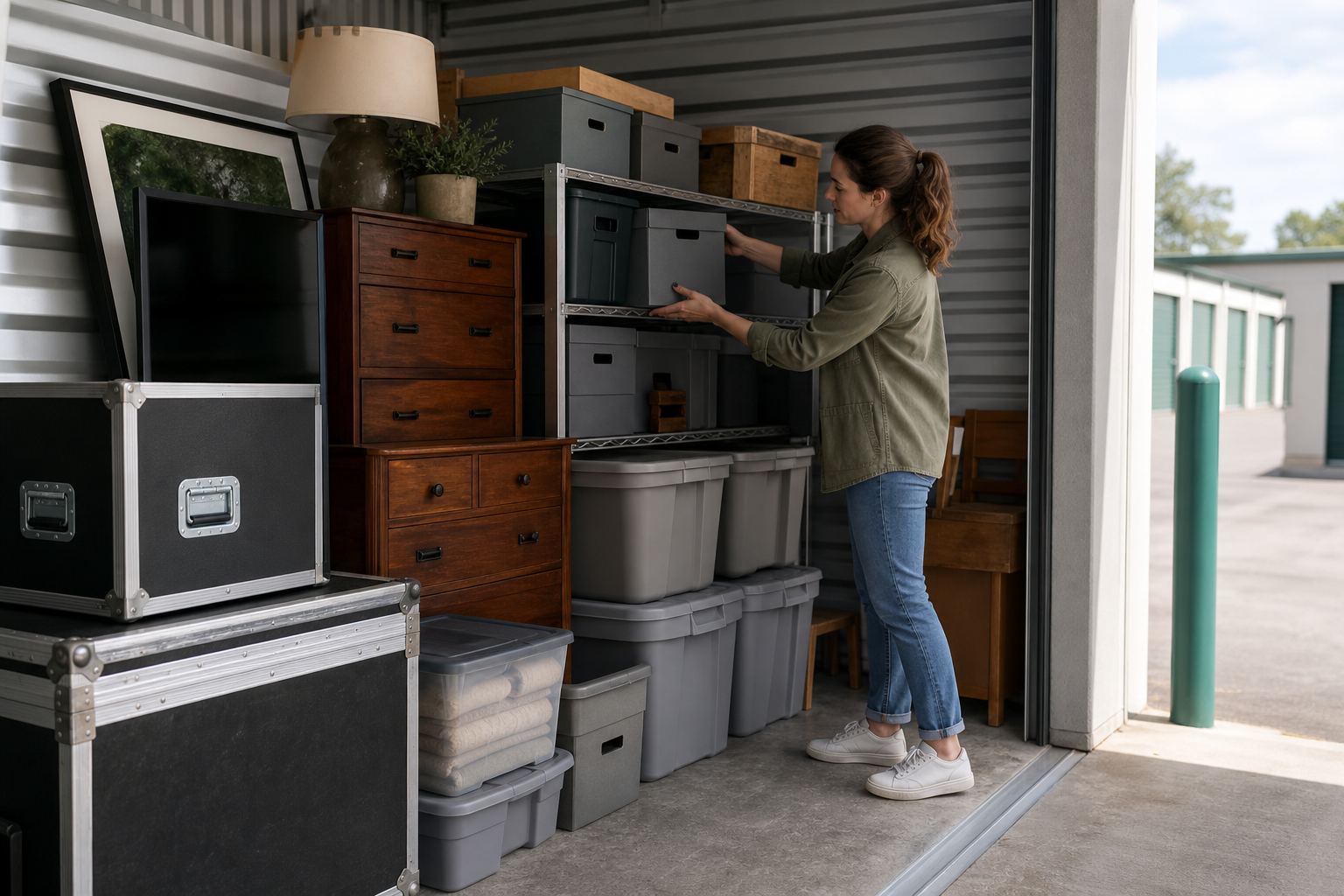
Once the size is set, loading order keeps things findable and undamaged. Heavy, sturdy items go on the bottom and toward the back: appliances, dressers, boxes of books. Lighter and fragile items ride on top. Stand mattresses and table tops on end against a wall to reclaim floor space, and fill drawers and appliance interiors with soft goods so nothing travels empty. Uniform box sizes stack into stable columns; a pile of mismatched boxes leans and topples. Leave a small gap around anything you might need mid-rental so you're not dismantling a tower to reach it.
- Heavy on the bottom, fragile on top
- Stand mattresses and tabletops on end
- Use even box sizes for stable stacks
- Fill drawers and appliances with soft items
Number your boxes and keep a quick phone note of what's in each. When you need the winter coats in March, you check the list instead of opening six boxes in a hot unit.
Decide whether Arkansas heat makes climate control worth it
Non-climate units in Arkansas can swing hot and humid through the summer, and that's rough on certain items. Wood furniture can warp or crack, upholstery and mattresses can hold moisture and mildew, electronics and photos degrade, and candles or vinyl records simply don't like the heat. If your load is mostly plastic bins, metal shelving, and outdoor gear, a standard drive-up unit is usually fine. If it includes anything sensitive, budget for climate control instead of hoping for a mild summer. This choice also nudges your access type: climate-controlled units are typically indoor, which trades easy drive-up loading for a steadier interior.
- Climate control for wood, electronics, and fabrics
- Standard units fine for bins, metal, and outdoor gear
- Indoor units trade drive-up ease for stable conditions
For a mixed load, split the difference: store the tough stuff and pack the handful of sensitive items into a small climate-controlled unit or a friend's closet, rather than paying climate rates for a garage full of tools.
Compare the next size up before forcing a tight fit
When your measurements land right between two sizes, don't automatically pick the smaller one to save a few dollars. Price the next size up and look at the real gap. Often the larger unit is close enough in monthly cost that the extra floor space, breathing room for a walkway, and the ability to actually reach the back are worth it. The exception is a clean, sealed load you won't touch until move-out, where a tight fit is fine. Also weigh the fees you don't see on the headline rate: admin charges, required insurance, and access hours that might not match a late campus move-out or an early lake trip.
- Price both sizes before deciding
- Check admin fees, insurance, and gate hours
- Tight fit is fine only for sealed, untouched storage
Ask for the all-in monthly cost and the gate hours before comparing two sizes. A cheaper unit with restricted access or a mandatory insurance add-on can cost more and be less convenient than the size up.
Quick summary
| Decision | What to check | Why it matters |
|---|---|---|
| Which size | Footprint of your 3-4 largest items | Furniture, not boxes, sets the minimum size |
| Walkway | Whether you'll visit before move-out | An aisle costs floor space but saves you unloading everything |
| Climate control | Do you have wood, electronics, or fabrics | Arkansas summer heat and humidity damage sensitive items |
| Access type | Drive-up vs indoor and gate hours | Loading ease and after-hours access vary by unit |
| True cost | All-in rate with fees and insurance | The teaser rate rarely equals the monthly bill |
Storage numbers worth checking
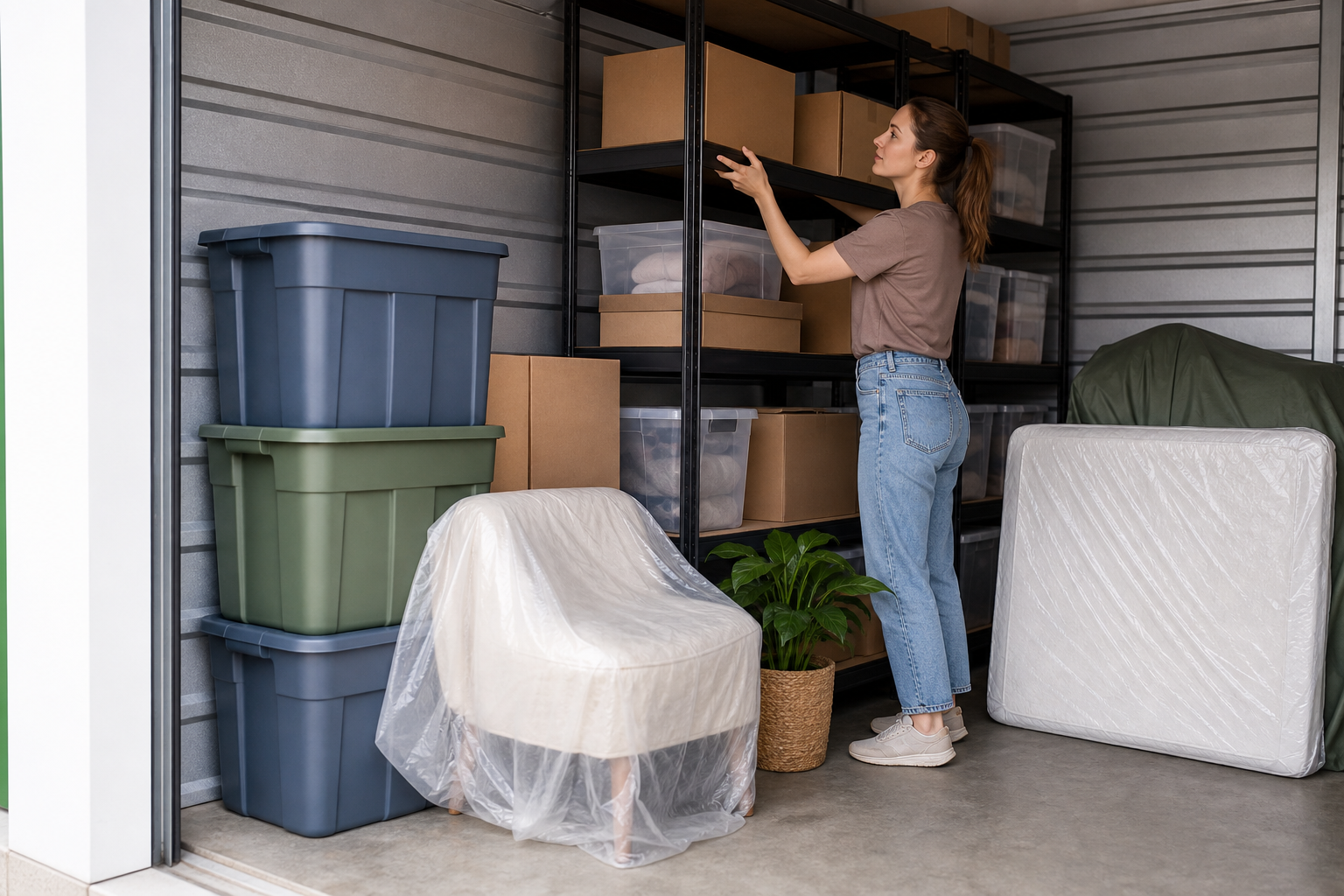
Use these numbers as decision anchors before comparing facilities. The goal is not to guess a perfect unit — it is to compare the same details across options.
List largest items, box count, and aisle needs.
Use these as comparison anchors.
Monthly rate, promo length, required fees.
Drive-up convenience vs. indoor protection.
| Check | What to compare | Why it matters |
|---|---|---|
| 5×10 | Boxes, small bedroom, seasonal items | A small unit can save money if it truly fits |
| 10×10 | Apartment contents or household overflow | Often a safer middle option for mixed items |
| 10×20 | Multi-room moves or large equipment | More room can reduce loading frustration |
| Climate control | Sensitive vs. durable belongings | Arkansas heat and humidity change the risk |
StorageGuide verdict
Use the article as a decision filter: choose the smallest unit that comfortably fits your load, use climate control for wood, electronics, documents, photos, and fabrics, prioritize access that matches your real schedule, and compare regular rates and fees before trusting the cheapest promotion.
Storage FAQs
Should I count boxes or measure furniture to pick a size?
Measure your largest, non-collapsible items first, the mattress, sofa, and appliances. They set the floor plan. Boxes are flexible and fill the space around and above them, so counting boxes alone usually leads to undersizing.
How much space should I leave for a walkway?
Roughly two feet down the center or along one wall if you plan to visit and pull items out during the rental. If you're sealing the unit until move-out, you can skip the aisle and pack it tight.
Do I need climate control in Arkansas?
It depends on what you're storing. Wood furniture, electronics, photos, upholstery, and records are vulnerable to summer heat and humidity, so climate control is worth it for them. Plastic bins, metal shelving, and outdoor gear are usually fine in a standard unit.
What if my stuff falls between two unit sizes?
Price the next size up and compare the real gap. If it's small, take the larger unit for the walkway and reach-in room. Only force a tight fit when the load is sealed and you won't open it until move-out.
What should I ask before renting?
Get the exact interior dimensions and door width, the all-in monthly cost including any admin fee or required insurance, the gate and office access hours, and whether the unit is drive-up or indoor.
Compare Arkansas storage units by size and access
Match your largest items to the right unit size and filter for climate control, drive-up access, and clear terms in your area.