Climate-Controlled Storage in Arkansas
Use this guide to compare Arkansas heat and humidity, storage length, sensitive belongings, unit size, indoor access, price tradeoffs, and what to ask before renting climate-controlled storage.

When Arkansas heat and humidity make climate control worth the upgrade
Climate control isn't a blanket recommendation. It's a decision that hinges on three things: what you're storing, whether it will sit through an Arkansas summer, and how much it would cost to replace. This guide helps you compare climate-controlled versus standard units on the points that actually matter for renters here: which items react to heat and moisture, when storage length tips the math toward climate control, how indoor access differs from drive-up, and what to ask about temperature range, humidity, price, and access hours before you sign. If you're storing tools and plastic bins for six weeks, you can likely skip it. If you're storing wood furniture, electronics, photos, or anything you can't replace through a July in Little Rock or Bentonville, read on.
What matters most
Use the article as a decision filter: choose the smallest unit that comfortably fits your load, use climate control for wood, electronics, documents, photos, and fabrics, prioritize access that matches your real schedule, and compare regular rates and fees before trusting the cheapest promotion.
Know which items react to heat and humidity first
Before you compare units, sort your load into two piles: things that react and things that don't. Wood furniture is the classic casualty in Arkansas because it swells, warps, and cracks as temperature and humidity swing through the day. Leather and upholstery mildew, mattresses absorb moisture and go musty inside the layers, and electronics collect condensation that fogs screens and corrodes contacts. Paper-based items are quietly the most vulnerable: photos fade and stick together, documents yellow, and books cockle. On the other side, tools, metal shelving, yard equipment, and sealed hard-plastic bins shrug off heat far better. Your pile of reactive items is what actually decides whether you're paying for climate control.
- Reactive: wood, leather, mattresses, electronics, photos, documents, art, instruments, vinyl
- Tolerant: tools, metal furniture, garden equipment, sealed plastic bins of hardware
Do a quick 'car test' on each questionable item: if you wouldn't leave it in a parked car all summer, treat it as a climate-control item.
Use climate control when storage runs through the hot months
Length of stay changes the math more than anything else. A few weeks in spring or fall is low-risk for most items, but the calendar in Arkansas is unforgiving from June through August, when highs sit in the low-to-mid 90s and the heat index climbs past 100 with humidity above 70 percent. That combination is what does cumulative damage: the longer sensitive items sit in it, the worse it gets, and damage can show within a single steamy week. A rough threshold works well here. Under a couple of months and outside peak summer, a standard unit is usually fine for tolerant items. Cross into summer, or plan to store past three to six months, and climate control stops being optional for anything reactive.
- Under ~2 months, off-season: standard unit often fine for tolerant items
- Through summer or past 3-6 months: climate control for anything reactive
Anchor the decision to your expected move-out date, not your move-in date. If you rent in April 'for a month or two' but there's any chance it stretches into July, book climate control now rather than transferring a damaged load later.
Pack sensitive items so the protection actually works
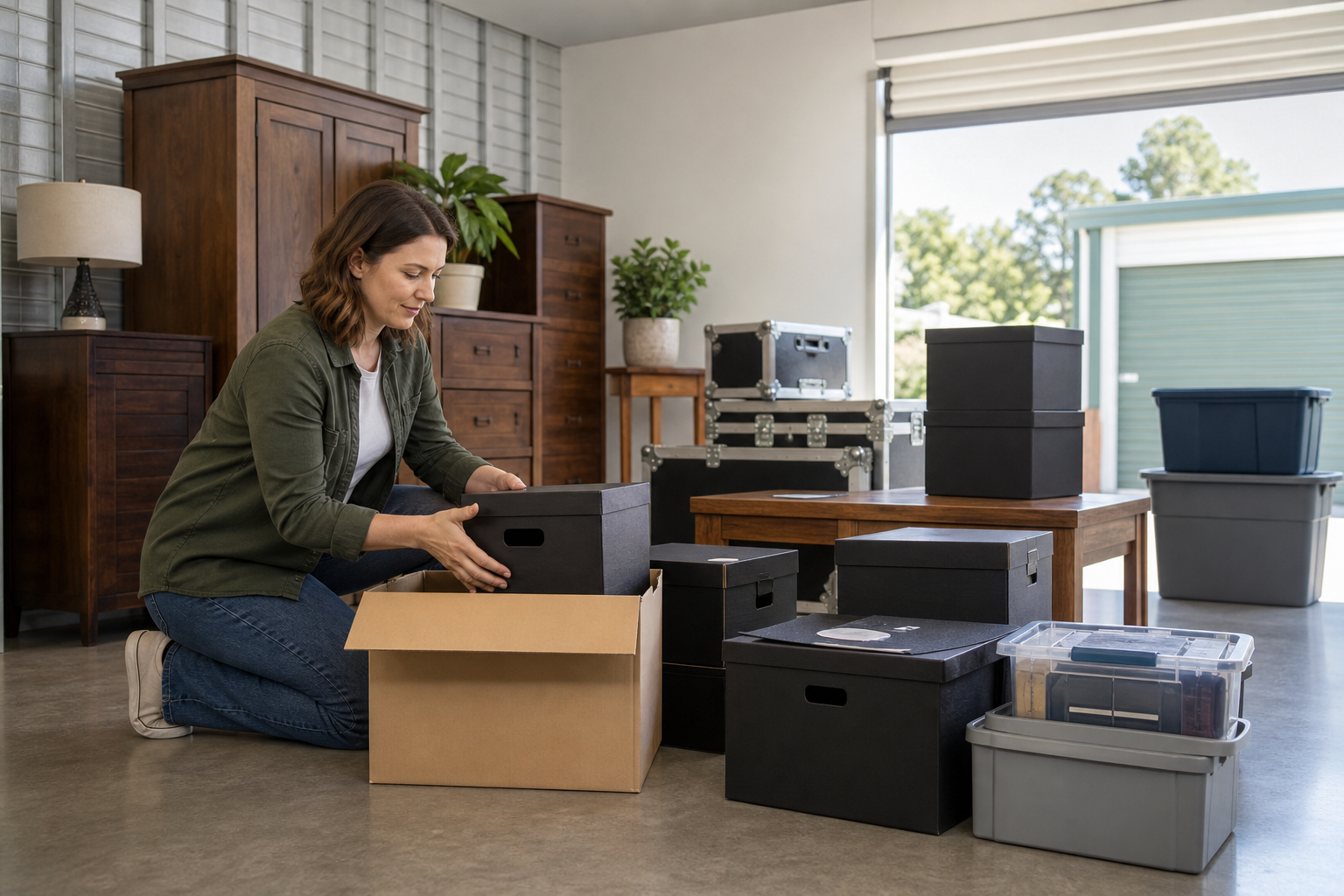
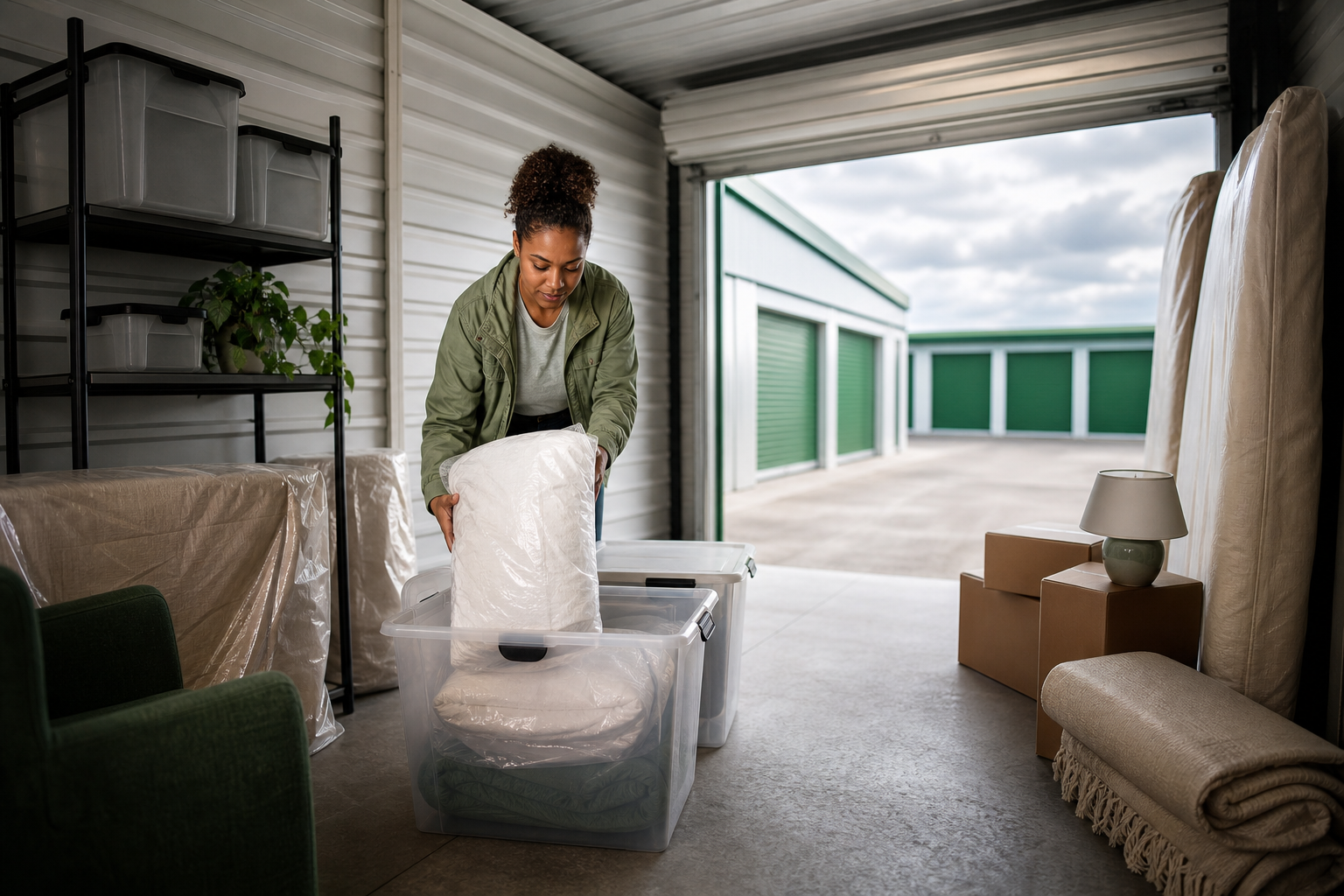
Climate control manages the room, but how you pack determines whether that stable air reaches your belongings. Sealing everything airtight can trap the moisture already inside an item, so leave breathing room where it counts. Furniture covers should shield from dust while still letting air move, and electronics do best boxed with their original packaging or padding to buffer the last of any temperature change. In Arkansas, the practical question is usually not just temperature; it is how long the item will sit through heat and humidity before you need it again.
- Elevate boxes off the concrete floor on pallets or shelving
- Use breathable covers for furniture; skip airtight plastic on wood and fabric
- Keep paper and photos in archival boxes, not bare cardboard
Toss a few silica gel packs or a small desiccant tub into boxes of photos, documents, and electronics even inside a climate-controlled unit. It's cheap insurance for the residual humidity that rides in with your boxes on a muggy loading day.
Compare climate control by access type, size, and availability
Climate-controlled units are almost always indoor units accessed from interior hallways inside an insulated, conditioned building, not the outdoor drive-up bays you back a truck up to. That trades a little loading convenience for a far more stable environment, and it means you'll carry items down a hallway rather than through a roll-up door. Availability is the practical catch: not every facility offers every size in climate control, and popular sizes fill up around campus move-out and peak moving season. Size the unit tight to your reactive load, since climate-controlled space typically costs more per square foot than drive-up, so an oversized unit compounds the premium. If you have a mixed load, some renters split it, keeping tools and metal in a cheaper drive-up unit and sensitive items in a smaller climate-controlled one. In Arkansas, the practical question is usually not just temperature; it is how long the item will sit through heat and humidity before you need it again.
- Size tight to sensitive items; the per-foot premium punishes oversizing
- Book early around campus move-out and summer moving season
- Consider splitting mixed loads between drive-up and climate-controlled
When you call, ask three things: the actual temperature range the building maintains, whether access hours differ for indoor units, and what the rate does after any intro month. Those answers separate real climate control with clear terms from a cheap headline price.
Quick summary
| Decision | What to check | Why it matters |
|---|---|---|
| What am I storing? | Whether items are reactive (wood, leather, electronics, paper) or tolerant (tools, metal, plastic) | Reactive items warp, mildew, and corrode; tolerant items usually don't need climate control |
| How long will it sit? | Whether the term runs through June-August or past 3-6 months | Arkansas summer heat and humidity cause cumulative damage the longer items stay |
| How am I packing it? | Elevation off the floor, breathable covers, archival boxes, desiccant | Poor packing traps moisture even inside a climate-controlled unit |
| Which unit and terms? | Temperature range, indoor access hours, size fit, and post-intro pricing | Clear terms and a right-sized unit beat the cheapest first-month promotion |
Storage numbers worth checking
Use these numbers as decision anchors before comparing facilities. The goal is not to guess a perfect unit — it is to compare the same details across options.
List largest items, box count, and aisle needs.
Use these as comparison anchors.
Monthly rate, promo length, required fees.
Drive-up convenience vs. indoor protection.
| Check | What to compare | Why it matters |
|---|---|---|
| 5×10 | Boxes, small bedroom, seasonal items | A small unit can save money if it truly fits |
| 10×10 | Apartment contents or household overflow | Often a safer middle option for mixed items |
| 10×20 | Multi-room moves or large equipment | More room can reduce loading frustration |
| Climate control | Sensitive vs. durable belongings | Arkansas heat and humidity change the risk |
StorageGuide verdict
Use the article as a decision filter: choose the smallest unit that comfortably fits your load, use climate control for wood, electronics, documents, photos, and fabrics, prioritize access that matches your real schedule, and compare regular rates and fees before trusting the cheapest promotion.
Storage FAQs
Is climate-controlled storage really necessary in Arkansas?
It depends on the item and the season. Arkansas summers push heat index values past 100°F with humidity often above 70 percent, which warps wood, mildews fabric and leather, and fogs electronics. If you're storing sensitive items through the hot months, climate control is worth it. If you're storing tools or plastic bins for a few weeks in spring or fall, a standard unit is usually fine.
What temperature do climate-controlled units keep?
It varies by facility, but most Arkansas climate-controlled units hold a managed indoor range in the neighborhood of 55°F to 85°F year-round, which stays well within the safe zone for wood, paper, electronics, and fabric. Ask each facility for its actual range, since some run tighter than others.
Is humidity or heat the bigger problem?
For most stored belongings, sustained humidity is the bigger threat. Once indoor humidity stays above roughly 60 percent, wood warps, leather and fabric mildew, metal corrodes, and paper yellows. A conditioned indoor space stays drier because cooler air holds less moisture, which is why climate control helps even when the temperature alone seems tolerable.
How long can I store items before I need climate control?
A useful rule of thumb: under a couple of months outside peak summer, most tolerant items are fine in a standard unit. Cross into June through August, or plan to store past three to six months, and climate control becomes the safer choice for anything reactive. Sensitive items can show damage in as little as a week during a humid Arkansas August.
Can I store some items standard and some climate-controlled?
Yes, and it's often the smart move for mixed loads. Keep tools, metal shelving, and sealed hardware in a cheaper drive-up unit, and put wood furniture, electronics, photos, and documents in a smaller climate-controlled unit. Sizing each unit tight to its contents keeps you from paying the climate-control premium on items that don't need it.
Find the right unit for your Arkansas summer
Compare climate-controlled and standard units by size, access, and availability near you, then match the unit to what you're actually storing and how long it'll sit.