Indoor vs Outdoor Storage Units: Which Is Better?
Use this size guide to compare bulky furniture, box count, walkway space, climate-control needs, drive-up access, and the questions to ask before reserving a unit.

How access type, size, and climate control actually change the loading experience
This guide compares indoor and outdoor storage by the things that actually change your day-to-day experience: unit size, climate control, drive-up versus hallway access, price patterns, access hours, and the questions worth asking before you sign anything. If you're moving a mattress, sofa, or appliance, access type matters as much as square footage. If you're storing anything sensitive to Arkansas heat and humidity, climate control matters more than whether the unit sits indoors or outdoors.
What matters most
Use the article as a decision filter: choose the smallest unit that comfortably fits your load, use climate control for wood, electronics, documents, photos, and fabrics, prioritize access that matches your real schedule, and compare regular rates and fees before trusting the cheapest promotion.
Let your biggest single item decide access type before you look at floor plans
Before comparing indoor and outdoor listings, figure out how your largest piece — a mattress, a sofa, a washer or dryer — will physically travel from your vehicle to the unit. Outdoor drive-up units let you back a truck or trailer directly to a roll-up door, which turns a full-size mattress or sectional into a single carry. Indoor units mean walking that same item down a corridor, possibly through a turn, and sometimes into an elevator, which is manageable for boxes and small furniture but can get awkward with anything long or heavy.
Measure your largest single item's longest dimension and compare it against the doorway width posted for indoor units, since hallway corners are often the real bottleneck, not the unit door itself.
Outdoor drive-up units trade weather exposure for loading speed
A drive-up unit is typically part of a single-row building you can park directly in front of, which is why movers, boat and trailer owners heading to Arkansas lakes, and anyone making several loading trips tend to prefer it. The tradeoff is exposure: the unit sits open to summer heat, sun on the door, and whatever rain shows up mid-move, unless the unit itself is climate controlled.
If you're leaning outdoor, ask whether that specific row sits on graded, well-drained ground, since drainage quality can vary row to row even within the same property.
Indoor units add hallway steps but tighter security layers
Indoor units usually sit behind an additional locked interior door beyond the property's outer gate, which is useful if you're storing higher-value items and want more than one barrier between the unit and the parking lot. The building itself also blocks direct sun and wind-driven rain, which is genuinely different from having a climate-controlled outdoor unit — you're getting shelter from the structure, not just temperature control.
If you're moving an appliance or full-size sofa indoors, ask staff whether the hallway and any elevator are wide enough for a furniture dolly to turn corners, not just whether the unit door will fit it.
Climate control is a separate decision from indoor versus outdoor
Being indoors doesn't automatically mean climate controlled, and being outdoors doesn't automatically mean unprotected — climate control is its own feature that can pair with either type. Arkansas summers push closed, unventilated units well above comfortable temperatures with humidity that swings hard after storms, which is rough on wood furniture, electronics, photos, instruments, and anything with adhesive or fabric. Tools, patio furniture, and sturdy plastic totes generally hold up fine without it.
Use this decision rule: if a box has sat untouched in a closet for over a year and you'd be upset to find it warped or musty, pay for climate control regardless of whether the unit is indoor or outdoor.
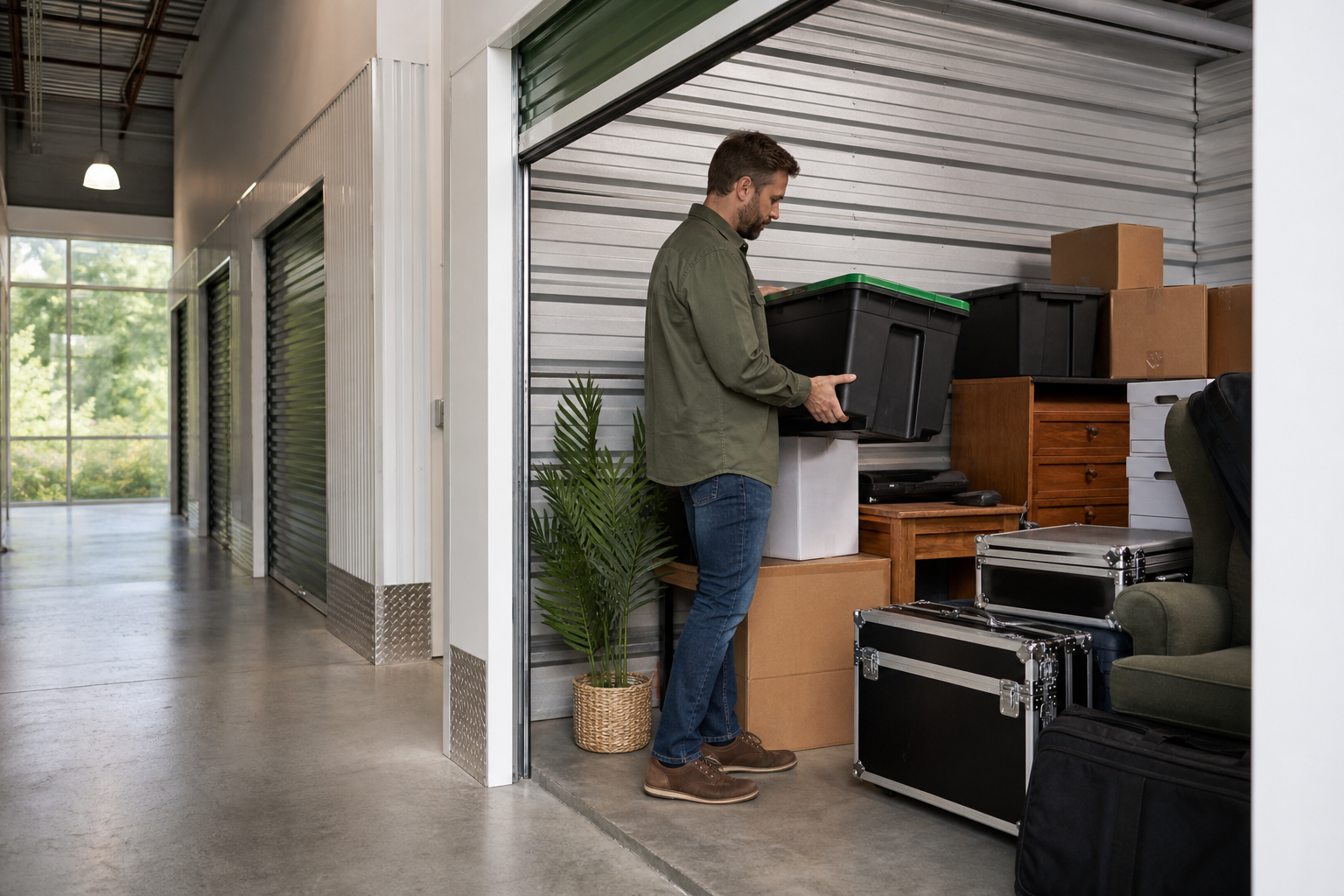
Use common size ranges as a planning starting point, not a fixed answer
Indoor and outdoor units are typically offered in the same general size lineup, so the square-footage math doesn't change based on access type — what changes is ceiling height and whether support columns interrupt the space. A studio move with mostly boxes and a mattress often fits a 5×10. A one-bedroom with a mattress, sofa, one major appliance, and moderate boxes usually needs a 10×10 to 10×15, more if you're also storing seasonal or lake gear.
- 5×5 to 5×10: dorm or studio overflow, mostly boxes
- 10×10: one-bedroom apartment with one or two large pieces
- 10×15: one-bedroom plus appliance or extra seasonal items
- 10×20 and up: multi-room household or vehicle-adjacent storage
Check the quoted ceiling height against your tallest stacked item — a mattress on its side plus a dresser on top of boxes — since some indoor units have lower clearance than outdoor units with taller roll-up doors.
Leave walkway space if you plan to visit the unit regularly
If you're storing pure long-term items you won't touch again until move-out, packing wall-to-wall makes sense. If you'll be back for seasonal decorations, business inventory, or anything you need more than once, an outdoor drive-up unit gives you the open bay in front as temporary staging space while you dig through boxes — an indoor unit doesn't have that buffer, so any walkway has to come out of the unit's own footprint.
If you expect to reach items more than twice a month, size up one increment specifically to preserve a center aisle rather than packing to the walls.
Compare the next size up and confirm fees and access hours before choosing indoor or outdoor
Before locking in a size, ask what the next size up costs — the difference is often smaller than expected relative to how much easier it makes loading and future access. Then confirm the practical terms that don't show up on a floor plan: access hours, whether those hours apply to the outer gate or the building interior, required locks, insurance or protection plan requirements, and whether the rate is month-to-month or a fixed lease term.
- What are the gate hours versus interior building hours?
- Is a specific lock type required, and is it provided or purchased separately?
- Is insurance or a protection plan required, and what does it cost?
- Is the rate month-to-month, and what changes if you need to move out early?
Ask specifically whether the posted access hours cover the building interior or just the property gate, since indoor buildings sometimes lock earlier than the outer gate closes.
Quick summary
| Decision | What to check | Why it matters |
|---|---|---|
| Indoor or outdoor access | Can you back a vehicle to the door, or is there a hallway and possibly an elevator | Determines how easily you move a mattress, sofa, or appliance without disassembly |
| Climate control | Whether temperature and humidity control is included or a separate add-on, indoors or out | Arkansas heat and humidity swings can warp wood, damage electronics, and encourage mold |
| Unit size | Box count plus large furniture pieces against common size ranges | Renting one size too small forces disassembly, a second trip, or a mid-lease upgrade |
| Walkway space | Whether you'll need to reach items again before move-out | Wall-to-wall packing only works for storage you won't touch until the end |
| Access hours and fees | Gate hours versus building hours, lock rules, insurance and lease terms | Restricted hours or added fees can offset a lower advertised rate |
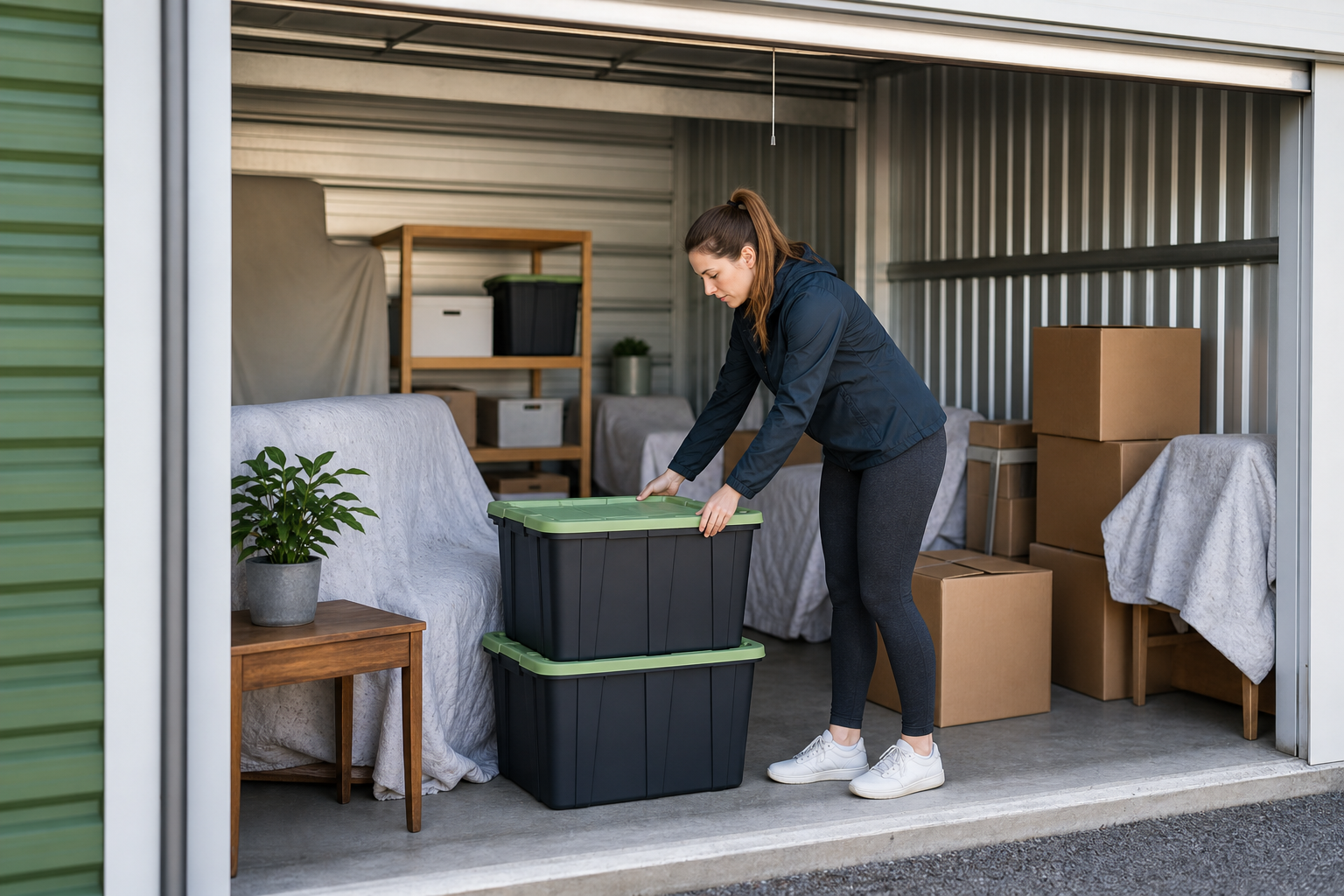
Storage numbers worth checking
Use these numbers as decision anchors before comparing facilities. The goal is not to guess a perfect unit — it is to compare the same details across options.
List largest items, box count, and aisle needs.
Use these as comparison anchors.
Monthly rate, promo length, required fees.
Drive-up convenience vs. indoor protection.
| Check | What to compare | Why it matters |
|---|---|---|
| 5×10 | Boxes, small bedroom, seasonal items | A small unit can save money if it truly fits |
| 10×10 | Apartment contents or household overflow | Often a safer middle option for mixed items |
| 10×20 | Multi-room moves or large equipment | More room can reduce loading frustration |
| Climate control | Sensitive vs. durable belongings | Arkansas heat and humidity change the risk |
StorageGuide verdict
Use the article as a decision filter: choose the smallest unit that comfortably fits your load, use climate control for wood, electronics, documents, photos, and fabrics, prioritize access that matches your real schedule, and compare regular rates and fees before trusting the cheapest promotion.
Storage FAQs
Is outdoor storage always cheaper than indoor?
Drive-up outdoor units tend to run lower than climate-controlled indoor space as a general pattern, but this isn't universal. Confirm actual rates for the specific unit type and size you're comparing rather than assuming outdoor is always the cheaper choice.
Can I fit a mattress and sofa into an outdoor drive-up unit?
Yes, and it's usually easier than indoor because you can back a vehicle directly to the door. Still measure the roll-up door width and height against your largest piece before booking.
Do all indoor units come with climate control?
No. Some indoor buildings offer climate control and some don't, and a few outdoor buildings offer it as well. Ask directly whether temperature and humidity control is included rather than assuming it based on indoor versus outdoor alone.
What size unit do I need for a one-bedroom apartment?
A 10×10 to 10×15 typically covers a mattress, sofa, one major appliance, and a moderate number of boxes. Go up a size if you have an oversized sofa, extra appliances, or seasonal and lake gear to store alongside apartment furniture.
How do I make sure I can still reach my boxes later?
Size up one increment specifically to keep a center walkway rather than packing wall-to-wall, especially indoors where there's no outside staging area to set boxes down temporarily.
Compare indoor and outdoor storage units near you
See available sizes, access types, and climate-control options before you decide.