5 Signs You Need a Larger Storage Unit
Use this size guide to compare bulky furniture, box count, walkway space, climate-control needs, drive-up access, and the questions to ask before reserving a unit.

How to size up before you overpay for empty space — or cram a unit you can't walk into
The right unit size is the smallest one your belongings fit into comfortably, not the one with the biggest number or the cheapest banner rate. This guide helps you compare common sizes (5×10 vs 10×10), decide when climate control is worth it for Arkansas heat and humidity, weigh drive-up versus indoor access, read past intro price and monthly fees, and check access hours before you sign. Start with your largest single item, add furniture and appliances, then count boxes last — and leave room to walk if you plan to visit.
What matters most
Use the article as a decision filter: choose the smallest unit that comfortably fits your load, use climate control for wood, electronics, documents, photos, and fabrics, prioritize access that matches your real schedule, and compare regular rates and fees before trusting the cheapest promotion.
#1Your largest item no longer fits without a fight
The single biggest thing you're storing sets your minimum unit size — not the total volume of your belongings. A queen mattress, a full-size sofa, or a refrigerator each dictates a footprint and a doorway clearance before anything else goes in. If you're tilting the mattress at an angle, standing the sofa on end just to close the door, or the appliance won't clear the entrance upright, the unit is too small for the item, period. Grab a measuring tape and record the length, width, and height of your largest piece, then compare it against the unit's door opening and interior dimensions rather than eyeballing it.
- Measure length, width, and height of your biggest piece first
- Check the door opening, not only the interior square footage
- If you're angling or standing an item up to fit, size up
Measure the unit's door opening, not just the floor. A 10×10 with a standard roll-up door can still block a tall armoire or a French-door fridge — call and confirm the clear door height before you commit.
#2Boxes keep multiplying after the furniture is already in
Box count is the wrong place to start and the right place to finish. Once you've placed your furniture and appliances, the remaining floor and vertical space determines how many boxes actually fit — and that's where people underestimate. A 5×10 swallows roughly 15 to 20 medium boxes on top of a mattress and small couch; add a dresser and a few totes and you're suddenly stacking against the door. If your box pile keeps growing every time you sort another closet, you've crossed from a compact unit into the next size up.
- Place furniture and appliances first, then count what boxes remain
- Use uniform box sizes so stacks stay stable and space-efficient
- Growing box counts mid-sort are the earliest sign you'll outgrow the size
Do a stack test at home: line up your packed boxes in a 5-by-10-foot rectangle taped on the floor. If they spill past the tape once furniture is accounted for, you need the larger unit — not more careful stacking.
#3You can't reach the back without unloading half the unit
If retrieving one item means restacking everything in front of it, your unit is functionally full even if there's air near the ceiling. Renters who visit — swapping seasonal gear, pulling business inventory, grabbing a tool — need a walkway, usually a two-foot aisle down the middle or along one side. That aisle costs you floor space, which means a unit that looked adequate for pure storage becomes too small the moment you plan to come and go. If you're storing and forgetting until move-out, you can pack tight; if you're storing and visiting, budget the walkway into your size.
- Leave a center or side aisle if you'll visit during storage
- Face labels outward and shelve frequently used items near the door
- No-visit storage can pack tight; frequent-access storage needs room to move
Put the things you'll reach for most near the door and label box sides, not tops. If you already know which items you'll retrieve monthly, that list alone tells you whether you need aisle space or can fill the unit solid.
#4A 5×10 is enough when it's apartment overflow, not a full home
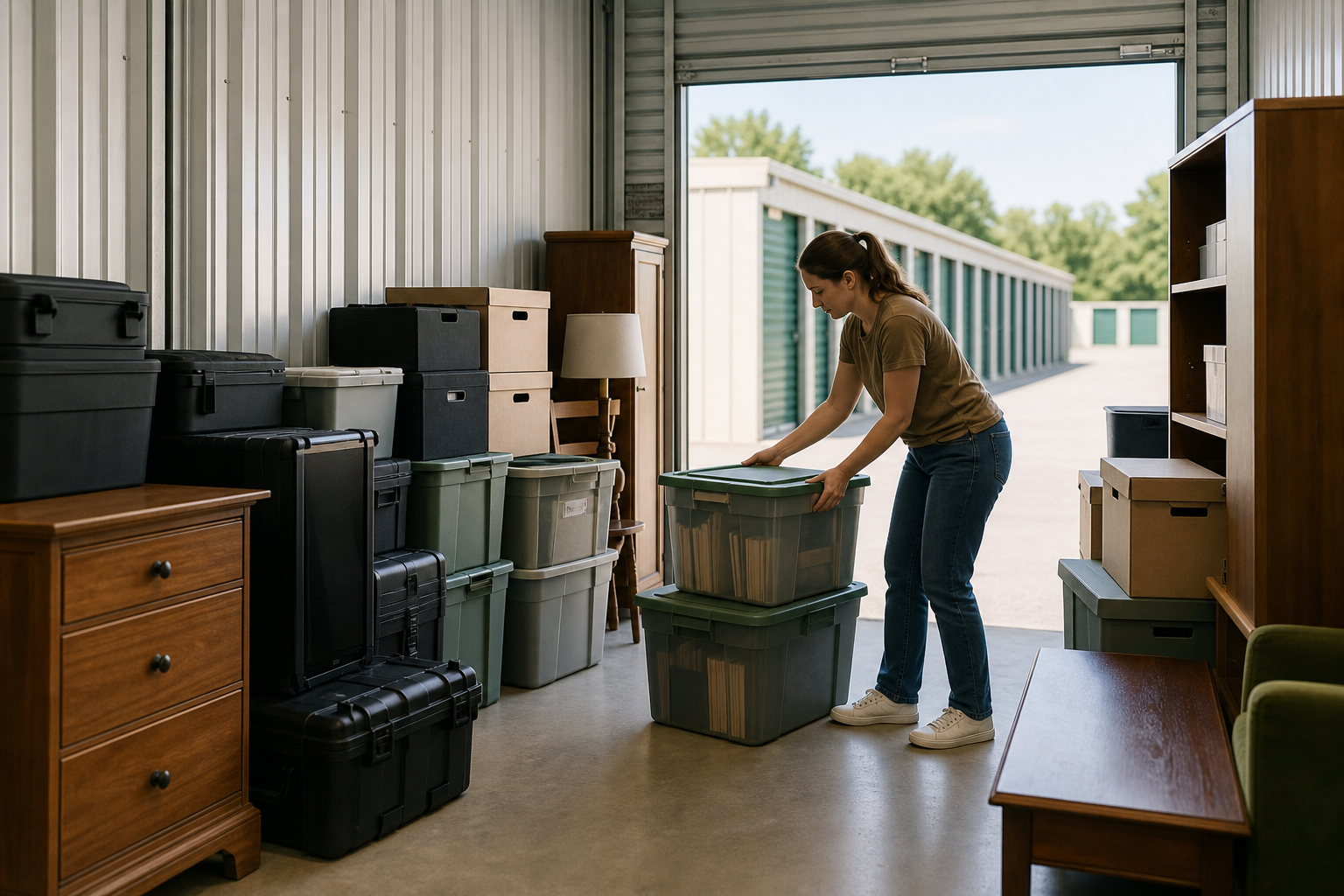
Not every 'need more space' feeling means renting bigger — sometimes it means you're eyeing the wrong tier. A 5×10 is the workhorse for apartment and studio overflow: a mattress set, a loveseat or small sofa, a dresser, a few lamps, and the boxes that go with them. It's a common landing spot for college move-out between semesters and for anyone clearing one room rather than an entire household. If your load is fundamentally 'one apartment's worth minus the big furniture,' resist jumping to a 10×10 you'll pay to keep half empty.
- Ideal for single-room clear-outs and campus move-out storage
- Fits a mattress, small couch, and dresser with boxes stacked
- Purge bulky low-value items before assuming you need to size up
Before upgrading, pull out anything you're storing out of guilt — the broken chair, the maybe-someday treadmill. Donating or selling two or three bulky items often keeps you in the smaller, cheaper unit for the whole rental term.
#5Step up to a 10×10 once real furniture dominates the load
The clean dividing line between the two most common sizes is furniture volume. A 10×10 doubles the floor space to 100 square feet and comfortably holds the contents of a one- to two-bedroom home: a full sofa and loveseat, a bedroom set, a dining table, major appliances, and the boxes around them. When you're storing multiple large pieces rather than a mattress and a couch, the 5×10 stops working and you spend the whole term fighting the door. This is also the size where climate control earns its keep — wood furniture, upholstery, and electronics hold up far better through an Arkansas summer of heat and humidity in a conditioned unit than in an unregulated one.
- Right when multiple large pieces and appliances lead the load
- Holds a 1-2 bedroom home's furniture plus boxes
- Pair with climate control for wood, upholstery, and electronics
If you're between sizes, price both for your expected rental length before deciding. A 10×10 you can actually walk through and access often beats a crammed 5×10 you have to unpack every visit — but only if the furniture volume genuinely justifies the jump.
Quick summary
| Decision | What to check | Why it matters |
|---|---|---|
| Largest item | Length, width, height vs. the door opening | One oversized piece can rule out a size regardless of total volume |
| Box count | How many fit after furniture is placed | Counting boxes first leads to under- or over-sizing |
| Access needs | Whether you'll visit and need a walkway | An aisle costs floor space and can push you up a size |
| 5×10 fit | Is this single-room apartment overflow? | Avoids paying for a half-empty larger unit |
| 10×10 fit | Do multiple large furniture pieces dominate? | Prevents a crammed unit you fight every visit |
| Climate control | Wood, upholstery, or electronics involved? | Arkansas heat and humidity warp and mildew sensitive items |
Storage numbers worth checking
Use these numbers as decision anchors before comparing facilities. The goal is not to guess a perfect unit — it is to compare the same details across options.
List largest items, box count, and aisle needs.
Use these as comparison anchors.
Monthly rate, promo length, required fees.
Drive-up convenience vs. indoor protection.
| Check | What to compare | Why it matters |
|---|---|---|
| 5×10 | Boxes, small bedroom, seasonal items | A small unit can save money if it truly fits |
| 10×10 | Apartment contents or household overflow | Often a safer middle option for mixed items |
| 10×20 | Multi-room moves or large equipment | More room can reduce loading frustration |
| Climate control | Sensitive vs. durable belongings | Arkansas heat and humidity change the risk |
StorageGuide verdict
Use the article as a decision filter: choose the smallest unit that comfortably fits your load, use climate control for wood, electronics, documents, photos, and fabrics, prioritize access that matches your real schedule, and compare regular rates and fees before trusting the cheapest promotion.
Storage FAQs
How do I know if I need a bigger unit or just better packing?
If you can restack to open a clear path and close the door easily, packing is the fix. If your largest item won't fit without tilting, or the box pile spills past the footprint after furniture is placed, you've genuinely outgrown the size.
Is a 5×10 or 10×10 better for a one-bedroom apartment?
It depends on your furniture. A 5×10 handles overflow like a mattress, small sofa, dresser, and boxes. Once you're storing a full sofa, a bedroom set, a dining table, and appliances together, step up to a 10×10 with room to move.
Do I need climate control in Arkansas?
For wood furniture, upholstery, electronics, and anything prone to warping or mildew, climate control is worth it through the humid summer months. For tools, patio gear, and sealed plastic totes, a standard drive-up unit is usually fine.
Should I leave empty space when I move in?
Only the space you'll actually use — a walkway if you plan to visit. Otherwise, aim for the smallest unit your belongings fit into comfortably rather than renting bigger just for cushion.
What should I ask before renting a larger unit?
Confirm the interior dimensions and door opening height, whether it's drive-up or indoor access, the access hours, and the total monthly cost including any administrative or insurance fees — not just the advertised intro rate.
Find the right size before you rent
Compare common unit sizes and climate-control options for your Arkansas move, then match your largest item and box count to a unit you can actually walk through.