9 Things Not to Store in a Storage Unit
Use this size guide to compare bulky furniture, box count, walkway space, climate-control needs, drive-up access, and the questions to ask before reserving a unit.

A practical way to choose between common unit sizes before you rent.
Start with mattresses, sofas, appliances, shelving, and whether you need a walkway. Boxes fill the gaps; bulky items decide the unit size.
What matters most
Use the article as a decision filter: choose the smallest unit that comfortably fits your load, use climate control for wood, electronics, documents, photos, and fabrics, prioritize access that matches your real schedule, and compare regular rates and fees before trusting the cheapest promotion.
#1Start with the largest item you need to store
Start with the items that cannot shrink or stack neatly. Mattresses, sofas, appliances, shelving, bikes, tools, and patio furniture usually determine the footprint before boxes do.
List the bulky items before counting boxes. Furniture and appliances usually decide the footprint.
#2Use box count only after furniture and appliances are listed
Box count matters after the furniture list is clear. A dozen boxes can fit around a sofa, but a sofa cannot fit around a dozen boxes. Estimate the large pieces first, then use boxes to fill the remaining space.
Sketch the largest pieces on paper before you reserve. One sofa or mattress can change the unit size faster than ten small boxes.
#3Leave walkway space if you will visit during storage
Walkway space is worth planning if you will visit during storage. A tightly packed unit may save money, but it becomes frustrating when the item you need is in the back corner.
Leave a walkway if you expect to retrieve items before moving out. A packed wall of boxes is cheaper only until you need something.
#4Choose 5×10 for compact apartment overflow
A 5×10 can work for compact apartment overflow, seasonal items, small furniture, and boxes. It becomes tight quickly when a mattress, sofa, or large appliance is part of the load.
A 5×10 can work for compact overflow, but only if furniture is limited and stackable items are organized.
#5Use 10×10 when furniture starts to dominate the load
A 10×10 is often the safer middle choice for one-bedroom moves, mixed household overflow, or furniture plus boxes. It gives more room for uneven shapes and a little access space.
If you are debating between 5×10 and 10×10, choose 10×10 when you need room to turn, stack carefully, or reach items later.
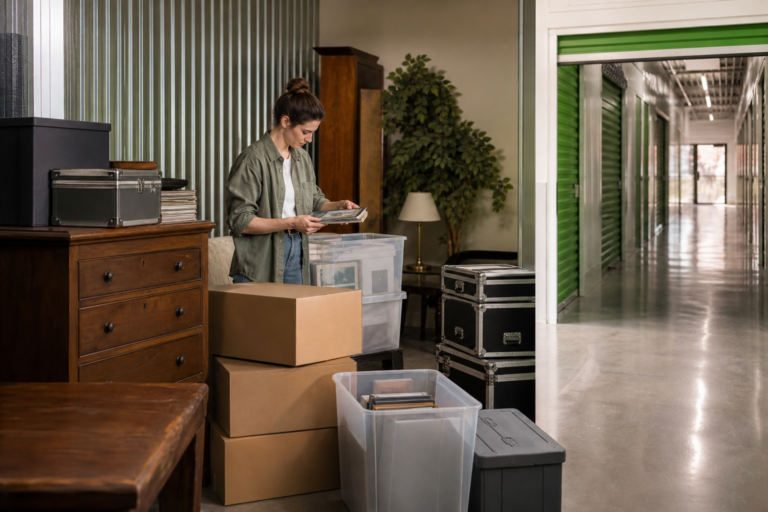
#6Consider 10×20 for multi-room moves and larger items
A 10×20 can make sense for multi-room moves, large equipment, tools, or bigger furniture loads. The extra space can reduce stacking pressure and make move-out easier.
Sketch the largest pieces on paper before you reserve. One sofa or mattress can change the unit size faster than ten small boxes.
#7Do not forget shelving, bikes, tools, and awkward items
Awkward items deserve their own line on the planning list. Bikes, shelves, ladders, grills, tools, and outdoor gear often use more practical space than their size suggests.
Do not forget bikes, shelving, outdoor gear, and odd-shaped items; they take more usable space than boxes.
#8Stack safely instead of relying on a perfect floor plan
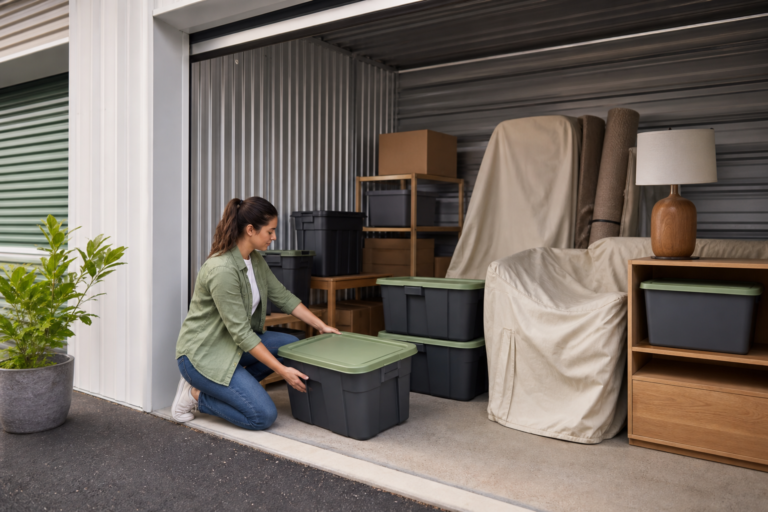
Stacking only works when weight and stability are realistic. Heavy boxes should stay low, fragile items should stay protected, and tall stacks should not lean into furniture or walkways.
Stack heavy boxes low and light boxes high so the unit stays safe to open later.
#9Compare the next size up before forcing a tight fit
Compare the next size up before forcing everything into a tight unit. Sometimes the easier loading path and reduced damage risk are worth more than the small monthly difference.
If you are debating between 5×10 and 10×10, choose 10×10 when you need room to turn, stack carefully, or reach items later.
Quick summary
| Decision | What to check | Why it matters |
|---|---|---|
| Unit size | Largest items, box count, walk-in space | Prevents renting too small or paying for unused space |
| Climate control | Wood, electronics, documents, photos | Protects sensitive belongings during Arkansas heat and humidity |
| Access | Drive-up, indoor hallway, gate hours | Makes move-in and repeat visits easier |
Storage numbers worth checking
Use these numbers as decision anchors before comparing facilities. The goal is not to guess a perfect unit — it is to compare the same details across options.
List largest items, box count, and aisle needs.
Use these as comparison anchors.
Monthly rate, promo length, required fees.
Drive-up convenience vs. indoor protection.
| Check | What to compare | Why it matters |
|---|---|---|
| 5×10 | Boxes, small bedroom, seasonal items | A small unit can save money if it truly fits |
| 10×10 | Apartment contents or household overflow | Often a safer middle option for mixed items |
| 10×20 | Multi-room moves or large equipment | More room can reduce loading frustration |
| Climate control | Sensitive vs. durable belongings | Arkansas heat and humidity change the risk |
Who this is best for
Best for
- Renters comparing size, access, climate control, and price clarity
- Moves where the items and retrieval plan matter
- Arkansas storage shoppers who want practical tradeoffs
Not best for
- Someone looking only for the lowest first-month promotion
- Renters who have not listed their largest items yet
- Facility-specific decisions without checking current availability
Pros
- Helps avoid paying for empty space
- Shows when stepping up from 5×10 to 10×10 is worth it
- Connects unit size to access, climate control, and retrieval needs
Watch-outs
- Box count estimates can be wrong if furniture is bulky
- A tightly packed unit is harder to use later
- Available sizes can vary by location
StorageGuide verdict
Use the article as a decision filter: choose the smallest unit that comfortably fits your load, use climate control for wood, electronics, documents, photos, and fabrics, prioritize access that matches your real schedule, and compare regular rates and fees before trusting the cheapest promotion.
Storage FAQs
Do I need climate-controlled storage in Arkansas?
You should consider it for wood furniture, electronics, documents, photos, fabrics, and anything stored through hot or humid months. Durable outdoor items may not need it.
What storage unit size should I choose?
Start with your largest items, then estimate box count and whether you need walkway space. A slightly larger unit can be easier to use if you will visit often.
Is drive-up storage better than indoor storage?
Drive-up storage is easier for heavy loading. Indoor storage can be better when weather protection and climate control matter more.
Compare storage options in Arkansas
Look for the right size, practical access, and clear rental terms before reserving a unit.