What Size Storage Unit Do I Need?
Use this size guide to compare bulky furniture, box count, walkway space, climate-control needs, drive-up access, and the questions to ask before reserving a unit.

Match your unit to your stuff, not the other way around
The fastest way to size a storage unit is to start with your largest furniture and appliances, then add box count and walkway space. This guide walks through common unit sizes as planning ranges, when to size up, and what to confirm on access, climate control, and fees before you sign.
What matters most
Use the article as a decision filter: choose the smallest unit that comfortably fits your load, use climate control for wood, electronics, documents, photos, and fabrics, prioritize access that matches your real schedule, and compare regular rates and fees before trusting the cheapest promotion.
Start with bulky items, not box count
Boxes stack and flex around your space, but a mattress, sofa, refrigerator, or shelving unit sets the floor footprint you can't shrink. List your three largest items first and note their rough dimensions. A queen mattress and a standard sofa already eat most of a 5×10. Add a dresser and a washer, and you're into 10×10 territory. Once the bulky pieces have a home, boxes fill the gaps above and around them.
Stand a mattress and sofa on their long edges against a wall. Vertical storage frees floor space and often drops you a full size down.
Use common unit sizes as planning ranges
Storage sizes aren't precise to your belongings, so treat them as ranges. A 5×5 handles a closet or a dorm's worth of boxes and a chair. A 5×10 fits a mattress set, a small sofa, and a stack of boxes. A 10×10 covers a one-bedroom apartment with appliances. A 10×15 to 10×20 absorbs a two- or three-bedroom home, including a fridge, washer, dryer, and larger furniture. Match the range to your move, then refine up or down based on how you pack.
- 5×5: closet, boxes, a chair or small desk
- 5×10: mattress, small sofa, boxes
- 10×10: full one-bedroom with appliances
- 10×15-10×20: multi-room home contents
Estimate by room: a 10×10 roughly equals one furnished bedroom plus a living room. Count rooms first, then adjust for how full each one is.
Leave walkway space if you'll visit
If you only load once and unload once, you can pack a unit wall to wall. But if you'll pull out a box of holiday decorations or swap seasonal clothing, you need a path. Plan roughly a two-foot aisle down the middle and keep frequently used items near the door. That walkway effectively costs you a size bump, but it saves you from unstacking the whole unit every visit. Drive-up units make loading easier; indoor units usually mean a cart and a hallway, so factor that into how you arrange things.
Label box ends, not tops, and face them toward your walkway. You'll find what you need without climbing over the stack.

Compare the next size up before forcing a tight fit
When your items barely fit, the next size up is often a small monthly difference for meaningful room. A unit packed to the ceiling with no slack is hard to access, harder to add to, and risks crushing items at the bottom. Before you commit to a tight fit, price the next size and weigh it against the headache of repacking or renting a second unit later. If you're between sizes and plan to add belongings during a move or a semester, size up now.
- Measure your tallest stack against the unit's ceiling height
- Leave slack if you'll add boxes later
- A second unit costs more than one right-sized unit
If you're hesitating between two sizes, choose the larger one only when you expect to add items. If your inventory is fixed, the smaller unit with smart vertical packing usually wins.
Confirm climate control, access, and fees
Size is only half the decision. Arkansas summers run hot and humid, and an un-cooled unit can warp wood, fog electronics, and grow mildew on upholstery and mattresses. Climate control matters most for furniture, instruments, photos, and anything fabric. On access, decide whether drive-up convenience or an indoor unit's protection fits your routine, and check gate hours against when you'll actually visit. On cost, ask what the rate becomes after any intro promo, whether there's an admin fee, and if insurance is required. Clear terms beat a low headline price.
Ask for the standard monthly rate, not just the promo, and write it down. Then ask what triggers a rate increase so you're not surprised in month four.
Quick summary
| Decision | What to check | Why it matters |
|---|---|---|
| Bulky items | Dimensions of your three largest pieces | They set the floor footprint you can't shrink |
| Box count | How many boxes and how high they stack | Fills space around furniture and affects size |
| Walkway | Whether you'll access items regularly | A usable aisle costs about one size up |
| Climate control | If items are heat- or humidity-sensitive | Arkansas summers can damage wood and fabric |
| Access type | Drive-up vs indoor and gate hours | Determines loading effort and visit timing |
| Fees | Post-promo rate, admin fee, insurance | Cheapest first month isn't the real cost |
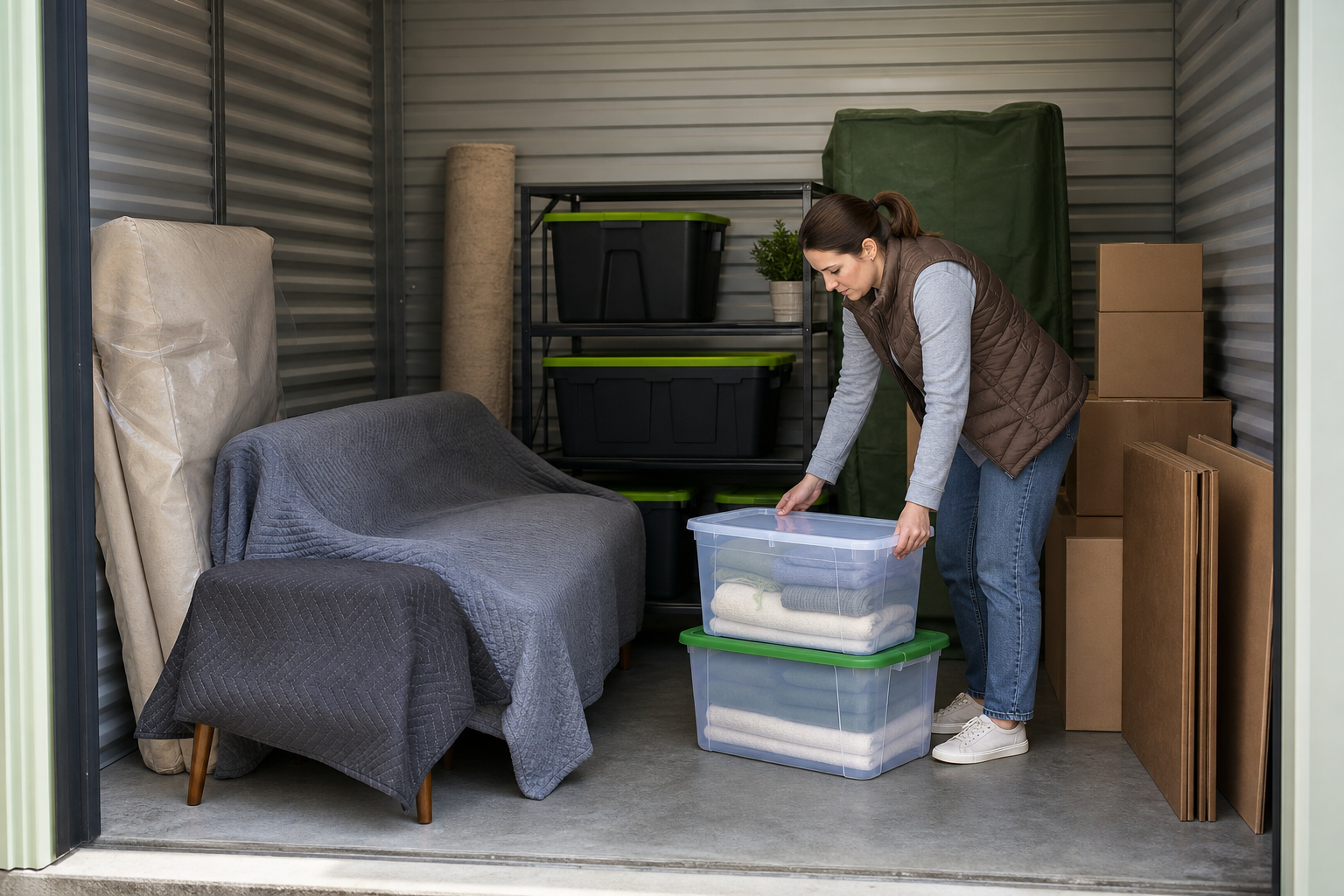
Storage numbers worth checking
Use these numbers as decision anchors before comparing facilities. The goal is not to guess a perfect unit — it is to compare the same details across options.
List largest items, box count, and aisle needs.
Use these as comparison anchors.
Monthly rate, promo length, required fees.
Drive-up convenience vs. indoor protection.
| Check | What to compare | Why it matters |
|---|---|---|
| 5×10 | Boxes, small bedroom, seasonal items | A small unit can save money if it truly fits |
| 10×10 | Apartment contents or household overflow | Often a safer middle option for mixed items |
| 10×20 | Multi-room moves or large equipment | More room can reduce loading frustration |
| Climate control | Sensitive vs. durable belongings | Arkansas heat and humidity change the risk |
StorageGuide verdict
Use the article as a decision filter: choose the smallest unit that comfortably fits your load, use climate control for wood, electronics, documents, photos, and fabrics, prioritize access that matches your real schedule, and compare regular rates and fees before trusting the cheapest promotion.
Storage FAQs
What size unit fits a one-bedroom apartment?
A 10×10 usually covers a furnished one-bedroom, including a mattress set, sofa, dresser, and appliances with boxes filling the gaps. If you have minimal furniture, a 5×10 may be enough.
How do I size a unit if I only have boxes?
Count your boxes and stack height. Around 25 to 30 standard boxes fit a 5×5; a 5×10 handles roughly double that plus a few small items. Stack boxes to the ceiling only if you won't need to dig through them.
Do I need climate control in Arkansas?
For wood furniture, mattresses, electronics, photos, and instruments, climate control is worth it given summer heat and humidity. For tools, plastic bins, and outdoor gear, a standard unit is usually fine.
Should I size up if I'm between two sizes?
Size up if you'll add belongings during a move or semester, or if you want a walkway. If your inventory is fixed and you pack vertically, the smaller unit typically saves money.
Does drive-up or indoor access change the size I need?
Not the size, but the layout. Drive-up units make loading bulky items easier, while indoor units mean carting items through hallways, so plan your aisle and item placement accordingly.
Find the right size near you
Compare unit sizes, climate control, access types, and clear pricing at facilities across Arkansas.