9 Things Not to Store in a Storage Unit
Use this size guide to compare bulky furniture, box count, walkway space, climate-control needs, drive-up access, and the questions to ask before reserving a unit.

How to size a storage unit by your biggest item, your box count, and how often you'll walk in
The fastest way to choose a unit size is to start with your largest item, list furniture and appliances before you count boxes, and decide whether you'll need a walkway to reach things during the rental. This guide walks that decision in order and shows where 5×10, 10×10, and 10×20 actually make sense. Along the way it flags the size-adjacent choices that change your monthly bill: climate control for Arkansas heat and humidity, drive-up versus indoor access, access hours, and the fees to confirm before you sign.
What matters most
Use the article as a decision filter: choose the smallest unit that comfortably fits your load, use climate control for wood, electronics, documents, photos, and fabrics, prioritize access that matches your real schedule, and compare regular rates and fees before trusting the cheapest promotion.
#1Measure your largest item before you look at any size chart
Unit sizes are sold in floor dimensions, but the item that dictates your size is usually the tallest or longest one: a sofa, a mattress and box spring, a refrigerator, or a dresser. Grab a measuring tape and record the width and depth of your biggest piece. If a king mattress or a three-seat sofa won't lie flat or stand on end inside the footprint, no amount of clever stacking fixes it. Sizing from your largest item first stops you from choosing a unit that looks big enough on paper but can't physically take the piece you cared about most.
Measure doorways and the unit's roll-up door opening too, not just the floor. A 30-inch fridge that fits the floor plan is useless if it won't clear a 28-inch entrance.
#2Count boxes only after furniture and appliances are placed
Boxes feel like the main event when you're packing, but they're the flexible part of the load. Furniture and appliances have fixed shapes and can't be compressed, so map those into the unit first. Once the couch, table, and washer have their spots, the leftover floor and the vertical space above the furniture is where boxes go. Counting boxes first tends to inflate the size you think you need, because you picture them spread across the floor instead of stacked into gaps and on top of sturdy pieces.
Standardize on one or two box sizes before you pack. Uniform cartons stack into stable columns and let you use vertical space that odd-sized boxes waste.
#3Add a walkway only if you'll visit during the rental
A clear aisle down the middle costs you usable space, so only build one if you'll actually come back before move-out. If you're storing everything and retrieving it all at once, you can pack the unit wall to wall and floor to near-ceiling. If you'll swap seasonal gear, pull out a bike, or grab boxes monthly, leave a two-foot walkway and put the items you'll touch most near the door. Deciding this upfront can be the difference between renting one size up or staying put.
If you need occasional access but hate losing floor space, store the frequently used items in labeled bins right at the front and pack everything else solid behind them.
#4Choose a 5×10 for tight apartment or dorm overflow
A 5×10 is about the size of a large walk-in closet and works when you're storing the contents of a studio, a single bedroom, or a college dorm between semesters. Think a mattress set on edge, a small dresser, a few chairs, and a stack of boxes down the length. It's the right call for Arkansas campus move-outs where you're clearing a dorm for the summer but not an entire household. Push furniture to the back wall and it holds more than the modest footprint suggests.
Store the mattress upright against a long wall rather than flat on the floor. It frees the whole floor for boxes and keeps the mattress from becoming a shelf you can't unbury.
#5Step up to a 10×10 when furniture starts to dominate the load
Once you're storing full-size furniture from one to two rooms, a sofa, bed, dresser, dining set, plus boxes, a 5×10 gets crowded and a 10×10 gives you room to arrange rather than cram. This is the most-rented household size for a reason: it swallows a couple of furnished rooms and still leaves room to stack boxes to a safe height. If your list has grown past a single room's worth of furniture but you're not moving a whole house, this is usually the sweet spot.
If a 10×10 fits but only if you pack it perfectly, price the 10×15 before committing. A little slack often costs less than the time and risk of a Tetris-perfect load.
#6Reach for a 10×20 for multi-room moves and long items
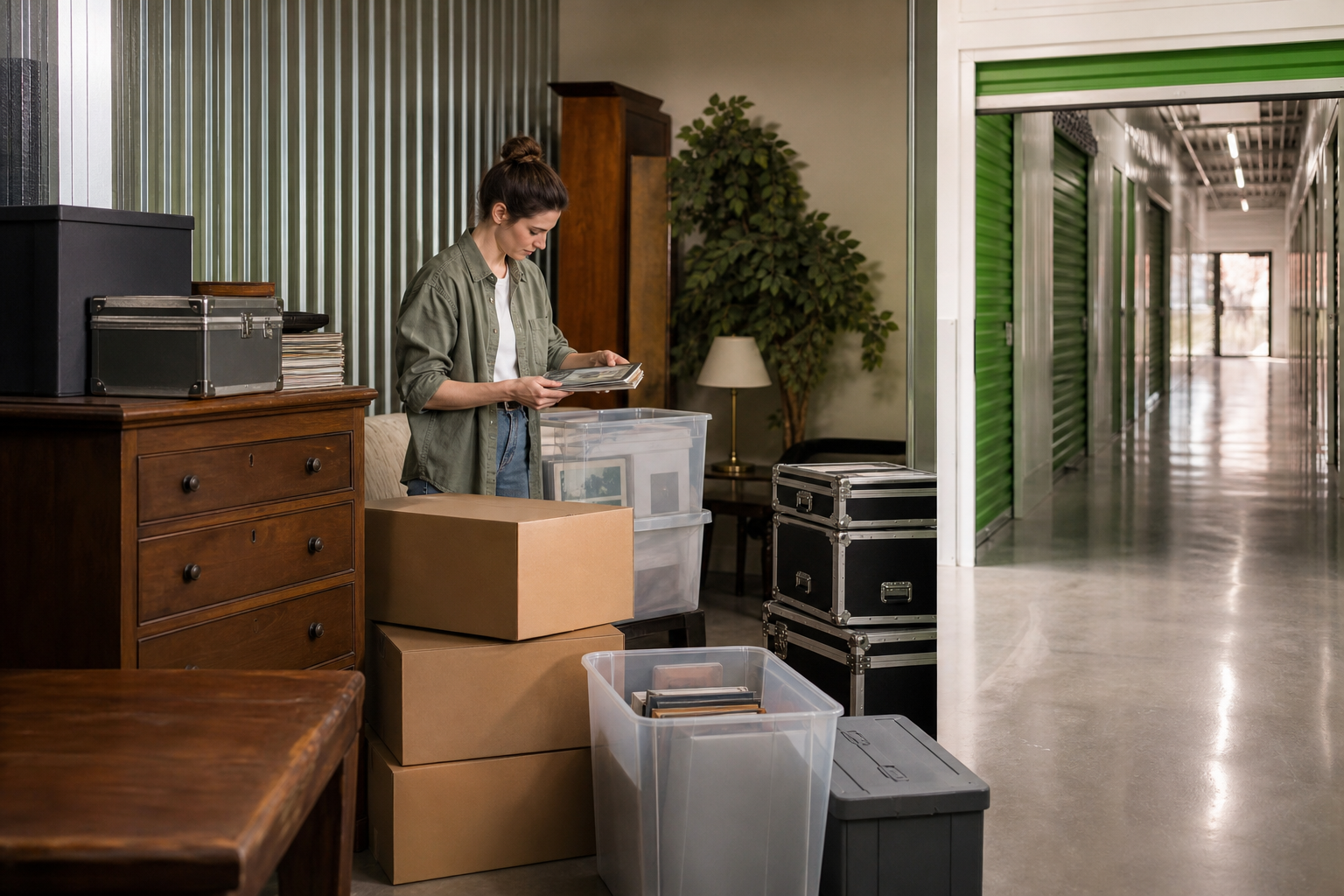
A 10×20 is roughly a one-car garage and handles the contents of a multi-room home or a small house, including appliances, mattresses, and the long or bulky pieces that shorter units fight you on. It's also the practical choice when you're between homes during a longer Arkansas move and need everything in one place. The 20-foot depth is what makes it work for ladders, sectional sofas, and long shelving that can't turn a corner in a smaller unit.
Load the deepest, least-needed items first at the back and keep a rough path if the move-in and move-out are weeks apart. A full-size unit is miserable to dig through if you didn't plan the order.
#7Account for shelving, bikes, tools, and awkward extras
The items that blow up a size estimate are rarely the big obvious ones, they're the awkward extras that don't stack: freestanding shelving units, bikes, a lawnmower, golf clubs, garden tools, a grill, or a car-top carrier. These eat floor space and refuse to nest with boxes. Walk through the garage, closet, and shed mentally and add them to your list before you settle on a size, because three or four odd items can quietly push you from one footprint to the next.
- Freestanding shelving and bookcases
- Bikes, scooters, and sports gear
- Lawn and garden tools, grills, coolers
Break down shelving units and hang bikes from wall hooks if the facility allows it, or lean them flat against a side wall so their footprint disappears.
#8Stack safely instead of counting on a perfect floor plan
Using vertical space is how a smaller unit beats a larger one, but only if the stack is stable. Put heavy boxes and sturdy furniture on the bottom, lighter and fragile items up top, and keep stacks square rather than leaning. A wobbly tower forces you to spread out on the floor, which wastes the space you paid for. Safe stacking, not a flawless diagram, is what lets you commit to the smaller size with confidence.
Don't stack directly against the door, and leave a few inches of air behind tall stacks so a shifted box can't jam the roll-up when you return.
#9Price the next size up before you force a tight fit
When your list barely fits, run the numbers on one size larger before you commit to squeezing. The gap between adjacent sizes is often smaller than renters expect, and a unit you can walk into without unloading half of it is worth real money in saved time and reduced breakage. Force a tight fit only when the price jump is clearly not worth it, and confirm access hours, drive-up versus indoor access, and any admin or lock fees so a low headline rate isn't hiding the real cost.
If you're within about 10 percent of a unit's capacity, size up. That last sliver of space is where damaged furniture and a jammed door come from.
Quick summary
| Decision | What to check | Why it matters |
|---|---|---|
| Which size | Largest item's width, depth, and height | One oversized piece can rule out a footprint that otherwise looks big enough |
| How full | Furniture and appliance list, then box count | Counting boxes first inflates the size you think you need |
| Access | Whether you'll visit and need a walkway | An aisle can push you one size up if you don't actually need it |
| Climate control | Wood, electronics, mattresses, or delicate items | Arkansas heat and humidity can warp and mildew unprotected belongings |
| Real cost | Access hours, drive-up vs indoor, admin and lock fees | A cheap headline rate can hide the price that actually applies |
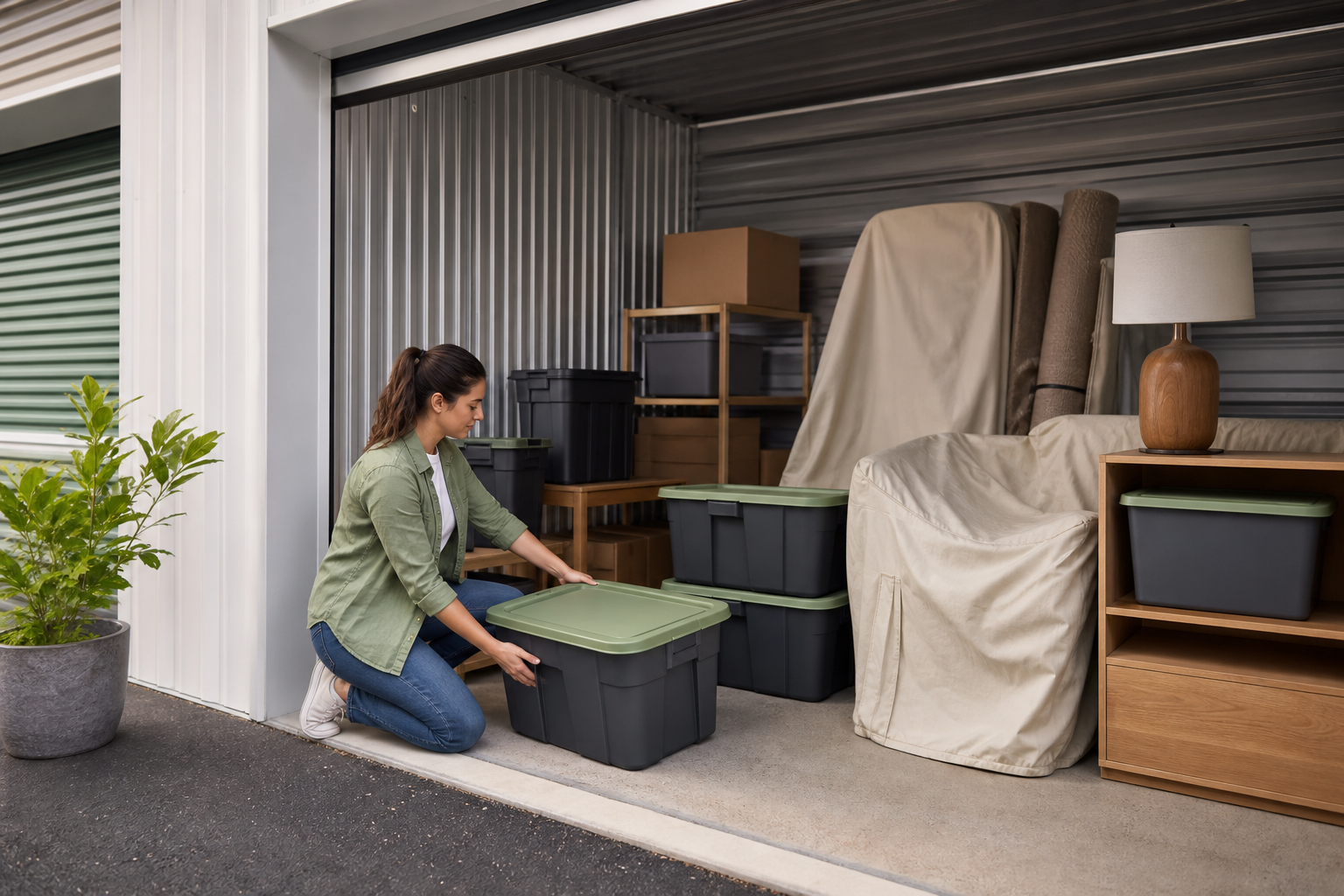
Storage numbers worth checking
Use these numbers as decision anchors before comparing facilities. The goal is not to guess a perfect unit — it is to compare the same details across options.
List largest items, box count, and aisle needs.
Use these as comparison anchors.
Monthly rate, promo length, required fees.
Drive-up convenience vs. indoor protection.
| Check | What to compare | Why it matters |
|---|---|---|
| 5×10 | Boxes, small bedroom, seasonal items | A small unit can save money if it truly fits |
| 10×10 | Apartment contents or household overflow | Often a safer middle option for mixed items |
| 10×20 | Multi-room moves or large equipment | More room can reduce loading frustration |
| Climate control | Sensitive vs. durable belongings | Arkansas heat and humidity change the risk |
StorageGuide verdict
Use the article as a decision filter: choose the smallest unit that comfortably fits your load, use climate control for wood, electronics, documents, photos, and fabrics, prioritize access that matches your real schedule, and compare regular rates and fees before trusting the cheapest promotion.
Storage FAQs
How do I know if I need a 5×10 or a 10×10?
Use furniture as the tiebreaker. A 5×10 fits a studio or single room's worth, while a 10×10 is right once full-size furniture from one to two rooms dominates the load. If your sofa, bed, and dresser already crowd the 5×10 on paper, move up.
Should I leave a walkway in my unit?
Only if you'll visit during the rental. Load-and-leave storage can be packed wall to wall, but if you'll retrieve seasonal or frequently used items, keep a roughly two-foot aisle and put those items near the door.
Do I need climate control in Arkansas?
It's worth it for wood furniture, electronics, mattresses, photos, and anything delicate, because Arkansas summer heat and humidity can warp, crack, and mildew unprotected belongings. Sturdy plastic, metal, and outdoor gear are usually fine without it.
Is it better to size up or force a tight fit?
If your load is within about 10 percent of a unit's capacity, price the next size up. The cost gap between adjacent sizes is often small, and the extra room reduces breakage and makes access far easier.
What fees should I ask about before renting?
Confirm access hours, whether the unit is drive-up or indoor, and any admin or lock fees on top of the monthly rate. A low advertised price can hide the number you'll actually pay.
Match your list to the right size
Once you've measured your largest item and listed your furniture, compare available sizes and access options near you before you rent.