Drive-Up vs Indoor Storage Units
Use this guide to compare drive-up access, indoor hallways, loading distance, access hours, weather exposure, unit size, and the questions to ask before renting.
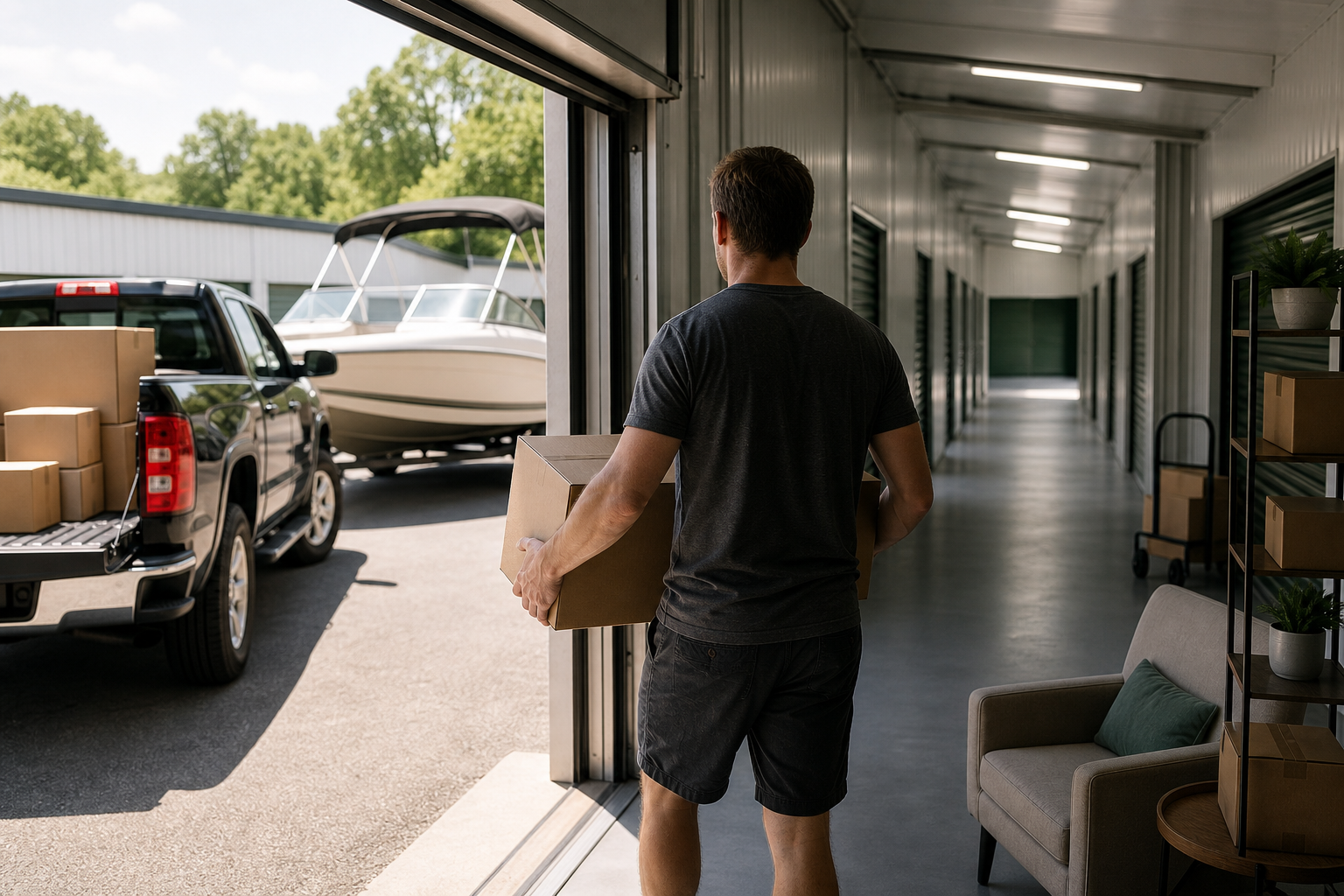
Match access to how you load, how often you visit, and what you're protecting
This comparison helps you choose between drive-up and indoor storage by weighing the factors renters actually search for: unit size, whether you need climate control, drive-up versus indoor access, price and fees, access hours, and what to ask before you sign. Drive-up units park your vehicle at a roll-up door for fast, dolly-free loading of sofas, mattresses, and heavy boxes. Indoor units trade a longer walk from the loading zone for a more sheltered, temperature-stable environment. If you're loading heavy furniture or making repeat visits, lean drive-up. If you're storing electronics, wood furniture, or anything sensitive to Arkansas heat and humidity, lean indoor climate-controlled.
What matters most
Use the article as a decision filter: choose the smallest unit that comfortably fits your load, use climate control for wood, electronics, documents, photos, and fabrics, prioritize access that matches your real schedule, and compare regular rates and fees before trusting the cheapest promotion.
Use drive-up access for heavy or repeated loading
Drive-up units put a roll-up door within a few feet of your vehicle, heavy tools, appliances or stacks of heavy boxes go from tailgate to unit without a hallway in between. That geometry matters most when items are awkward or heavy: you skip the interior corridors, elevators, and door thresholds that slow indoor loading. It also pays off when you'll be back often — a business restocking inventory or a renter cycling seasonal gear saves real time per trip when the truck can back right up to the door.
- Ideal for heavy, rugged items
- Cuts trips for renters who visit weekly or seasonally
- Best matched to trucks, trailers, and wide-access vehicles
Compare loading distance with protection needs
The core tradeoff is distance versus shelter. Drive-up wins the distance battle, but the same door to the outside that makes loading easy also exposes your unit to outside temperature and humidity. Indoor units sit behind the building envelope, which buffers temperature swings and keeps moisture regulated — at the cost of a longer carry from the loading area. The right call depends on what's inside: a lawnmower and plastic totes shrug off the exposure, while a leather sofa, a flat-screen, or a wood dresser will not.
- Rugged items: tools, plastic totes, metal shelving, yard gear
- Sensitive items: electronics, wood, upholstery, instruments, paper
- Mixed loads may justify a dolly and indoor protection
Sort your load into two piles before you choose: 'rugged' items that tolerate exposure and 'sensitive' items that don't. If the sensitive pile is more than a box or two that could be stored elsewhere, the protection of indoor storage outweighs the shorter drive-up carry.
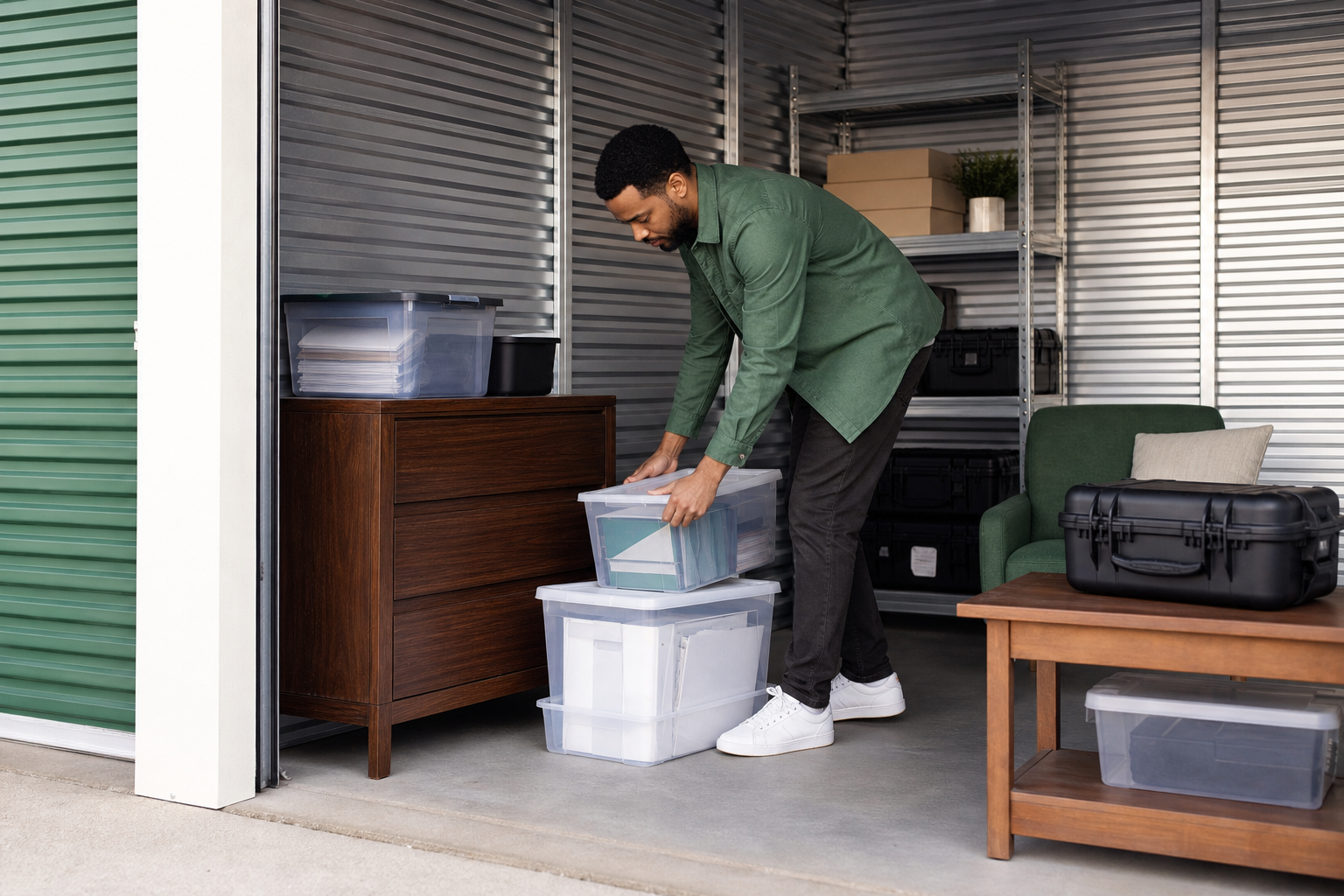
Choose indoor access when weather protection matters more
In Arkansas, the deciding factor for many renters is summer. Sustained heat and high humidity can warp wood, cloud electronics, mildew upholstery, and buckle vinyl inside an unconditioned drive-up unit. An indoor climate-controlled space holds a steadier temperature and lower humidity, which is what protects sensitive belongings over months rather than a quick weekend hold. It also shields against the abrupt storms and wind-driven rain that can push moisture and debris under a roll-up door. If you're storing anything you'd hesitate to leave in a hot garage from June through September, indoor is the safer access.
- Protects wood, electronics, upholstery, and documents
- Buffers humidity spikes and storm-driven moisture
- Matters most for multi-month and seasonal storage
For long-term summer storage, treat climate control as the requirement and access type as secondary.
Quick summary
| Decision | What to check | Why it matters |
|---|---|---|
| Heavy furniture loading | Roll-up door and vehicle access lane | Drive-up loads a sofa or mattress straight from the truck; indoor adds a hallway carry |
| Sensitive belongings | Climate control and humidity handling | Indoor units buffer Arkansas heat and humidity that can damage wood and electronics |
| Frequent visits | Loading distance and access hours | Drive-up saves time per trip; confirm gate and building hours fit your schedule |
| Weather exposure | Unit envelope and storm protection | Indoor keeps out dust, moisture, and wind-driven rain that reach a drive-up door |
| Cost and fees | Ongoing rate, not just first-month promo | Climate-controlled indoor typically costs more; weigh protection against the recurring rate |
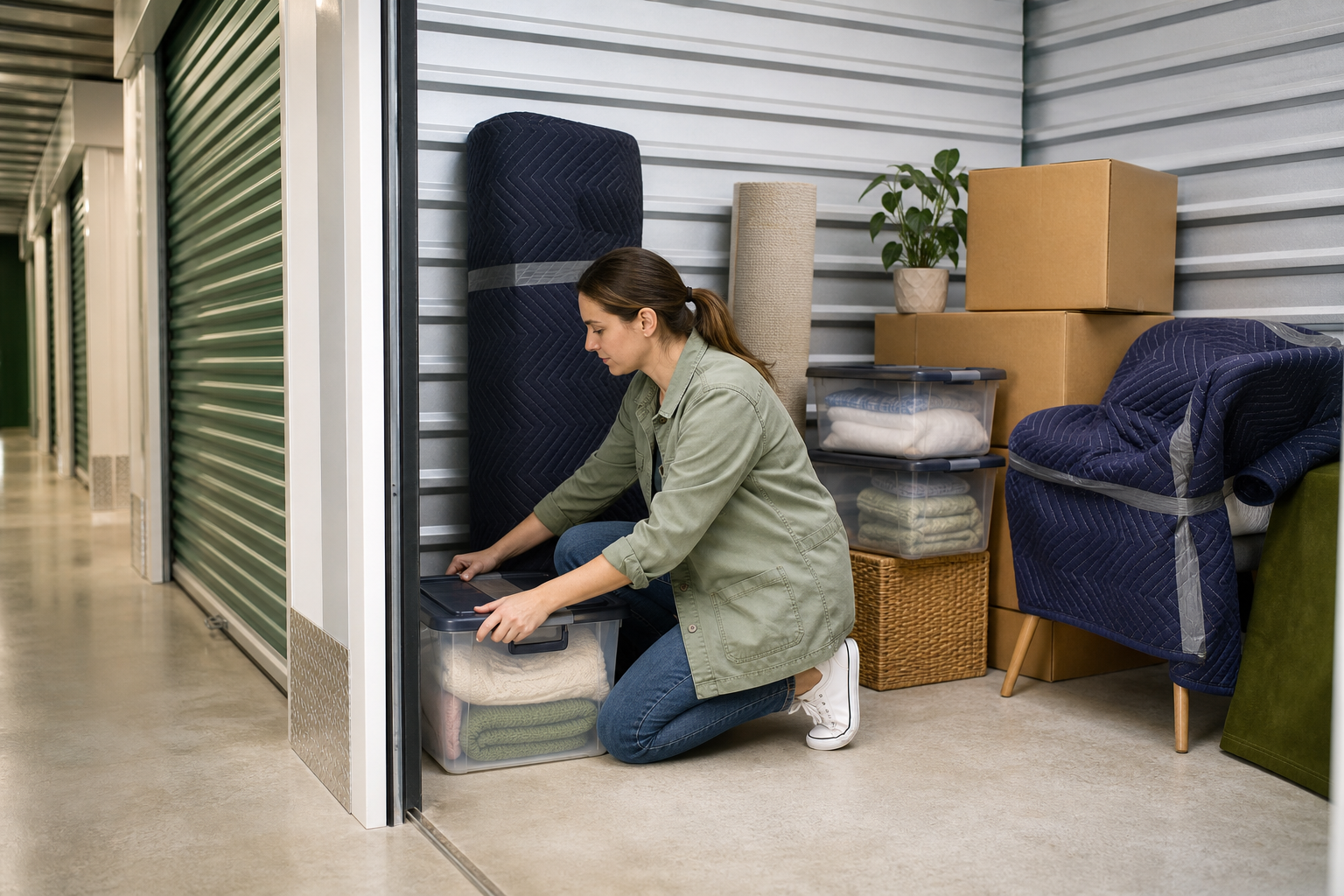
Storage numbers worth checking
Use these numbers as decision anchors before comparing facilities. The goal is not to guess a perfect unit — it is to compare the same details across options.
List largest items, box count, and aisle needs.
Use these as comparison anchors.
Monthly rate, promo length, required fees.
Drive-up convenience vs. indoor protection.
| Check | What to compare | Why it matters |
|---|---|---|
| 5×10 | Boxes, small bedroom, seasonal items | A small unit can save money if it truly fits |
| 10×10 | Apartment contents or household overflow | Often a safer middle option for mixed items |
| 10×20 | Multi-room moves or large equipment | More room can reduce loading frustration |
| Climate control | Sensitive vs. durable belongings | Arkansas heat and humidity change the risk |
StorageGuide verdict
Use the article as a decision filter: choose the smallest unit that comfortably fits your load, use climate control for wood, electronics, documents, photos, and fabrics, prioritize access that matches your real schedule, and compare regular rates and fees before trusting the cheapest promotion.
Storage FAQs
Is drive-up storage always cheaper than indoor?
Not necessarily. Drive-up units are often priced lower than indoor climate-controlled space, but rates vary by size, facility, and demand. Compare the ongoing monthly rate rather than the first-month promotion, and weigh any savings against the protection you'd give up for sensitive items.
Can I get climate control with drive-up access?
Climate control is most common in indoor units, though some facilities offer climate-controlled drive-up space. If you need both easy heavy loading and temperature protection, ask whether that combination exists, or choose an indoor unit positioned close to the loading dock.
Which is better for storing furniture over an Arkansas summer?
For wood furniture, leather, and upholstery you plan to keep for months, indoor climate-controlled storage is the safer choice because it buffers the heat and humidity that cause warping and mildew. Drive-up is fine for short holds or rugged items that tolerate temperature swings.
Do drive-up and indoor units have different access hours?
They can. Drive-up units often use broad gate hours, while at some facilities, indoor areas may sit behind a main door or elevator with narrower windows. However, some operators, such as U Storage, offer both indoor and outdoor units with free 24/7 access.
What should I ask before renting either type?
Confirm the exact unit size, whether it's climate-controlled, the real access hours for the gate and building, the recurring rate and any admin or insurance fees, and how close you can park to the door. Those answers matter more than a headline discount.
Compare drive-up and indoor units near you
Filter by unit size, climate control, and access type to find storage that matches how you load and what you're protecting.