Storage Unit vs Garage Storage
Use this size guide to compare bulky furniture, box count, walkway space, climate-control needs, drive-up access, and the questions to ask before reserving a unit.
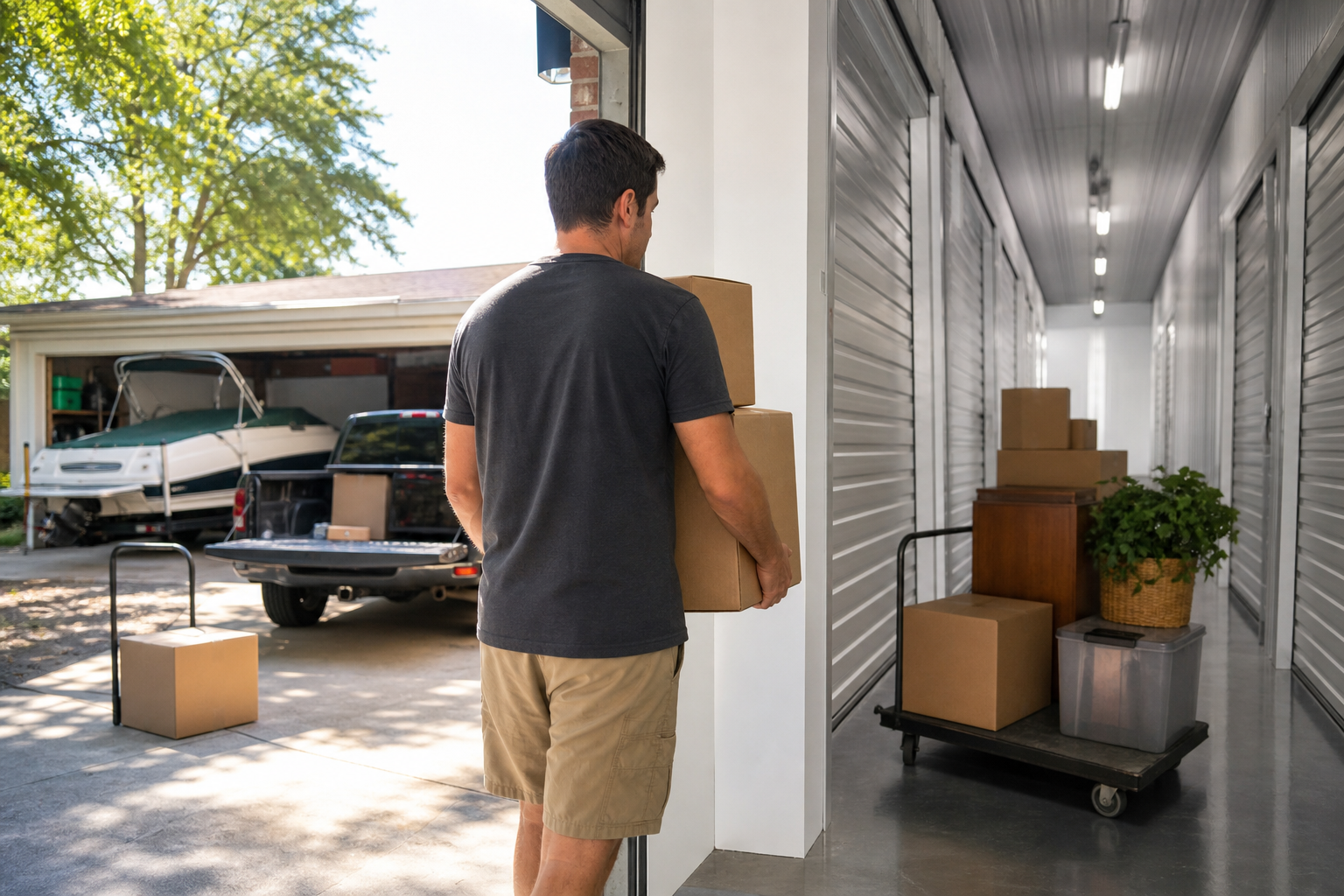
Rent a unit or use the garage you already have? Here's how to decide by what you're storing, not just by cost.
Your garage is free and always open, but it isn't climate controlled and it steals space you may actually need. A rented unit costs money every month, but it protects heat- and humidity-sensitive items and clears your home. The right pick comes down to what you're storing, how long, and whether Arkansas summer heat can reach it. This guide walks through unit size, climate control, drive-up vs indoor access, fees and access hours, and the questions worth asking before you sign anything.
What matters most
Use the article as a decision filter: choose the smallest unit that comfortably fits your load, use climate control for wood, electronics, documents, photos, and fabrics, prioritize access that matches your real schedule, and compare regular rates and fees before trusting the cheapest promotion.
Start with your bulky items, not your box count
Boxes are flexible — they stack and shift to fill gaps. Your large items are what actually decide the footprint. Lay out the real list first: a queen mattress and box spring, a sofa, a fridge or washer, a dining table, a bike. A garage swallows a couple of these easily, but a third or fourth is where the aisle disappears and you can no longer park or walk. For a rented unit, those same pieces set your size: a mattress plus a sofa plus an appliance is already pushing past a small unit into a 10×10 range. Measure the longest, tallest, widest pieces with a tape before you decide anything — a 7-foot sectional or a tall shelving unit fits very differently than the catalog photo suggests.
- List every item taller than 4 feet or longer than 5 feet first
- Appliances and mattresses can't be crushed down — they set the floor space
- Only then estimate boxes to fill the leftover gaps
Photograph each large item next to a tape measure showing its longest dimension. When you're standing in an empty garage or unit later, you'll know in seconds whether the sectional turns the corner — no guessing, no second trip.
The climate question is where the garage usually loses
This is the single factor that most often pushes people from the garage to a unit. An uninsulated Arkansas garage can run well over 100 degrees in July and stay humid for weeks, and that's rough on anything that warps, cracks, delaminates, or grows mildew. Wood furniture joints loosen, electronics and batteries degrade, upholstered pieces and mattresses trap moisture, and paper and photos curl. A climate-controlled unit holds a steadier temperature and humidity, which is the whole reason to pay for one. If everything you're storing is plastic, metal, or sealed and truly weatherproof, the garage is fine. The moment the list includes a mattress, a leather sofa, a TV, or boxes of documents, the garage becomes a gamble every summer.
- Climate-sensitive: wood, leather, electronics, mattresses, photos, documents, instruments
- Garage-safe: sealed plastic bins, metal shelving, gardening gear, auto parts
- Humidity, not just heat, is what ruins upholstery and paper
Do the 'August test': if you'd be upset opening the box in late August to find it warped, faded, or musty, it belongs in climate control — not the garage. That one question sorts most of your inventory faster than a room-by-room debate.
Drive-up, indoor, or the door you already have
The garage wins on pure convenience — it's steps away and open any hour. A rented unit trades some of that for protection, and the type of access changes the experience. Drive-up units let you pull a vehicle right to the door, which is ideal for heavy or frequent loads; indoor units usually mean a cart, a hallway, and sometimes an elevator, but they're often climate controlled and better shielded. Match access to how often you'll actually visit. Storing seasonal items you'll touch twice a year? Indoor is fine. Rotating business inventory or lake and boat gear on weekends? Drive-up saves your back. Always confirm gate and access hours before renting — some facilities aren't truly 24/7, and that matters if you load up after work or before an early lake run.
- Drive-up: fastest for appliances, furniture, and frequent trips
- Indoor: better climate and security, slower load-in
- Confirm gate hours separately from office hours
Ask specifically: 'What are gate hours, and are they different from office hours?' Facilities sometimes advertise long access but close the gate earlier — a detail that only bites you when you show up at 9 p.m. with a loaded truck.
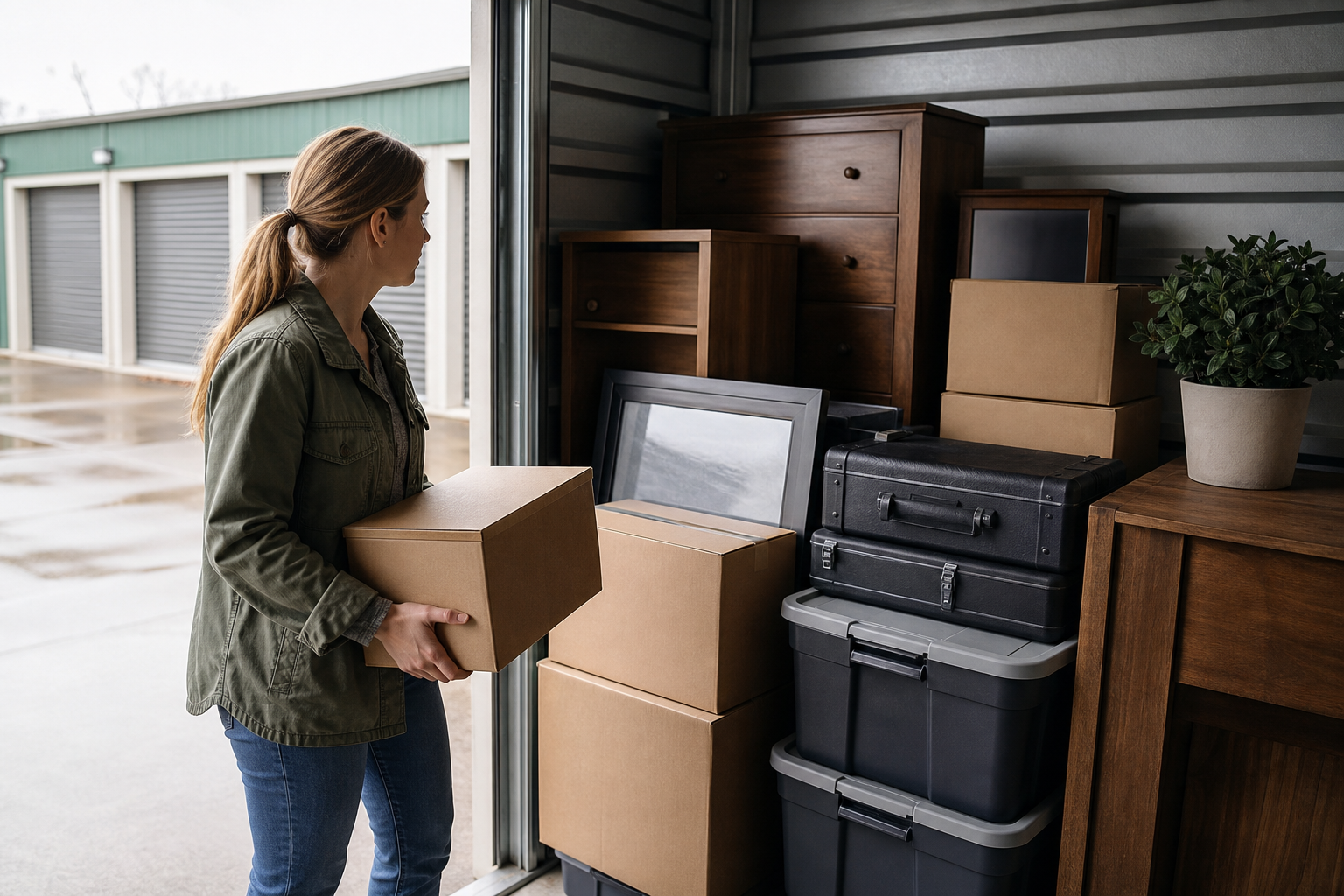
Leave a walkway if you'll visit — in either space
The mistake in both a garage and a rented unit is packing wall to wall with no path in. If you'll never open it until move-out, pack it tight and cheap. But if you'll pull the holiday bins, swap seasonal clothes, or grab a tool, you need a walkway — and that walkway is real space you have to plan for. In a garage, that aisle is often the difference between still parking a car and not. In a unit, it means renting one size up isn't waste — it's the room that keeps your stuff reachable without unstacking everything. Store the items you'll want first near the door, put long-term items deep, and keep one clear lane down the middle.
- Front: what you'll grab often; back: long-term storage
- Keep one clear center lane if you'll visit
- A walkway is planned space, not wasted space
Set your most-accessed bins at the front and label them on the side facing the aisle, not the top. When items are stacked, side labels are the only ones you can actually read without pulling the pile apart.
Compare the next size up before forcing a tight fit
When your items land right at the edge of a size, run the numbers on the next step up before you cram everything in. Common units work as planning ranges: a 5×10 handles a bedroom's worth of furniture and a dozen boxes; a 10×10 covers a one-bedroom apartment; a 10×15 to 10×20 takes multi-room households, appliances, and a vehicle. Forcing a full one-bedroom into a 5×10 usually means damaged stacks, no walkway, and a call to upsize later anyway. But don't overshoot either — an empty half of a big unit is money spent on air. The goal is the smallest size your bulky items and needed walkway comfortably fit, with the next-size-up cost checked so the decision is deliberate.
- 5×10: single bedroom + ~12 boxes
- 10×10: one-bedroom apartment
- 10×15–10×20: multi-room homes, appliances, or a car
Price both sizes per usable square foot, then add the value of not repacking twice. If the larger unit is only a modest step in monthly cost, the room to move often pays for itself the first time you need something from the back.
Quick summary
| Decision | What to check | Why it matters |
|---|---|---|
| Climate-sensitive items | Wood, electronics, upholstery, paper on the list? | Arkansas summer heat and humidity ruin these in an uninsulated garage; a climate-controlled unit protects them. |
| How long you're storing | Weeks vs. many months | Short-term rugged items suit a garage; long-term or seasonal storage favors a unit that clears your home. |
| Access frequency | How often you'll visit and how heavy the loads | Frequent heavy trips point to drive-up; twice-a-year items are fine indoors or in the garage. |
| Available space | Can you still park and walk in the garage? | If the garage is unusable, its 'free' cost isn't real — you've already lost the space. |
| Unit size | Do bulky items + a walkway fit the smaller size? | Avoids paying for empty air, and avoids a cramped unit you have to upsize later. |
| Fees and hours | Rate after promo, admin/lock fees, gate hours | A cheap first month can hide the real monthly cost and limited access. |
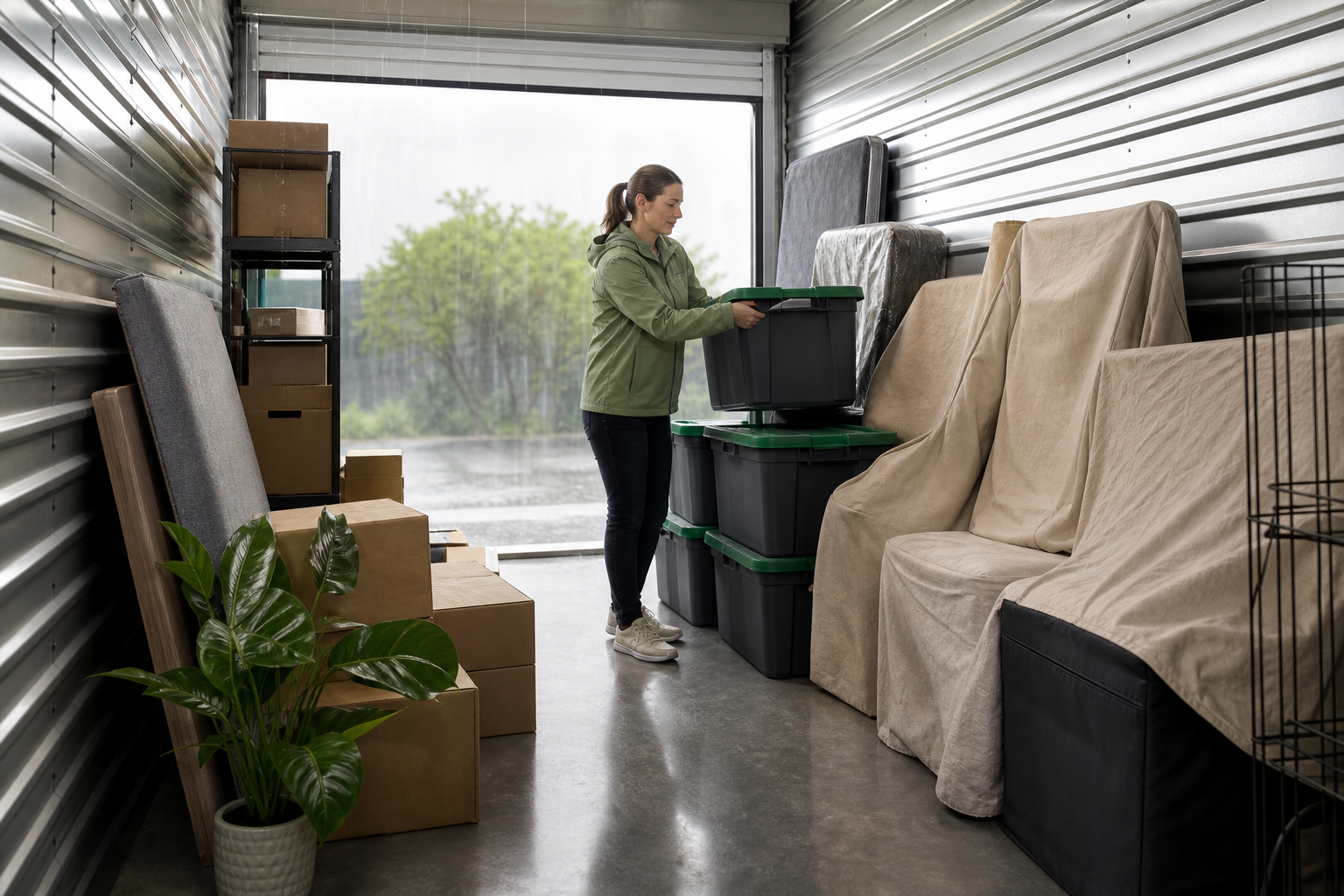
Storage numbers worth checking
Use these numbers as decision anchors before comparing facilities. The goal is not to guess a perfect unit — it is to compare the same details across options.
List largest items, box count, and aisle needs.
Use these as comparison anchors.
Monthly rate, promo length, required fees.
Drive-up convenience vs. indoor protection.
| Check | What to compare | Why it matters |
|---|---|---|
| 5×10 | Boxes, small bedroom, seasonal items | A small unit can save money if it truly fits |
| 10×10 | Apartment contents or household overflow | Often a safer middle option for mixed items |
| 10×20 | Multi-room moves or large equipment | More room can reduce loading frustration |
| Climate control | Sensitive vs. durable belongings | Arkansas heat and humidity change the risk |
StorageGuide verdict
Use the article as a decision filter: choose the smallest unit that comfortably fits your load, use climate control for wood, electronics, documents, photos, and fabrics, prioritize access that matches your real schedule, and compare regular rates and fees before trusting the cheapest promotion.
Storage FAQs
Is my garage really free storage?
Only if you still have usable room. Once the garage is packed so you can't park or walk through it, you've given up space you own — which is a real cost, just not a monthly bill. Compare that lost space against a unit's rent honestly.
Do I need climate control, or is a standard unit enough?
Standard units are fine for sealed plastic, metal, and weatherproof gear. Choose climate control for anything wood, leather, upholstered, electronic, or paper — an Arkansas summer is hard on all of those, whether they're in a garage or a non-climate unit.
How do I pick a size without overpaying?
Start with your largest items and the walkway you need, then match to the smallest size they comfortably fit. Use common sizes as ranges — 5×10 for a bedroom, 10×10 for a one-bedroom — and check the next size up's price before forcing a tight fit.
Drive-up or indoor for furniture and appliances?
Drive-up is easier for heavy or frequent loads because you pull the vehicle right to the door. Indoor units usually offer better climate and security but mean carts and hallways. Match it to how often you'll actually visit.
What should I ask before renting?
Ask the rate after any promotion ends, whether there are admin or lock fees, the real gate/access hours versus office hours, whether the unit is climate controlled, and whether it's drive-up or indoor. Those five answers tell you the true cost and fit.
Compare units by size, access, and climate
Know your bulky items and how often you'll visit? Use the storage finder to compare unit sizes and access types near you, and match the space to what you're actually storing.