Self Storage vs Portable Storage Containers
This guide helps compare unit size, climate control, drive-up versus indoor access, price and fees, access hours, and the questions to ask before renting.
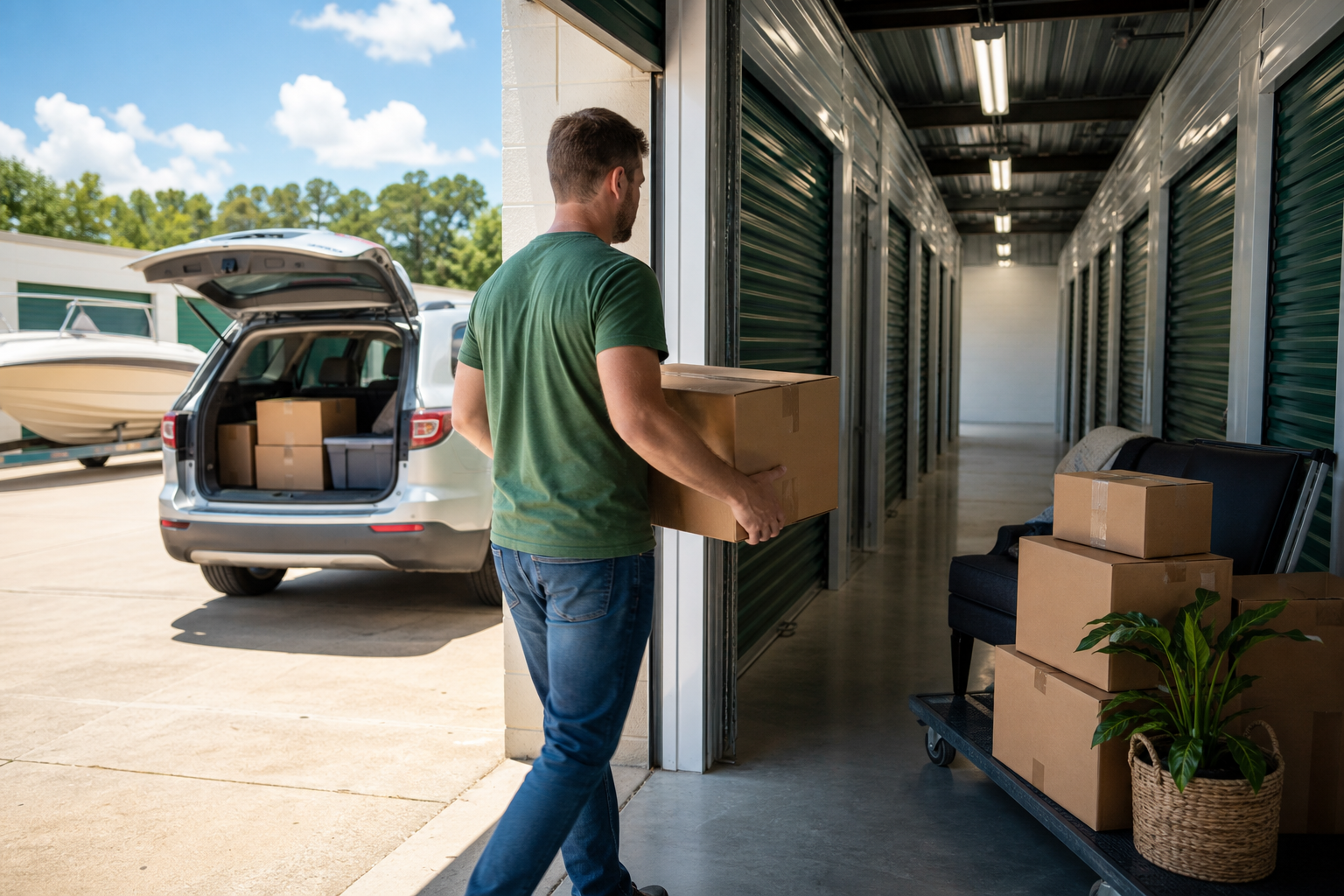
Match the option to what you're actually moving and where it's going — not to a one-size checklist
This comparison helps you decide between a portable container dropped at your home and a rented self-storage unit. We cover the size you actually need, whether climate control matters for your items, drive-up vs indoor access, how location works as a route decision, and the fees, access hours, and terms to confirm before you commit. The short version: portable containers win when the container needs to travel with you or sit at your property during a project; self storage wins when you want climate control, a secure gated facility, and stable monthly terms without moving a container twice.
What matters most
Use the article as a decision filter: choose the smallest unit that comfortably fits your load, use climate control for wood, electronics, documents, photos, and fabrics, prioritize access that matches your real schedule, and compare regular rates and fees before trusting the cheapest promotion.
Start with the specific items you're storing
Before comparing delivery vs. drive-up, list what's actually going in. A studio's worth of boxes and a mattress is a very different job than a household of solid-wood furniture, a leather couch, and a few electronics. Portable containers make loading easy because everything comes down at ground level with no stairs or elevators, which is great for bulky, awkward pieces. But standard containers are weatherproof, not conditioned — so anything that warps, cracks, or grows mildew is at risk if it sits for weeks. Self storage lets you match the item to the environment: an indoor climate-controlled unit for the sensitive stuff, a standard drive-up unit for tools, patio furniture, or a lawnmower.
- Bulky, heavy furniture: easier to load into a ground-level portable container
- Electronics, wood, upholstery, documents: favor climate-controlled self storage
- Tools, yard gear, seasonal items: fine in a standard drive-up self-storage unit
Sort your pile into two lists — 'survives heat and humidity' and 'doesn't' — before you price anything. If the second list is more than a couple of boxes, you're really shopping for climate control, which tilts the decision toward self storage regardless of how convenient a driveway container sounds.
Compare protection and access before you look at price
The two options protect and expose your stuff differently. Self storage facilities are typically gated with individual unit locks and are built to hold a steady indoor temperature and humidity in climate-controlled buildings — a real advantage during an Arkansas summer when a metal box can bake and swing between damp mornings and hot afternoons. A portable container sitting in your driveway is convenient but exposed to that same outdoor heat and humidity, and it's only as secure as your property. On access: a container gives you all-day reach as long as it's parked at your home, while a self-storage unit ties you to the facility's gate hours but keeps everything behind a controlled entrance.
- Portable container: convenient access, but outdoor-exposed and yard-secure only
- Self storage: controlled entrance, individual locks, optional climate control
- Climate control matters most for wood, leather, electronics, and paper
Ask each self-storage option two things a brochure won't tell you: whether climate control runs 24/7 or only during business hours, and what the gate hours actually are. A unit that's 'climate controlled' but only conditioned when the office is open won't protect your items overnight during a July heat wave.
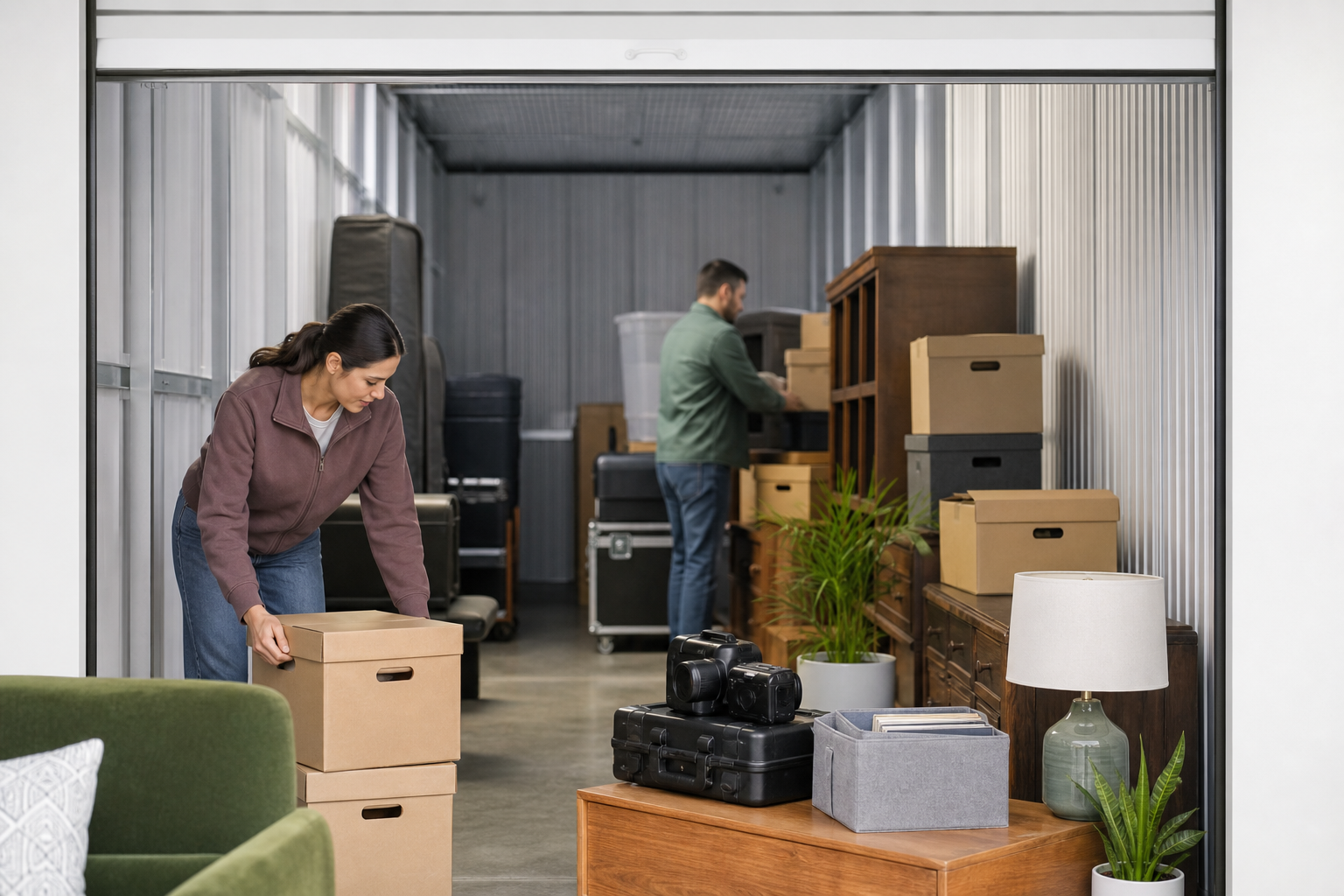
Use location as a route decision, not just a map pin
Where the storage lives should follow where your stuff is going. If you're moving across town or out of state, a portable container is essentially a moving decision: you load once and the company hauls it, so the 'location' is really your origin and destination. If you're staying put and just need overflow or seasonal space, self storage location becomes a route question — pick a facility that's on a road you already drive, so drop-offs and pickups don't turn into a special trip. This matters for lake and boat gear, campus move-out runs near a university, or clearing an apartment before a lease flip: the closer the unit is to that regular route, the more you'll actually use it well.
- Moving cross-town or out of state: portable container travels with the load
- Staying local: pick a self-storage location on a road you already drive
- Seasonal lake/boat or campus move-out: match location to that trip
If you're choosing self storage, measure convenience in minutes off your normal drive, not miles from home. A facility five minutes off your daily commute beats a closer one that requires a dedicated detour — you'll access it more often and be less tempted to overpack a single trip.
Check the full rental experience before you reserve
The headline price rarely tells the whole story for either option. Portable containers often carry delivery and pickup fees, a minimum rental period, and pricing that depends on how long the container sits and whether it moves. Self storage advertises a low first-month rate that can step up to a higher standard rate, and may add admin fees, a lock purchase, or insurance requirements. Both can require advance booking during busy stretches — think summer moving season or campus move-out — so availability, not just cost, may decide it. Read how long a quoted rate holds and what triggers an increase before you lock anything in.
- Portable: delivery/pickup fees, minimum term, move-with-you pricing
- Self storage: promo vs. standard rate, admin/lock fees, insurance rules
- Book early for summer moves and university move-out weeks
Get the total cost for your actual timeline in writing, not the monthly teaser. For a portable container, add delivery + pickup + your expected weeks. For self storage, ask what the rate becomes after any promo month and whether insurance is required. Compare those two real numbers — that's the honest head-to-head.
Quick summary
| Decision | What to check | Why it matters |
|---|---|---|
| Who it's for | Does the box need to travel or stage at your home? | Portable wins for moves and on-site projects; self storage wins for stationary storage |
| Climate control | Are your items heat/humidity sensitive? | Standard containers aren't conditioned; self storage offers climate-controlled units |
| Access | How often will you pull items in and out? | Container gives all-day home access; self storage ties you to gate hours but adds security |
| Location | Is the facility on a road you already drive? | Route-friendly self storage gets used; a driveway container needs a legal parking spot |
| Cost | Total for your real timeline, not the teaser rate | Delivery fees vs. promo step-ups decide the honest cheaper option |
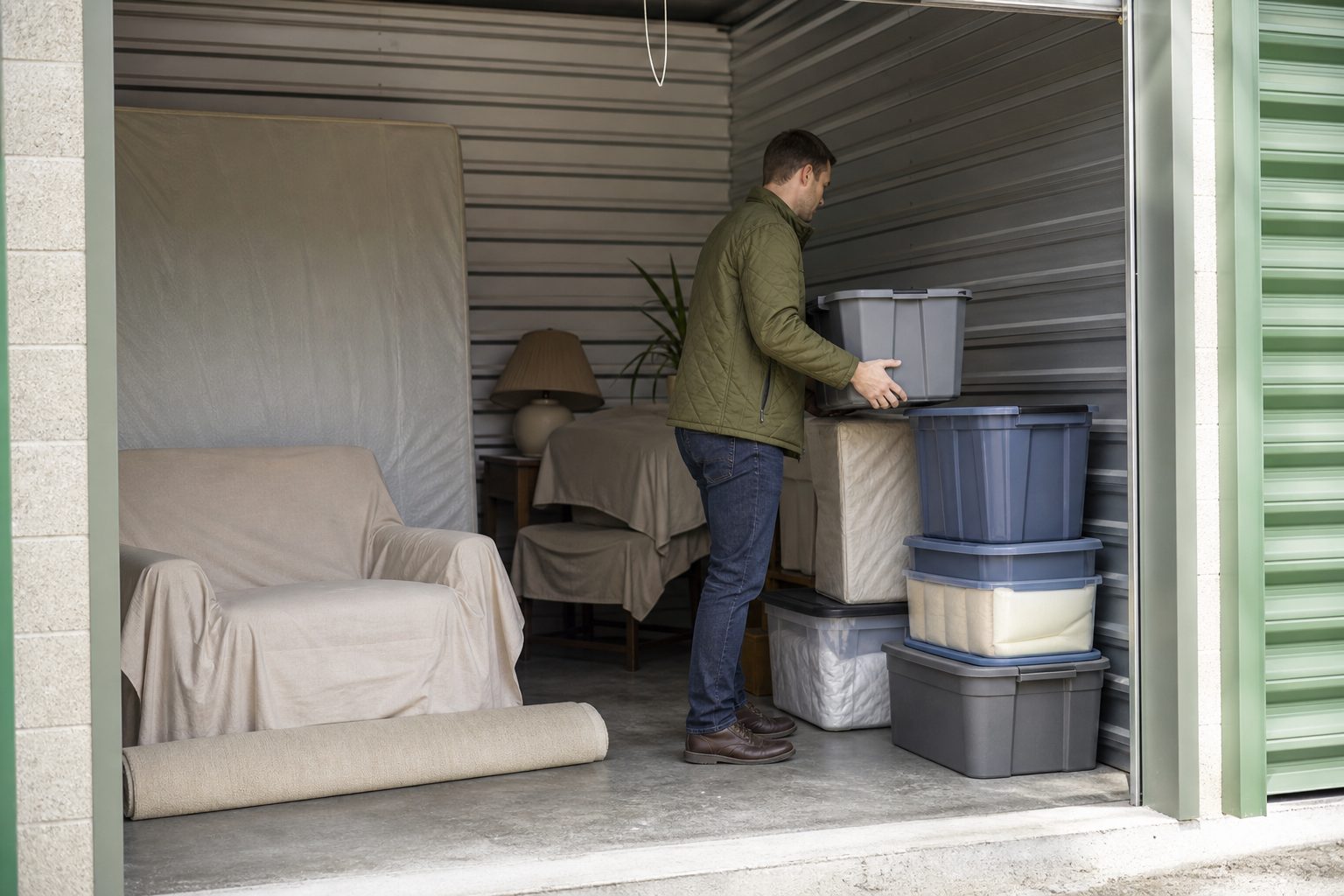
Storage numbers worth checking
Use these numbers as decision anchors before comparing facilities. The goal is not to guess a perfect unit — it is to compare the same details across options.
List largest items, box count, and aisle needs.
Use these as comparison anchors.
Monthly rate, promo length, required fees.
Drive-up convenience vs. indoor protection.
| Check | What to compare | Why it matters |
|---|---|---|
| 5×10 | Boxes, small bedroom, seasonal items | A small unit can save money if it truly fits |
| 10×10 | Apartment contents or household overflow | Often a safer middle option for mixed items |
| 10×20 | Multi-room moves or large equipment | More room can reduce loading frustration |
| Climate control | Sensitive vs. durable belongings | Arkansas heat and humidity change the risk |
StorageGuide verdict
Use the article as a decision filter: choose the smallest unit that comfortably fits your load, use climate control for wood, electronics, documents, photos, and fabrics, prioritize access that matches your real schedule, and compare regular rates and fees before trusting the cheapest promotion.
Storage FAQs
Is a portable container or self storage cheaper?
It depends on how long you need it. Portable containers add delivery and pickup fees, so they tend to make sense for shorter windows or when the container also handles your move. Self storage usually costs less per month over a longer stay, especially if you can size down. Compare the total cost for your actual timeline — including any delivery fees on one side and promo step-ups on the other — rather than the advertised starting price.
Do portable containers protect against Arkansas heat and humidity?
Standard portable containers are weatherproof but not climate conditioned, so they don't hold a steady temperature or humidity level. During a hot, humid Arkansas summer, that can put wood furniture, leather, electronics, and documents at risk of warping or mildew. For those items, a climate-controlled self-storage unit is the safer choice.
Can I keep a portable container in my driveway?
Often yes, but check first. Many HOAs, apartment complexes, and cities limit how long a container can sit on a driveway or street, and some require a permit. If your property can't host the container, you'll need it moved to a storage yard, which changes the cost and convenience math.
Which is better for a college move-out?
For a short haul between apartments or dorms near campus, a portable container can save a second handling if you load once and have it delivered to the new place. If there's a gap between move-out and move-in — common in summer — a small climate-controlled self-storage unit on your regular route is usually cheaper and protects sensitive items through the heat.
How far in advance should I book?
Book early during summer moving season and university move-out weeks, when both containers and units get tight. Availability, not just price, can end up making the decision, so reserve as soon as your dates are firm.
Compare real options for your move
Match the storage type to what you're moving, where it's going, and how long you need it. Use the finder to line up sizes, climate control, and access before you reserve.