Student Storage vs Apartment Storage
Use this guide to compare unit size, climate control for summer, campus routes, lease timing, shared boxes, price/fees, and what to ask before renting student storage.
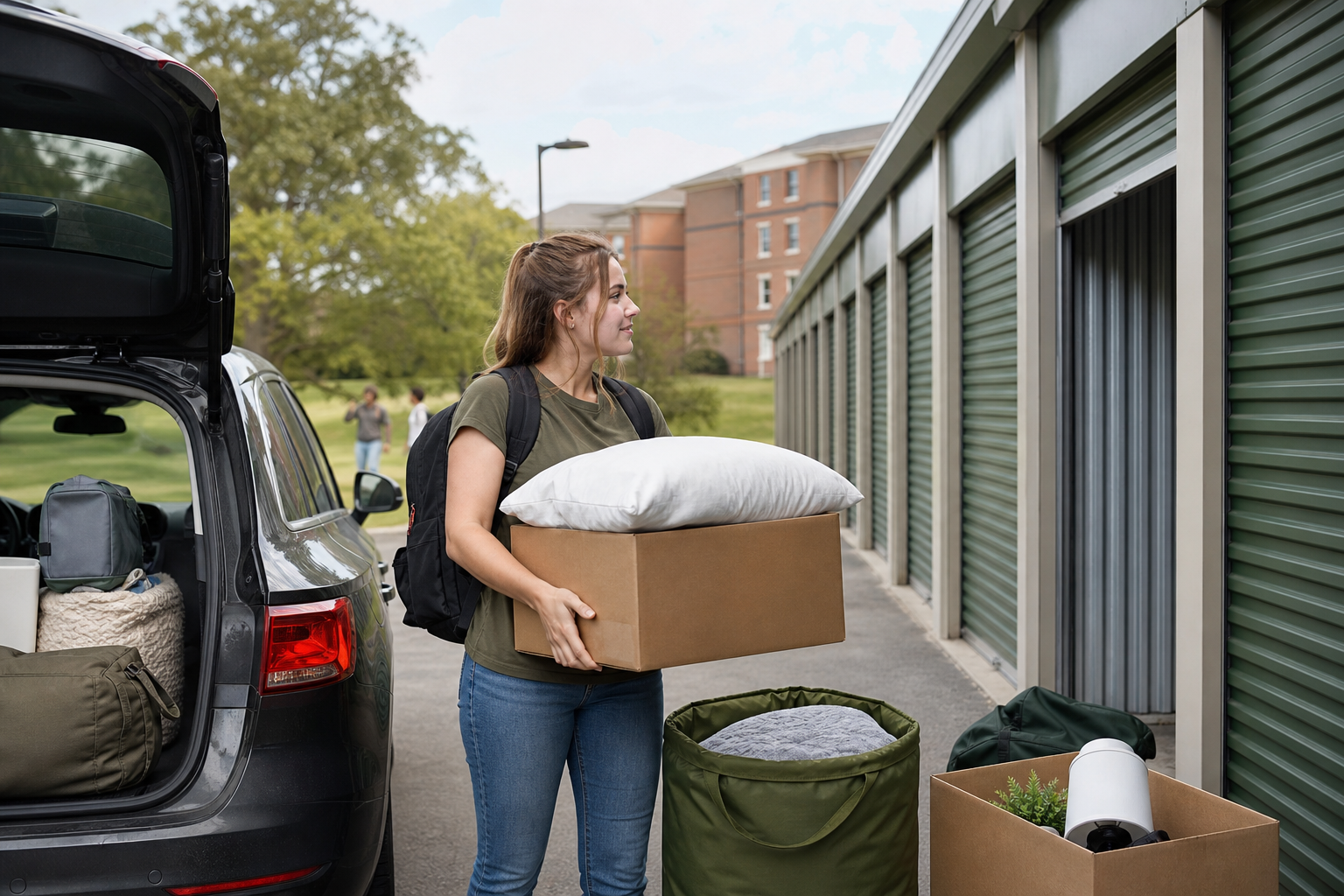
How to pick the right short-term unit when campus move-out, roommates, and summer heat all land at once
Student storage is usually a small, seasonal, deadline-driven stay: a dorm's worth of bins, bedding, and a mini fridge that has to be out by a fixed move-out date. Apartment storage is often a bit bigger and more flexible on timing, holding furniture and household overflow during a lease gap. This guide compares them on the things that actually decide the rental: unit size, climate control, drive-up vs indoor access, price and fees, access hours, and the questions to ask before you sign.
What matters most
Use the article as a decision filter: choose the smallest unit that comfortably fits your load, use climate control for wood, electronics, documents, photos, and fabrics, prioritize access that matches your real schedule, and compare regular rates and fees before trusting the cheapest promotion.
Plan around move-out and move-in dates first
The single biggest difference between student and apartment storage is the calendar. Dorms and campus housing enforce hard move-out days, and everyone leaves in the same 48-hour window, so units near campus fill and load-in traffic peaks right when you need it. Reserve before finals week, not during it. Apartment renters usually have a softer gap between a lease ending and the next one starting, which means you can pick move dates that dodge the end-of-month crush. In both cases, count your actual months: a student stay is often just May through August, so a rental that bills month-to-month with no long commitment fits better than a discounted rate that assumes you'll stay a year.
Ask whether the facility prorates your final month. A summer-only renter who moves out on the 3rd shouldn't pay for the whole month, and prorating can matter more than a first-month discount over a short stay.
Separate fall essentials from things you can bury in back
Short stays reward smart packing order over raw square footage. Students should pull out what they'll want first in August, like a laundry bag, one set of bedding, and desk basics, and load those last so they're by the door. Off-season and bulky items such as winter clothes, extra textbooks, and stacked bins go to the back. Apartment renters storing between leases should keep a labeled essentials box separate from long-haul boxes, because you're more likely to need a tool, a charger, or a kitchen item mid-gap. Clear or color-coded bins beat cardboard here: they stack cleanly, resist a humid summer better, and let you see contents without unstacking the whole unit.
- Load August essentials last: bedding, laundry bag, desk items
- Push off-season clothes and textbooks to the back
- Keep one clearly marked essentials box you can reach without digging
Photograph each bin's contents on your phone before it goes in and note the bin number. When you come back in the fall, you can find the mini fridge parts or your router without opening five bins.

Protect electronics, bedding, and documents through summer heat
An Arkansas summer is exactly when climate control earns its cost. Heat and humidity are hard on the things students and renters most often store: laptops and monitors, gaming consoles, printers, mattresses, pillows, and paper documents like transcripts and leases. Sustained heat can stress electronic components, and humidity invites mildew on bedding and warping in paper. If you're storing any electronics or fabric for the summer, a climate-controlled unit is worth the difference. Don't seal electronics in plastic wrap, which can trap condensation; use bins instead and elevate anything off the floor. For a bare pile of hardy plastic bins with no electronics or textiles, a standard unit can be fine.
Pull batteries out of remotes, controllers, and small devices before storing them. Heat makes leaks and swelling more likely, and a leaked battery can ruin the device it's sitting in.
#4Pick a location and access type that fits your route
Where the unit sits changes how painful move day is. Students should weigh a spot close to campus so a car or borrowed truck makes short trips during the move-out crush, and indoor access with carts is often easier for hauling bins up from a dorm. Apartment renters loading a couch, dresser, or mattress usually want drive-up access so you back right up to the door instead of wheeling furniture down a hallway. Also check access hours against your real schedule: if you're moving after a late shift or an evening final, a facility with extended or 24-hour access beats one that locks the gate at 6 p.m. Confirm the drive and gate details before you commit, because a cheaper unit across town can cost you an extra trip in July heat.
- Students: near campus, indoor access with carts
- Renters: drive-up access for furniture
- Check that access hours fit late or shared schedules
If you'll share the move with a roommate, put both names on the account or set up gate-code access for each person. One person holding the only code turns into a scheduling headache on move-out day.
Quick summary
| Decision | What to check | Why it matters |
|---|---|---|
| Stay length | Month-to-month vs long-term rate | A summer or lease-gap stay is short; don't lock into a year for a discount |
| Unit size | 5×5-5×10 for students, 5×10-10×10 for renters | Students store bins; renters add furniture, so sizing differs |
| Climate control | True temperature and humidity control | Arkansas summer heat and humidity damage electronics, bedding, and documents |
| Access type | Indoor with carts vs drive-up | Bins move easily indoors; furniture wants a drive-up door |
| Access hours | Gate hours and per-person codes | Late finals, work shifts, and roommates need flexible access |
| Price and fees | Proration, admin fee, deposit | Over a few months, fees can outweigh a first-month promotion |

Storage numbers worth checking
Use these numbers as decision anchors before comparing facilities. The goal is not to guess a perfect unit — it is to compare the same details across options.
List largest items, box count, and aisle needs.
Use these as comparison anchors.
Monthly rate, promo length, required fees.
Drive-up convenience vs. indoor protection.
| Check | What to compare | Why it matters |
|---|---|---|
| 5×10 | Boxes, small bedroom, seasonal items | A small unit can save money if it truly fits |
| 10×10 | Apartment contents or household overflow | Often a safer middle option for mixed items |
| 10×20 | Multi-room moves or large equipment | More room can reduce loading frustration |
| Climate control | Sensitive vs. durable belongings | Arkansas heat and humidity change the risk |
StorageGuide verdict
Use the article as a decision filter: choose the smallest unit that comfortably fits your load, use climate control for wood, electronics, documents, photos, and fabrics, prioritize access that matches your real schedule, and compare regular rates and fees before trusting the cheapest promotion.
Storage FAQs
Do I really need climate control for a summer-only student stay?
If you're storing electronics, bedding, or paper documents through an Arkansas summer, yes. Heat and humidity are the main threats to those items, and a few months is long enough for mildew or component stress. If you're only storing hardy plastic bins with no electronics or fabric, a standard unit can work.
What size unit fits a dorm room's worth of stuff?
A 5×5 or 5×10 usually handles bins, bedding, a mini fridge, and a few small furniture pieces. Size up to a 10×10 only if you're adding a full apartment's furniture, which is more common for a lease-gap move than a dorm move-out.
Should I choose drive-up or indoor access?
Indoor access with carts is often easier for students hauling bins, while drive-up access is better for renters loading a couch, dresser, or mattress. Match it to whether you're moving mostly boxes or mostly furniture.
How do I keep costs down for a short stay?
Rent month-to-month rather than a long-term rate, pick the smallest unit that fits, and ask about proration on your final month and any admin or deposit fees. Over three or four months, those terms matter more than a single-month discount.
How do I handle storage with a roommate?
Put both names on the account or set up separate gate codes so either person can load or unload. Agree in advance on who pays and who's returning at fall move-in to avoid a scramble.
Find a short-stay unit that fits your move dates
Compare climate control, access type, and clear monthly terms for a student or lease-gap stay near you.